Why Track Booking Sources for Your Tattoo Studio
TL;DR:
- Tracking booking sources helps tattoo studios connect marketing efforts directly to client appointments and revenue. Using tools like UTM parameters and manual intake questions, studios can accurately attribute bookings across multiple channels. Privacy changes make server-side tracking essential for maintaining reliable attribution in the future.
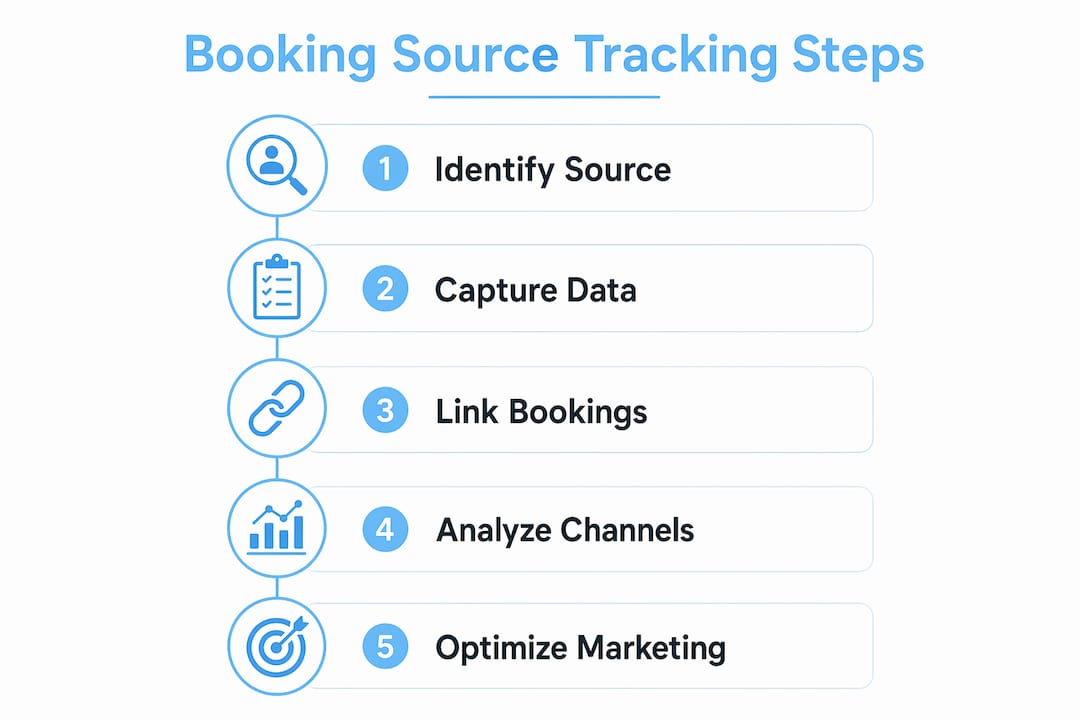
Booking source tracking is the process of identifying which platforms, campaigns, or channels generate real client appointments for your tattoo studio. Knowing why track booking sources matters is the difference between spending your marketing budget on what works and throwing money at what feels good. HubSpot describes lead source tracking as foundational for proving ROI because it connects marketing effort directly to revenue. Studios using tools like Ink link and ServiceM8 can see exactly which channels convert browsers into booked appointments. Without that data, every marketing decision is a guess.
Why track booking sources: the core case for tattoo studios
Booking source tracking tells you which channel produced a real appointment, not just a click or a profile view. That distinction matters more than most studio owners realize. A client might find you on Instagram, read your Google reviews, visit your website, and then book through a direct message. If you only credit the DM, you misread the whole picture.
HubSpot identifies lead source tracking as the system that carries source data through the funnel so revenue can be attributed correctly. For tattoo studios, that funnel includes Instagram, Google Search, walk-ins, referrals, and online booking platforms. Each channel behaves differently, converts at different rates, and costs different amounts to maintain.
The importance of tracking bookings comes down to one question: which of your marketing efforts actually fills your calendar? Without source data, you cannot answer that question with confidence. You might be investing heavily in paid ads while your best clients keep coming from word-of-mouth referrals you never formally tracked.
How does booking source data improve marketing ROI?
The biggest budget mistake tattoo studios make is relying on last-touch attribution. Last-touch attribution gives full credit to the final interaction before a booking, usually the booking form or a direct message. Attribution models affect budget decisions because last-touch models reward closing interactions while under-crediting channels that created demand earlier in the journey.
A client who found your studio through a Google search, saved your Instagram post, and then booked after seeing a flash sale email represents three channels working together. Crediting only the email means you might cut your SEO budget or stop posting flash content, both of which quietly drove that booking.
Multi-touch attribution solves this by distributing credit across every touchpoint a client engaged with before booking. The benefits of tracking sources through a multi-touch model include a clearer picture of which channels create awareness, which build consideration, and which close appointments.
Here is how studios can act on booking source data to improve marketing ROI:
-
Identify top-performing channels. If Google Search consistently drives bookings with high average spend, that channel deserves more budget.
-
Cut underperforming spend. If a paid social campaign generates clicks but zero bookings, the data makes the case for reallocating that budget.
-
Prove the value of organic content. Source tracking often reveals that organic Instagram posts or portfolio updates drive more bookings than paid promotions.
-
Time promotions by channel. If email campaigns spike bookings on Tuesdays, you can schedule flash sales accordingly.
-
Compare cost per booking by source. Knowing that a referral program costs less per booking than paid ads is a direct input into budget planning.
Pro Tip: Set up UTM parameters on every link you share, from your Instagram bio to your Google Business profile. UTM parameters identify source and campaign so your analytics tool can separate paid traffic from organic and report conversions by campaign. It takes ten minutes to set up and pays off every time you review your booking reports.
How does source data help with scheduling and staffing?
Booking source data is not just a marketing tool. It directly shapes how you run your studio day to day. Different channels produce different booking behaviors. Clients who find you through Google tend to book further in advance. Walk-ins and Instagram DMs often want same-week appointments. Knowing this lets you structure your calendar to match actual demand patterns.
ServiceM8 booking reports break down visits, conversion rate, and revenue by source. That level of detail means you can see not just where bookings come from, but which sources produce your highest-value appointments. A source that drives frequent small bookings may require different staffing than one that drives large custom pieces booked weeks out.
Here is a practical process for using source data to improve scheduling:
-
Pull a monthly source report. Review which channels drove bookings and compare volume, average booking value, and lead time by source.
-
Identify peak booking windows by channel. If Instagram DMs spike on weekends, make sure your team responds and your calendar has availability then.
-
Adjust staffing based on channel patterns. If walk-ins cluster on Friday afternoons, schedule a flexible artist for that slot rather than booking it solid with custom appointments.
-
Flag low-conversion sources. A channel that drives many inquiries but few actual bookings may need a different follow-up process, not more ad spend.
-
Plan capacity around campaigns. Before launching a promotion on a specific channel, check historical booking volume from that source so you staff appropriately.
Pro Tip: Track booking lead time by source alongside conversion rate. A channel with a long lead time is not underperforming. It is building your future calendar. Cutting it because it looks slow in a weekly report is a common and costly mistake.
Best practices for setting up accurate booking source tracking
Accurate tracking requires both technical setup and consistent human habits. Neither alone is enough. The technical side handles online channels. The human side handles everything else.
Setting up UTM parameters for online bookings
UTM parameters are tags you append to a URL that tell your analytics platform where a visitor came from. For example, a link in your Instagram bio might end with ?utm_source=instagram&utm_medium=social&utm_campaign=flash-sale. When a client clicks that link and books, the booking record carries that source data. Shopify confirms UTMs show exactly which traffic sources lead to conversions, making campaign-level reporting possible.
Capturing offline bookings manually
Phone calls, walk-ins, and Instagram DMs do not generate UTM data automatically. For these channels, manual source capture is not optional. Your intake process needs a source dropdown or a standard question: “How did you hear about us?” The answer must be recorded in the booking record, not just noted mentally.
Linking source data to the booking record
Source data is only useful when it stays attached to the appointment. Attribution is only useful when connected to the booking record itself. If your UTM data lives in Google Analytics but never reaches your booking system, you cannot match marketing traffic to actual revenue. Choose a booking platform that stores source data with each reservation.
Standardizing naming conventions
Inconsistent naming silently corrupts your reports. Consistent naming maintains clean attribution data over time. If one team member logs a source as “Instagram” and another logs it as “IG” and a third uses “Social Media,” your reports will split that channel into three separate lines. Agree on a fixed list of source names and use them every time, without exception.
Here is a comparison of tracking methods by channel type:
| Channel | Tracking method | Data captured automatically? |
|---|---|---|
| Google Search (paid) | UTM parameters | Yes |
| Instagram bio link | UTM parameters | Yes |
| Email campaign | UTM parameters | Yes |
| Phone call | Manual source dropdown | No |
| Walk-in | Manual source dropdown | No |
| Instagram DM | Manual source dropdown | No |
| Referral from client | Manual source dropdown | No |
What attribution challenges should studios prepare for in 2026?
Browser privacy changes have made traditional tracking less reliable. Safari’s Intelligent Tracking Prevention and Firefox’s Enhanced Tracking Protection block third-party cookies, which means referral data from some channels gets lost before it reaches your booking system. Studios that relied entirely on browser-based tracking are now seeing gaps in their source reports.
Server-side first-party data collection captures campaign attribution parameters at the moment a visitor arrives on your site, bypassing browser-level blocks. This approach stores source data on your server rather than in the client’s browser, making it far more resistant to privacy restrictions. For studios running paid campaigns on Meta or Google, this is the most reliable way to maintain accurate attribution in 2026.
The second challenge is the multi-touch journey itself. Most clients do not book on their first visit. They might see your work on Instagram, search your name on Google, read reviews, and then book two weeks later. Each step in that journey may look like a separate, unconnected visit in a basic analytics setup. Recognizing multiple touchpoints requires either a multi-touch attribution model or a CRM that logs client interactions across sessions.
| Challenge | Cause | Solution |
|---|---|---|
| Lost referral data | Browser privacy blocks third-party cookies | Server-side first-party tracking |
| Multi-touch gaps | Single-session attribution misses prior visits | Multi-touch attribution model or CRM logging |
| Inconsistent source names | No naming standard enforced | Fixed source list with team training |
| Offline channel gaps | UTMs do not apply to phone or walk-in | Manual source capture at intake |
Inconsistent or inaccurate source data breaks attribution and causes budgets to be allocated incorrectly. The fix is not just technical. Defining and enforcing capture rules across your whole team is what keeps your data trustworthy over time.
Key takeaways
Tracking booking sources is the single most direct way to connect your marketing spend to real appointments and revenue.
| Point | Details |
|---|---|
| Define your sources clearly | Use a fixed list of source names across all team members to keep reports clean and reliable. |
| Use UTMs for every online link | Append UTM parameters to all shared links so your booking system captures campaign-level data automatically. |
| Capture offline sources manually | Phone, walk-in, and DM bookings require a source question at intake since no automated signal exists. |
| Link source data to the booking record | Source data stored only in analytics tools cannot be matched to revenue without connecting it to the appointment. |
| Prepare for privacy-driven data loss | Server-side first-party tracking protects attribution accuracy as browser privacy restrictions tighten. |
The part most studios skip entirely
I have talked with a lot of studio owners who run great Instagram accounts, spend real money on Google ads, and still have no idea which channel fills their chairs. They check follower counts and ad impressions, but they never connect those numbers to actual bookings. That gap is not a technology problem. It is a habit problem.
The studios that grow consistently are the ones that treat source tracking as part of their intake process, not an afterthought. They ask every new client how they found the studio. They log it. They review it monthly. That habit, more than any analytics tool, is what makes the data useful.
The other thing I see constantly is studios that set up UTM parameters once, then let the naming conventions drift. Six months later, “Instagram” and “IG” and “Social” are all separate rows in their reports. The data is technically there, but it is useless because nobody enforced a standard. Fixing that takes one team meeting and a shared document. It is not complicated. It just requires someone to own it.
If you manage booking requests and deposits carefully but ignore where those bookings come from, you are managing the outcome without understanding the cause. Source tracking closes that loop. It tells you what to do more of, what to stop paying for, and where your next wave of clients is already coming from.
— Matthew
Ink link makes booking source tracking part of the process
Ink link is built for tattoo studios that want to manage bookings, payments, and client records without juggling five separate tools. The platform connects your studio’s calendar and client data in one place, making it straightforward to record and review where each booking originated.
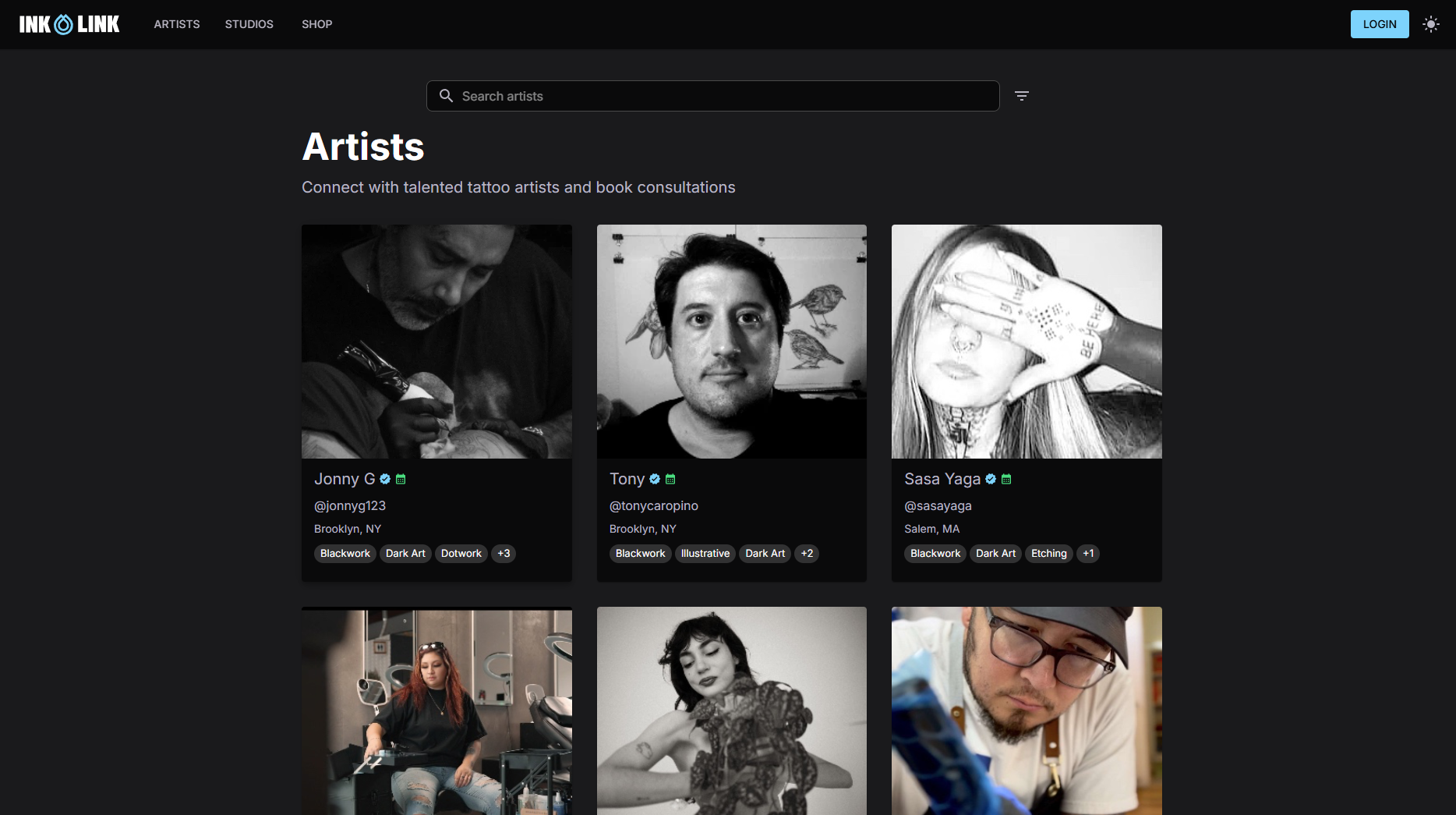
Studios on Ink link can assign booking sources at intake, whether a client found you through search, social media, a referral, or a walk-in. That data stays attached to the appointment record, so your reports reflect real channel performance rather than guesswork. Explore tattoo studios on Ink link to see how the platform handles bookings end to end, or browse the full studios directory to see how other studios present their work and manage client flow.
FAQ
What does booking source tracking mean for a tattoo studio?
Booking source tracking identifies which channel, such as Instagram, Google Search, or a walk-in, produced each client appointment. It connects marketing activity to real bookings rather than just traffic or inquiries.
Why does last-touch attribution cause problems?
Last-touch attribution credits only the final interaction before a booking, which can cause studios to cut channels that created demand earlier in the client journey. Multi-touch models distribute credit more accurately across all touchpoints.
How do UTM parameters work for tattoo studio bookings?
UTM parameters are tags added to a URL that tell your analytics platform where a visitor came from and which campaign they clicked. When a client books after clicking a tagged link, the source data is recorded with the appointment.
How should studios track phone and walk-in bookings?
Phone calls and walk-ins do not generate automatic tracking signals, so manual source capture at intake is required. A simple source dropdown or a standard intake question logged in the booking record keeps offline channels visible in your reports.
How does browser privacy affect booking source tracking in 2026?
Browser privacy restrictions block third-party cookies, which causes some referral data to disappear before reaching your booking system. Server-side first-party tracking captures source data at the server level, bypassing browser blocks and maintaining attribution accuracy.