Why Publish Tattoo Guides: Benefits for Studios and Artists

TL;DR:
- Publishing tattoo guides builds client trust and reduces uncertainty before booking. These guides also improve healing outcomes and enhance a studio’s long-term search visibility through consistent content.
Tattoo guides are published educational resources that help clients make informed decisions and help studios build lasting trust. Artists and studios that publish guides consistently outperform those that rely on social media alone, because educational content reduces uncertainty more reliably than great art does. The importance of tattoo education is clear: clients facing a permanent decision need accurate, specific answers before they book. This article covers why publish tattoo guides matters for your studio, your clients, and your long-term growth.
Why publish tattoo guides? The core case for studios and artists
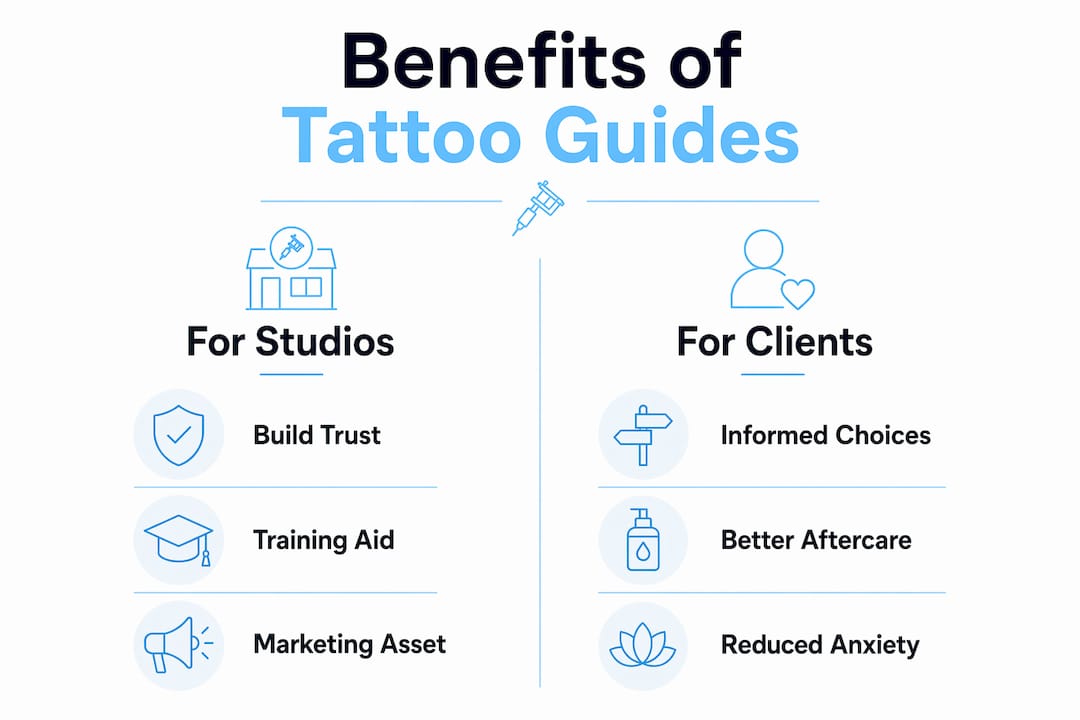
Publishing tattoo guides is the most direct way to answer the questions clients are already asking. Before booking, clients search for placement advice, healing timelines, removal costs, and what to expect in the chair. A guide that answers those questions honestly positions your studio as the credible source, not a random Reddit thread.

Kingsroad Tattoo built its publishing approach around one principle: accuracy and depth over filler content. That means writing guides that match real client demand, not generic advice that could apply to any industry. When your guide answers a specific question better than anything else online, clients arrive at your studio already trusting you.
The benefits of tattoo guides extend beyond first impressions. Guides work around the clock. A well-written aftercare page answers questions at 2 a.m. when your front desk is closed. A placement guide helps a nervous first-timer feel ready before their consultation. That kind of consistent, reliable information is what turns browsers into booked clients.
Pro Tip: Write guides that answer the exact questions clients ask during consultations. Keep a running list of recurring questions from your front desk and turn each one into a dedicated guide.
How do tattoo guides reduce client uncertainty and improve decision-making?
Client uncertainty is the single biggest barrier between interest and booking. Tattoos are permanent, and that permanence creates anxiety. Guides that address real concerns directly cut through that anxiety faster than any sales pitch.
The most effective guides answer questions in four categories:
-
Placement: Which body areas hurt more, heal better, or fade faster. Clients want honest comparisons, not reassurance.
-
Meaning and style: How to choose a design that holds up over time, including line weight, color saturation, and aging.
-
Aftercare: What to do in the first two weeks, what products to use, and what warning signs to watch for.
-
Removal and costs: Realistic timelines and price ranges for laser removal, so clients understand the full picture before committing.
Guides that cover these areas do something more valuable than inform. They reduce the gap between what a client imagines and what actually happens. Client trust builds more from reduced uncertainty than from the quality of the art alone. A client who feels informed is a client who shows up calm, prepared, and ready to commit.
The depth of your guides also signals professionalism. A studio that publishes a thorough guide on ink ingredients, healing stages, and touch-up policies communicates that it takes the craft seriously. That signal matters especially for first-time clients who have no prior relationship with your studio.
Pro Tip: Avoid writing guides that only cover the basics. Go one level deeper than what clients expect. If everyone covers “keep it moisturized,” you cover which moisturizers work best and why petroleum-based products can pull ink.
Guides also reduce the burden on your staff. When clients arrive having already read your aftercare guide, consultations focus on design rather than logistics. That saves time and creates a better experience for everyone.
What role do tattoo aftercare guides play in healing and complication prevention?
Tattooing is controlled skin trauma. The needle punctures the skin thousands of times per session, creating an open wound that needs proper care to heal without complications. A well-written aftercare guide is a clinical tool, not just a courtesy.
Cleveland Clinic dermatologists outline a clear aftercare checklist that studios can adapt directly into their own guides:
-
Wash gently with fragrance-free soap twice daily during the first two weeks.
-
Moisturize with a thin layer of unscented lotion or tattoo-specific balm after washing.
-
Cover appropriately for the first few hours post-session, then allow the skin to breathe.
-
Avoid sun exposure and submerging the tattoo in water until fully healed.
-
Watch for warning signs including red streaks, fever, swelling, or discharge that may indicate infection.
“Aftercare is vital to prevent infections and poor healing. Tattoos create open wounds where bacteria can enter, so maintaining cleanliness is critical during the healing period.” — Cleveland Clinic dermatologist, via Cleveland Clinic Tattoo Aftercare
The risks of poor aftercare include infections, scarring, rashes, and in serious cases, bloodborne illness if equipment was not properly sterilized. These are not rare edge cases. They are predictable outcomes of predictable failures. A guide that clearly explains what to do and what to avoid removes the guesswork that leads to those failures.
One underappreciated benefit of publishing aftercare guides is that they replace the conflicting advice clients find online. Forums, social media comments, and outdated blog posts often contradict each other. Your studio’s guide becomes the authoritative source your clients refer back to, which means fewer panicked calls and fewer complications. Guides designed around common failure points like itching, sun exposure, and infection triggers are more effective at improving outcomes than generic instructions.
A 2025 study found that distributing an information booklet on tattooing health risks produced a statistically significant knowledge increase among nursing students, with a t-value of 13.10 and p less than 0.05. That result confirms what studios already sense: structured written education works better than verbal instructions alone.
How can publishing tattoo guides benefit studios’ infection control and internal training?
Infection control is not just a client concern. It is a studio operations issue. The education level of practitioners directly affects how well they follow hygiene protocols, and published guides are one of the most practical ways to raise that baseline across your team.
A 2026 cross-sectional study found that higher education levels among body modification practitioners correlated with significantly better infection control knowledge, attitudes, and practices. Mean knowledge scores rose from 0 to 5.86 and practice scores from 14.86 to 28.57 as education level increased, with p less than 0.001. That data point matters for studios with staff at different training levels.
Publishing internal guides standardizes practice across your team. Key areas to cover include:
-
Sterilization protocols: Step-by-step procedures for autoclave use, single-use needle confirmation, and surface disinfection.
-
Cross-contamination prevention: Clear rules on glove changes, barrier film use, and handling of used equipment.
-
Client screening: Questions to ask clients about skin conditions, medications, or immune system concerns before starting a session.
-
Incident response: What to do if a client reports signs of infection after leaving the studio.
Pro Tip: Align your client-facing aftercare guide with your internal hygiene protocols. When both documents say the same thing, clients and staff reinforce each other’s behavior rather than creating confusion.
Publishing guides also serves as ongoing professional development. Studios that update their infection control guides regularly give artists a reason to revisit best practices, even after years in the industry. That habit of updating and reviewing is itself a structural safety measure.
In what ways do tattoo guides support marketing and local SEO for studios?
Published guides build a content library that works as a long-term marketing asset. Each guide targets a specific search query, and over time those guides compound into a body of work that ranks for dozens of terms your competitors are not covering.
| Content type | Social media post | Published tattoo guide |
|---|---|---|
| Lifespan | 24–48 hours | Months to years |
| Search visibility | Minimal | High for long-tail queries |
| Client trust signal | Moderate | Strong |
| Booking conversion | Low | High |
| Compounding value | None | Grows over time |
Local SEO for tattoo studios depends on answering the specific questions clients in your area are searching for. A guide titled “How to choose a tattoo artist in [your city]” or “What to expect from your first tattoo session” targets exactly the kind of long-tail queries that drive qualified local bookings. Social media posts disappear from feeds within hours. A well-written guide keeps ranking for years.
Content marketing through guides also creates a moat against competitors who rely only on Instagram. A studio with 30 published guides covering aftercare, style comparisons, placement advice, and artist spotlights has a search presence that cannot be replicated overnight. That compounding SEO effect steadily increases the number of clients who find your studio through organic search rather than paid ads.
The Ink link blog is a strong example of how platforms can support studios in building that kind of content presence. Guides that answer client questions also increase the quality of booking inquiries. When clients arrive having read your style guide or placement FAQ, they ask better questions and make faster decisions.
Key Takeaways
Publishing tattoo guides builds client trust, prevents complications, standardizes studio practices, and drives long-term search visibility through compounding content value.
| Point | Details |
|---|---|
| Guides reduce client uncertainty | Accurate, specific guides answer permanent-decision questions before clients book. |
| Aftercare guides prevent complications | Structured checklists lower infection risk and replace conflicting online advice. |
| Education improves infection control | Higher practitioner education correlates with significantly better hygiene compliance. |
| Guides support local SEO | Published content ranks for long-tail queries and compounds in value over time. |
| Internal guides standardize teams | Aligning client and staff guides prevents contradictory instructions and raises safety. |
What I’ve learned from studios that skip the guides
Studios that do not publish guides share a common pattern: their staff answers the same five questions every single day, their clients arrive anxious and underprepared, and their online presence depends entirely on platforms they do not control. I have seen this play out repeatedly, and the fix is always the same.
The most common mistake is treating guides as a one-time task. A studio publishes an aftercare page in 2021, never updates it, and wonders why clients still call with questions the guide should answer. Guides need to reflect current products, current healing research, and current booking policies. An outdated guide is almost as harmful as no guide at all.
The second mistake is writing for search engines instead of clients. A guide stuffed with keywords but short on real answers does not build trust. It signals that your studio is more interested in traffic than in helping people. The studios I respect most write guides the way they talk to clients in person: directly, honestly, and without padding.
The third mistake is keeping guides separate from the booking experience. A guide that lives on a blog but never appears in a booking confirmation, a consultation follow-up, or a pre-appointment email is missing most of its value. The best guides are woven into every client touchpoint, from first search to post-session check-in. That integration is what turns a good guide into a trust-building system.
— Matthew
Ink link makes it easier to connect guides with bookings
Publishing great guides is only half the work. The other half is making sure those guides reach clients at the right moment in their booking process.
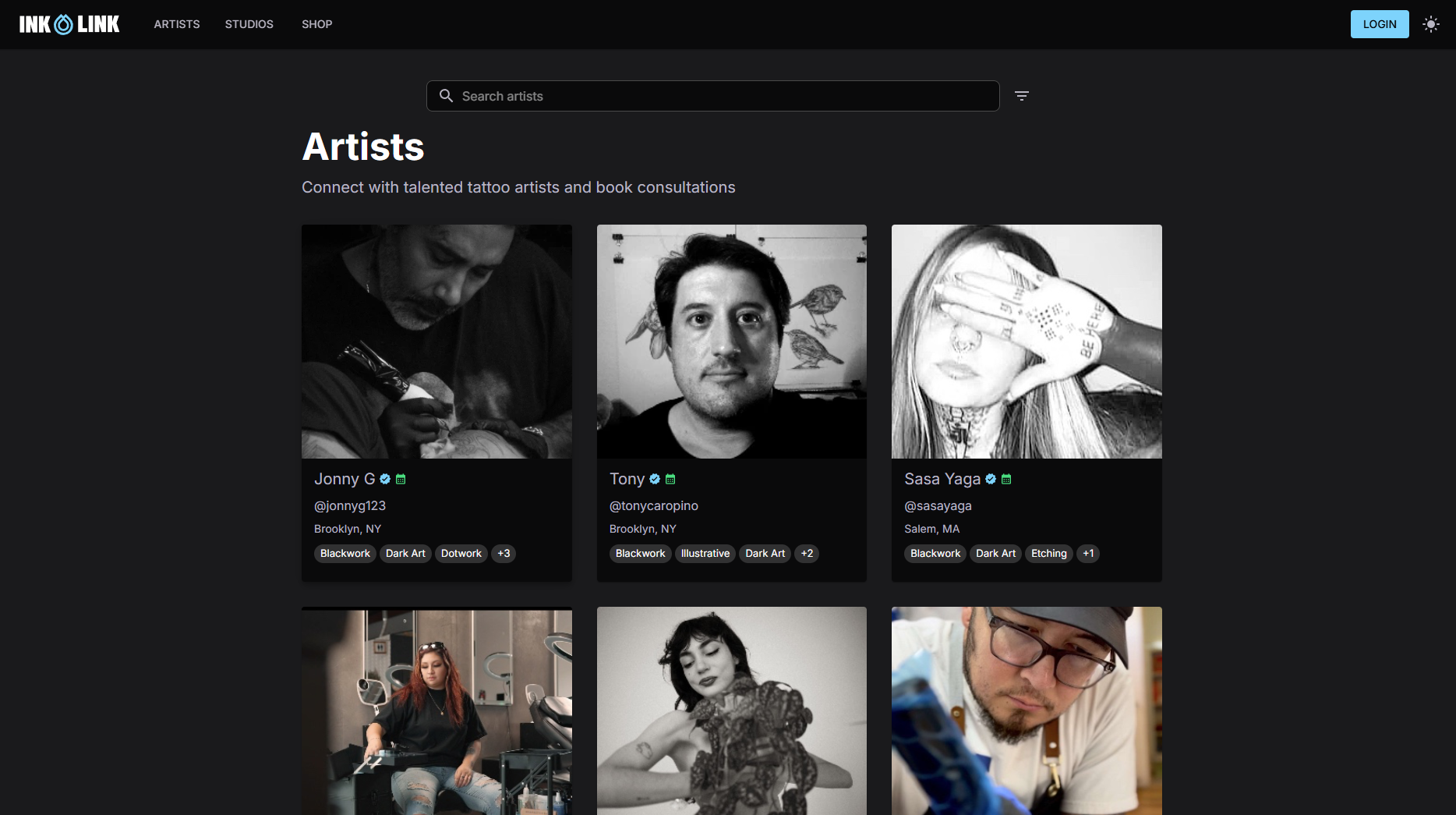
Ink link connects artists and studios with clients who are actively searching for their next tattoo. Studios on the Ink link platform can pair their published guides with their booking pages, so clients read your aftercare advice, style breakdowns, and placement tips right before they book. That combination of education and easy booking is what turns a curious visitor into a confirmed appointment. The Ink link platform gives studios the tools to manage bookings, calendars, and client records in one place, so your guides and your operations work together rather than separately.
FAQ
Why should tattoo studios publish guides?
Published guides build client trust, reduce pre-appointment anxiety, and improve aftercare outcomes. Studios that publish guides also rank higher in local search results over time.
What should a tattoo aftercare guide include?
A strong aftercare guide covers washing instructions, moisturizing steps, sun and water avoidance, and warning signs of infection. Cleveland Clinic recommends watching for red streaks, fever, and unusual swelling.
How do tattoo guides improve infection control?
A 2026 study found that higher education levels among practitioners correlate with significantly better infection control practices. Published guides reinforce those standards across staff with varying training backgrounds.
Do tattoo guides help with local SEO?
Published guides target long-tail search queries that social media posts cannot capture. Content marketing through guides creates compounding search visibility that grows steadily over months and years.
How often should studios update their tattoo guides?
Studios should review and update guides at least once a year, or whenever healing research, product recommendations, or studio protocols change. Outdated guides can create confusion and undermine client trust.