Why Mobile Bookings Matter for Tattoo Clients

TL;DR:
Mobile bookings now dominate tattoo appointment scheduling, with over 60% of reservations completed on smartphones.
Optimizing for speed, design, instant confirmation, and mobile payments drastically improves booking conversion and reduces no-shows.
Mobile booking is the standard method for scheduling tattoo appointments, with over 60% of reservations now completed on smartphones. That shift is not a trend to watch. It is the current reality for every tattoo studio and every client looking to lock in a session. Understanding why mobile bookings matter means understanding how clients actually behave: they browse artist portfolios on their phones, fall in love with a flash design, and want to book right then. Any friction in that moment costs studios real appointments. Platforms like Ink link and Reservio are built around this reality, giving clients a path from discovery to confirmed booking without ever switching devices.
Why mobile bookings matter: the technology behind them
Mobile booking technology is not just a desktop website shrunk to fit a smaller screen. It is a purpose-built experience designed around how people actually use their phones to schedule services.

The most critical factor is speed. 53% of mobile users abandon a page that takes more than 3 seconds to load. That number means a slow booking page does not just frustrate clients. It actively kills completed appointments. Tattoo clients expect booking pages to load in under 2 seconds on a cellular connection. Every extra second of delay reduces the chance they complete the booking.
Beyond speed, the physical design of a booking flow matters more than most studios realize. Thumb-friendly controls are not a nice-to-have feature. They are a requirement. Mobile booking UX built around large tap targets, minimal text input, and no modal popups blocking the screen keeps clients moving through the process. Small buttons, required phone number fields, and pop-up overlays are the most common reasons clients abandon a booking before confirming.
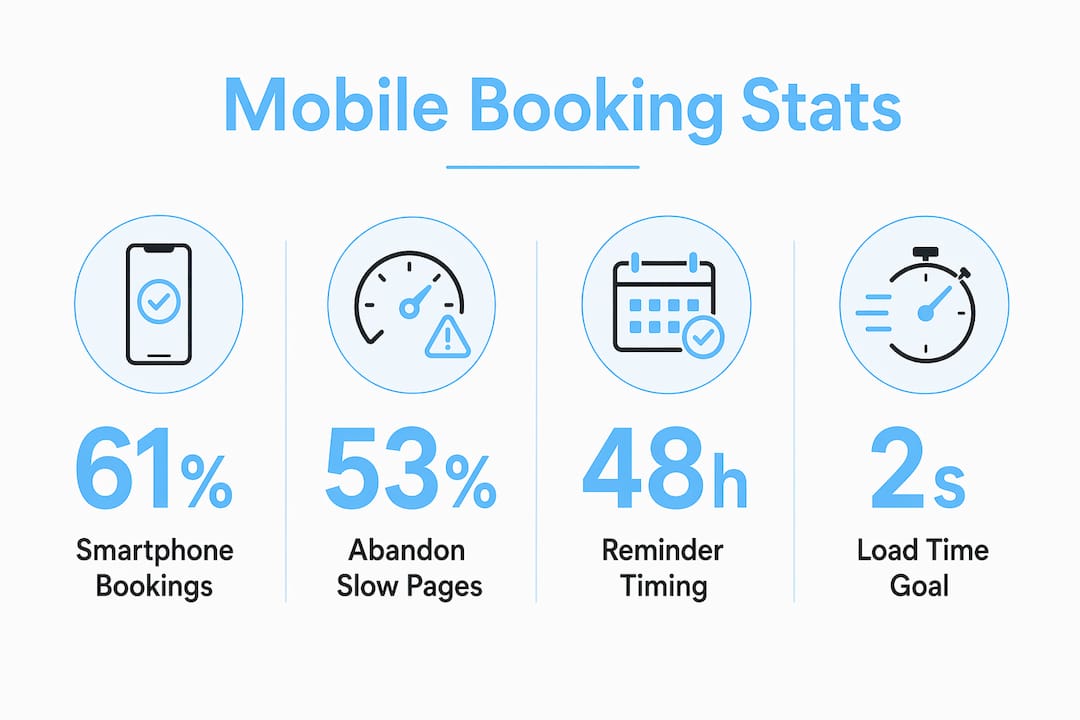
Instant confirmation is the third pillar of effective mobile booking technology. When a client taps “confirm,” they expect an immediate response on their phone. Platforms like Ink Link deliver 24/7 self-booking with automatic confirmation messages and appointment reminders sent directly to the client’s phone. That automation reduces no-shows and removes the need for studios to manually follow up.
Mobile payment integration completes the flow. Digital wallets like Apple Pay and Google Pay let clients pay a deposit in two taps without typing a card number. That single feature removes the biggest friction point at the end of the booking process.
-
Fast load times: Pages must load in under 2 seconds on mobile networks to hold client attention.
-
Thumb-first design: Large tap targets, dropdown selectors, and pre-filled fields replace small links and long forms.
-
Instant confirmation: Automated messages sent immediately after booking build client trust.
-
Automated reminders: Text or push notifications before the appointment reduce no-shows without staff effort.
-
Mobile payments: Digital wallet support removes card entry friction at the deposit step.
Pro Tip: Test your studio’s booking page on a real phone using a cellular connection, not Wi-Fi. The experience your clients get on LTE is often significantly slower than what you see on your studio’s broadband.
What makes mobile outperform desktop for tattoo appointments?
Smartphones now hold 61.45% of the online booking market. That share reflects a clear behavioral pattern: clients research on their phones and expect to finish the booking there too. The problem is that many studios still run booking systems designed for desktop browsers.
The gap between research and completion tells the real story. 65% of clients research tattoo artists on mobile, but far fewer complete the booking on the same device. The drop-off happens because desktop-centric booking funnels force clients to switch devices to finish the process. That device switch is where studios lose appointments. A client who has to open a laptop to complete a booking they started on their phone will often just not bother.
“The gap between researching on mobile and booking on mobile is not a client motivation problem. It is a design problem. Fix the funnel, and the bookings follow.”
The conversion rate difference between optimized and unoptimized mobile booking is stark. Mobile conversion rates can run 40–60% lower than desktop rates when booking widgets are not designed for mobile screens. That gap closes almost entirely when studios switch to a mobile-first booking tool.
| Factor | Desktop booking | Mobile booking (optimized) |
|---|---|---|
| Client research behavior | Less common starting point | Primary research device |
| Booking completion rate | Higher on legacy systems | Equal or higher when mobile-first |
| Device switching required | None | None when fully mobile-optimized |
| Conversion drop risk | Lower | 40–60% lower if not optimized |
| Availability | Business hours dependent | 24/7 self-booking |
| Payment friction | Card entry on keyboard | Digital wallet, two taps |
The immediacy factor is what gives mobile its real edge. A client scrolling through an artist’s portfolio at 10 p.m. on a Sunday can book a session right then. A desktop-dependent studio misses that moment entirely. Mobile booking captures intent at the exact moment it peaks.
How mobile bookings improve client experience and studio operations
Mobile booking changes the tattoo appointment experience from the client’s first search to the day of the session. The benefits run in both directions: clients get convenience, and studios get efficiency.
For clients, the biggest win is 24/7 availability. Mobile self-booking means a client does not need to call during business hours, wait for a DM reply, or hope the studio’s email is monitored. They open the app or booking page, pick a time, confirm, and they are done. That independence is what modern clients expect from any service they book.
The experience gets even better when portfolio viewing, placement consultation, session length selection, and intake forms all live in one mobile flow. Clients can browse an artist’s work, choose their design, pick a session length, fill out their health intake form, and pay a deposit without leaving the app. That kind of bundled experience builds trust before the client ever walks through the studio door.
-
24/7 booking access: Clients book at any hour without waiting for studio staff to respond.
-
Instant confirmation: Immediate booking confirmation removes uncertainty and builds confidence.
-
Automated reminders: Text or app notifications before the appointment reduce forgotten sessions.
-
Portfolio and intake in one flow: Clients review work, select designs, and complete forms in a single session.
-
Deposit collection at booking: Studios secure commitment upfront, reducing last-minute cancellations.
For studios, the operational gains are just as significant. Automated reminders sent through platforms like Ink link reduce no-shows without any staff involvement. Artists spend less time on scheduling logistics and more time on their craft. Studios using Ink link’s booking tools can manage deposits, calendar slots, and client records from a single dashboard, whether they are at the studio or not.
Pro Tip: Bundle your intake form directly into the booking confirmation flow. Clients who complete their health and design information at booking time arrive prepared, which shortens consultation time and keeps your schedule running on time.
The no-show reduction benefit deserves specific attention. Automated reminders sent 48 hours and again 24 hours before an appointment give clients enough notice to reschedule if needed. That window protects the artist’s time while keeping the client relationship positive.
What to look for in a mobile tattoo booking platform
Not every booking tool delivers the same mobile experience. Choosing the wrong platform means your clients hit friction at exactly the moment they are ready to commit.
These are the features that separate a genuinely mobile-ready booking platform from one that just technically works on a phone:
-
Mobile-first design. The platform should be built for phones, not adapted from a desktop layout. Look for large buttons, simple navigation, and a booking flow that requires minimal scrolling.
-
Fast load times on cellular networks. Test the platform on a real phone using LTE or 5G. If it takes more than 2 seconds to load the booking page, clients will leave before they book.
-
Minimal data entry. The fewer fields a client has to type, the more likely they are to complete the booking. Platforms that use dropdowns, date pickers, and pre-filled options outperform those with long text forms.
-
Integrated mobile payments. Support for Apple Pay, Google Pay, and card-on-file options removes the biggest friction point at the deposit step.
-
Automatic reminders and confirmations. These should be built in, not add-ons. Every booking should trigger an immediate confirmation and a pre-appointment reminder without manual setup.
-
Calendar sync. Two-way sync with Google Calendar or Apple Calendar keeps artists and clients aligned without double-booking risk.
-
Portfolio and flash browsing. The best platforms let clients browse artist work and book in the same session, which shortens the path from interest to appointment.
| Feature | Why it matters |
|---|---|
| Mobile-first UI | Reduces drop-off from poor design |
| Sub-2-second load time | Keeps clients on the page through the booking |
| Digital wallet support | Removes card entry friction at deposit |
| Automatic reminders | Cuts no-shows without staff effort |
| Integrated portfolio | Connects discovery to booking in one flow |
Ink link is built around all of these requirements. Clients can browse tattoo studios and artists, view portfolios and flash, and book appointments from their phones without switching tools or devices.
Key Takeaways
Mobile bookings are the primary channel for tattoo appointment scheduling, and studios that optimize for mobile capture more clients, reduce no-shows, and run more efficiently than those relying on desktop-first tools.
| Point | Details |
|---|---|
| Mobile is the dominant channel | Smartphones drive over 61% of online bookings, making mobile optimization non-negotiable. |
| Speed determines completion | Pages loading over 3 seconds lose more than half of mobile visitors before they book. |
| Design drives conversion | Thumb-friendly controls and minimal typing can close a 40–60% mobile conversion gap. |
| Automation reduces no-shows | Instant confirmations and automated reminders cut missed appointments without staff effort. |
| Bundled flows build trust | Combining portfolio, intake, and payment in one mobile session increases client confidence. |
What I’ve learned watching studios lose bookings they should have kept
I have watched tattoo studios with genuinely talented artists lose clients at the booking step. Not because of pricing. Not because of style. Because their booking page was slow, the buttons were too small, or the form asked for too much information before the client felt ready to commit.
The studios that get mobile booking right share one habit: they treat the booking flow as part of the creative experience, not an administrative afterthought. When a client is excited about a design they just saw in an artist’s portfolio, that excitement is the highest-intent moment in the entire client relationship. A clunky booking form at that moment is the equivalent of a bad first impression.
The most common mistake I see is separating portfolio browsing from booking. A client who has to leave an artist’s Instagram, find the studio website, navigate to a booking page, and then re-enter all their information has already lost momentum. The studios that bundle discovery and booking into one mobile flow, the way Ink link does, convert that excitement into a confirmed appointment instead of a “maybe later” that never comes back.
The second mistake is underestimating deposits. Studios that collect a deposit at booking see dramatically fewer no-shows than those that do not. Mobile payment support makes that deposit collection frictionless. A client who pays a deposit on their phone in two taps is a client who shows up.
My honest advice: book a test appointment on your own studio’s mobile booking page right now. Go through the full flow on your phone, on cellular. If anything feels annoying or slow, your clients feel it too. Fix those friction points before they cost you another booking.
— Matthew
Ink link makes mobile tattoo booking work for you
Tattoo clients book on their phones, and Ink link is built for exactly that. The platform gives clients 24/7 access to artist profiles and studios, with portfolio browsing, flash discovery, and appointment booking all in one mobile flow.
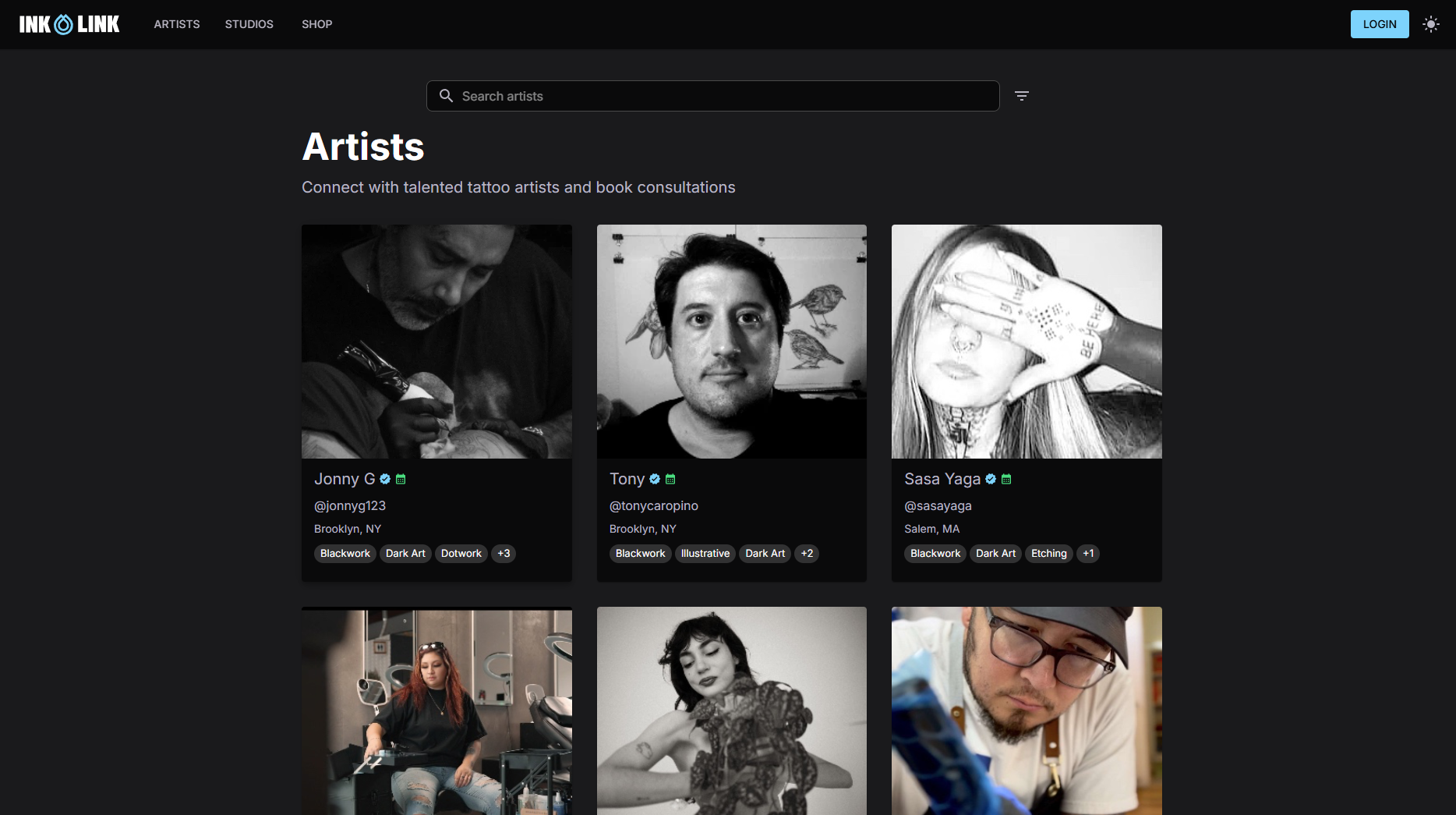
Ink link sends instant booking confirmations and automated reminders so clients show up prepared and artists stay focused on their work. Studios manage their calendars, deposits, and client records from a single place. Whether you are a client ready to book your next piece or a studio looking to capture more appointments, Ink link connects you without the friction. Find your next artist and book directly from your phone today.
FAQ
Why do mobile bookings matter for tattoo appointments?
Mobile bookings matter because over 60% of clients research and book services on their phones. A mobile-optimized booking flow captures client intent at the moment it peaks, before they switch devices or lose interest.
How does page speed affect tattoo booking completion rates?
53% of mobile users abandon pages that take more than 3 seconds to load, and each additional second of delay can reduce conversions by up to 20%. Fast-loading booking pages are one of the highest-impact improvements a tattoo studio can make.
What is the biggest reason clients abandon mobile booking forms?
Poor mobile UX causes most drop-offs. Small tap targets, required phone number fields, and modal popups blocking the screen are the most common reasons clients leave before confirming. Platforms designed with thumb-friendly controls and minimal typing reduce abandonment sharply.
Can mobile booking reduce no-shows at tattoo studios?
Yes. Automated reminders sent 24–48 hours before an appointment, combined with upfront deposit collection at booking, significantly reduce no-shows without requiring any manual follow-up from studio staff.
What features should a tattoo studio look for in a mobile booking platform?
The most important features are sub-2-second load times, thumb-friendly design, digital wallet payment support, automatic confirmations and reminders, and integrated portfolio browsing. Platforms like Ink link combine all of these in a single mobile-ready tool built specifically for tattoo studios and clients.