What Is Collaborative Tattooing? A Complete Guide
TL;DR:
- Collaborative tattooing involves artists and clients working together to create personalized designs. It emphasizes communication and active participation to produce meaningful, well-suited tattoos, especially for large-scale or complex projects.
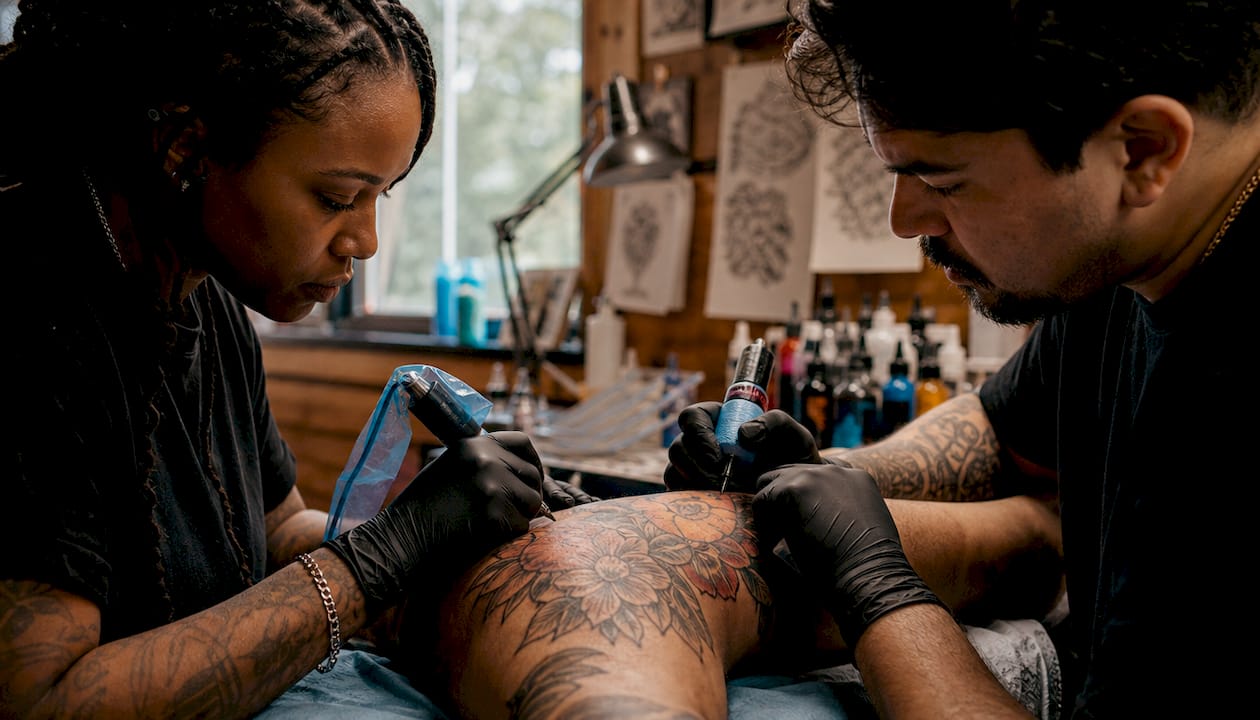
Collaborative tattooing is defined as a practice where two or more tattoo artists work together on a single piece, or where an artist and client co-create the design before and during the appointment. The industry recognizes two distinct forms: multi-artist execution on large-scale projects and artist-client co-creation throughout the design process. Both forms share one goal: producing a tattoo that fits the person wearing it, inside and out. As tattoo culture matures in 2026, collaborative methods have moved from niche practice to an expected standard at quality studios. Platforms like Ink link make it easier than ever to find artists who specialize in this approach, browse their portfolios, and book a consultation that starts the process right.
What is collaborative tattooing, and what are its main types?
Collaborative tattooing takes two distinct forms, and understanding both helps you choose the right approach for your next piece.
Artist-to-artist collaboration
The first form involves two or more tattoo artists working on the same tattoo. This is generally reserved for complex, high-impact projects like full sleeves, back pieces, and extended leg compositions. One artist might handle portraiture while another executes botanical elements, each contributing their strongest skill set to a unified design. The result is a piece that no single artist could produce alone, at least not with the same depth of technical range.
Artist-client co-creation
The second form centers on the relationship between the artist and the person getting tattooed. Rather than the artist disappearing for weeks and returning with a finished design, the client participates actively in every phase. Consultations replace “snatched conversation” models, involving structured client involvement before the design is finalized. This approach treats the client’s story, emotional meaning, and personal aesthetic as raw material the artist shapes into a tattoo.
How the two forms compare
| Point | Artist-to-artist | Artist-client co-creation |
|---|---|---|
| Who collaborates | Two or more tattoo artists | One artist and the client |
| Typical scale | Full sleeves, back pieces, large compositions | Any size, from small pieces to full projects |
| Design workflow | Artists divide sections by specialty | Sketches, mockups, and feedback rounds |
| Primary benefit | Blended technical skill sets | Personal meaning and anatomical fit |
| Common outcome | Technically complex, multi-style pieces | Deeply personal, well-placed tattoos |
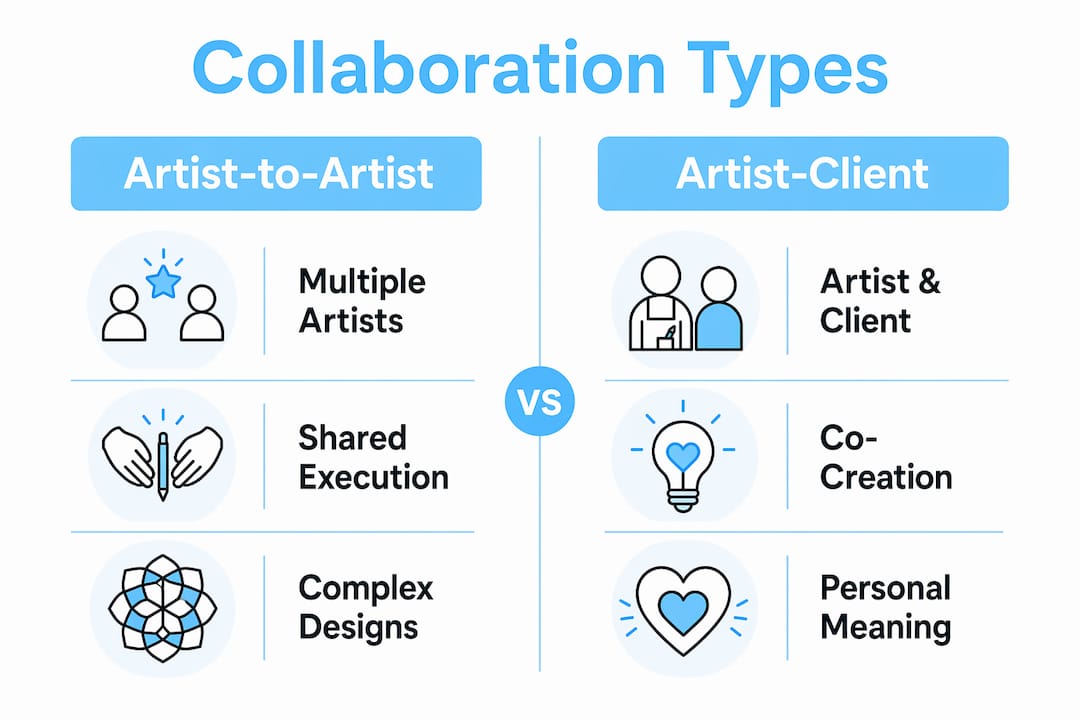
Both forms share a commitment to communication and mutual respect. The difference is who sits at the table during the creative process.
How does the collaborative tattooing process typically work?
The collaborative tattooing process follows a structured sequence that replaces guesswork with genuine dialogue. Here is how it typically unfolds from first contact to finished tattoo.
-
Initial consultation. You meet with the artist, either in person or virtually, to discuss placement, size, meaning, and reference images. This conversation is the foundation. The artist listens for the emotional core of what you want, not just the visual description.
-
Reference gathering. You collect images, words, or objects that represent your vision. These do not need to be tattoo photos. Paintings, fabrics, photographs, and even song lyrics all give the artist useful material to interpret.
-
Sketch or digital mockup phase. The artist produces an initial sketch or digital rendering based on your consultation. Digital mockups and multiple feedback rounds are now standard at quality studios, replacing the old model where clients saw the design for the first time on appointment day.
-
Feedback and refinement. You review the draft and share honest reactions. This is where the collaboration becomes real. A good artist welcomes specific feedback, such as “the flower feels too large” or “I want the linework heavier,” and adjusts accordingly.
-
Anatomy check. Before finalizing the stencil, the artist considers how the design interacts with your body. Curves, muscle groups, and skin texture all affect how a tattoo reads. Adjustments may include resizing, repositioning, and modifying to avoid flat or sticker-like effects.
-
Appointment-day flexibility. Many artists intentionally hold final design decisions until the day of the appointment. Artist Ray Angulo argues that designing on appointment day empowers both artist and client to adapt in real time, improving the final result. This prevents the “sticker effect” where a pre-made design sits awkwardly on the body.
-
Execution and check-ins. During the session, the artist pauses at key stages to confirm the work matches your expectations. You stay engaged, not passive.
Pro Tip: Bring three to five reference images that represent the feeling you want, not just the style. An image of morning light through trees communicates mood just as clearly as a tattoo photo, and it gives your artist more creative room to work.
Advanced studios now offer virtual try-on consultations that let clients live with a digital mockup for days before approving it. This reduces anxiety and last-minute changes significantly. The tattoo consultation process at forward-thinking studios treats this preview phase as non-negotiable, not optional.
Why is collaborative tattooing considered a superior method?
Collaborative tattooing consistently produces better outcomes for both clients and artists. The reason is straightforward: a tattoo designed with your direct input fits your life, your body, and your story in ways a generic design never can.
Active client participation during sketching or mockup phases is the single most effective way to reduce regret. Regret in tattooing almost always traces back to a gap between what the client imagined and what ended up on their skin. Collaboration closes that gap before the needle touches skin.
“Every tattoo is shaped by both the artist’s skill and the client’s emotional input. Collaboration is not a courtesy — it is the foundation of realism tattooing. When emotional meaning and artistic precision align, the result is a tattoo that feels inevitable, like it could not have existed any other way.” — Artist Roudolf Dimov, on how collaboration shapes realism tattoos
The technical benefits are equally significant. A tattoo designed with anatomy in mind ages better, reads more clearly, and flows naturally with the body’s contours. Artists who align the tattoo with body structure, lighting, and emotional meaning produce work that holds up over decades, not just years.
Collaboration also changes the emotional experience of getting tattooed. When you understand why every element of your design exists, the appointment feels meaningful rather than stressful. That emotional clarity carries into how you wear the tattoo for the rest of your life.
Pro Tip: If your artist presents a design you feel uncertain about, say so clearly and specifically. “I love the composition but the shading feels too dark” is far more useful than “I’m not sure about it.” Specific feedback leads to better revisions and a stronger final piece.
Transparent, consultative models that allow clients to preview and approve designs before the appointment have replaced the old “black box” experience at leading studios. The shift reflects a broader understanding: the client’s satisfaction is not separate from the artist’s craft. It is part of it.
What are the common misconceptions and challenges in collaborative tattooing?
Several persistent myths keep people from engaging fully in the collaborative process. Addressing them directly makes the experience less intimidating and more productive.
The biggest misconception is that you need art skills to collaborate. You do not. Clients need not be artists to collaborate effectively. Emotional and meaning-based communication matters far more than technical art knowledge. Telling your artist “this tattoo is for my grandmother, and she loved wildflowers and the color blue” gives them everything they need. You are not designing the tattoo. You are providing the raw material for someone who is.
Common pitfalls in the collaborative process include:
-
Vague briefs. Saying “I want something cool” gives the artist nothing to work with. Bring specific references, even if they are not tattoo images.
-
Passive approval. Nodding along to a design you are not fully happy with leads to regret. Speak up during the feedback phase, not after the appointment.
-
Ignoring anatomy advice. If your artist recommends a different placement for flow reasons, listen. They have seen how designs age on skin. You have not.
-
Expecting instant results. Quality collaborative work takes multiple rounds of feedback. Rushing the process produces weaker outcomes.
-
Confusing collaboration with control. Collaboration means mutual input, not dictating every line. Trust the artist’s expertise within the creative conversation.
The tension between artistic control and client input is real. Some artists prefer to design fully in advance and present a near-finished concept. Others, like Ray Angulo, design on the day of the appointment to maintain maximum flexibility. Neither approach is wrong. The key is finding an artist whose process matches your comfort level, and discussing expectations before you book.
Communication hurdles are the most common source of friction. The solution is simple: ask questions early and often. A good artist welcomes questions. An artist who discourages them is not the right fit for a collaborative project.
How can you best engage in a collaborative tattooing experience?
Getting the most from a joint tattoo design starts well before you walk into the studio. Preparation is the difference between a productive consultation and a frustrating one.
Start by writing down what the tattoo means to you. Not what it should look like, but why you want it. The meaning drives every design decision. If you can articulate the emotional core clearly, your artist can translate that into visual language far more effectively than if you hand them a Pinterest board without context.
During the tattoo sketching and design development phase, stay engaged. Review drafts carefully and give specific feedback. If something feels off, name it. If something feels right, name that too. Positive feedback is just as useful as critical feedback because it tells the artist where to double down.
Choosing the right artist matters as much as the preparation. Look for artists who list collaboration or custom work prominently in their portfolio descriptions. Browse studio pages on Ink link to find artists who offer consultation-based booking, which signals they prioritize the co-creation process. The Ink link booking platform also gives you access to artist portfolios so you can assess their style before reaching out.
Trust is the foundation of the whole process. Once you have chosen your artist and communicated your vision clearly, give them room to create. Micromanaging every line undermines the artistic synergy that makes collaborative work exceptional.
Pro Tip: Ask your artist if they offer a virtual consultation or digital mockup preview before the appointment. Many studios now provide this as standard. Seeing the design on a photo of your actual body placement removes almost all uncertainty before you commit.
Understanding how to handle booking and deposits also helps you approach the process with realistic expectations. Collaborative projects often require a deposit to secure the artist’s design time, and that is a sign of a professional studio, not a red flag.
Key Takeaways
Collaborative tattooing produces better results because it aligns the artist’s technical skill with the client’s personal meaning before the needle ever touches skin.
| Point | Details |
|---|---|
| Two distinct forms | Collaborative tattooing is either multi-artist execution or artist-client co-creation, each with different workflows. |
| Process starts with meaning | Effective collaboration begins with communicating emotional intent, not just visual references or style preferences. |
| No art skills required | Clients contribute through clear communication of meaning and honest feedback, not technical drawing ability. |
| Anatomy drives design | Skilled artists adjust placement, sizing, and flow to suit the body, preventing flat or mismatched results. |
| Preparation determines quality | Clients who prepare references, articulate meaning, and give specific feedback consistently get stronger final tattoos. |
Why collaboration changed how I think about tattoos
The conventional wisdom in tattoo culture used to be that you find an artist you love, trust them completely, and stay out of the way. That advice is not wrong, but it is incomplete. What I have seen over years of watching this industry is that the best tattoos come from a specific kind of trust: the kind built through genuine dialogue, not silence.
The artists who produce the most memorable work are not the ones who disappear and return with a finished design. They are the ones who ask uncomfortable questions. “Why do you want this?” “What does this symbol actually mean to you?” “Have you thought about what this looks like in 20 years?” Those questions feel intrusive until you realize they are the reason the finished tattoo feels inevitable.
Client expectations have shifted significantly by 2026. People want to understand what they are getting before they get it. Virtual mockups, extended consultations, and multi-round feedback processes are now the baseline expectation at quality studios, not a premium add-on. Artists who resist this shift are losing clients to those who embrace it.
The most underrated benefit of collaboration is what it does to the client’s relationship with the finished tattoo. When you helped shape every element of the design, you carry the story of how it came to be. That story is part of the tattoo itself. It makes the piece more meaningful in a way that no amount of technical skill alone can replicate.
Technology will keep pushing this forward. Digital try-ons, remote consultations, and shared design tools are making it possible to collaborate across cities and time zones. The artists who learn to use these tools without losing the human connection at the center of the process will define the next era of tattoo culture.
— Matthew
Finding the right artist for your collaborative tattoo
Knowing what collaborative tattooing involves is one thing. Finding an artist who practices it well is another step entirely.
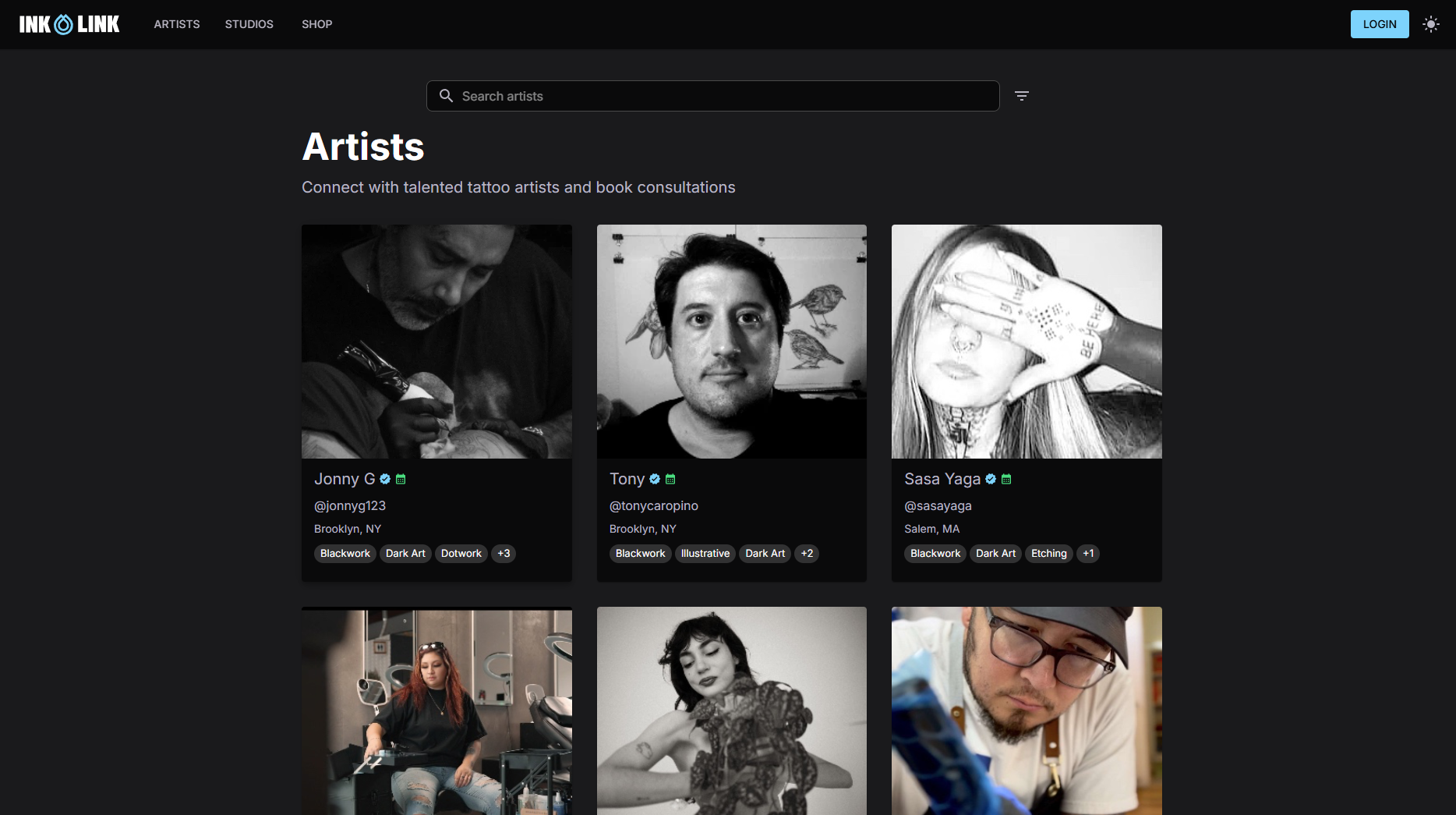
Ink link connects you directly with tattoo artists and studios that specialize in custom, consultation-based work. You can browse artist portfolios, review their style, and book a consultation without back-and-forth emails or phone tag. Studios like Old Traditions Tattoo Parlor on Ink link are a strong starting point if you want artists experienced in collaborative design. The full Ink link studio directory lets you filter by location and specialty so you find the right fit before you commit. Your next meaningful tattoo starts with the right conversation, and Ink link helps you find the person worth having it with.
FAQ
What is collaborative tattooing in simple terms?
Collaborative tattooing is a process where either two or more artists work together on one tattoo, or an artist and client co-create the design through consultations and feedback rounds before and during the appointment.
Do I need to know how to draw to collaborate on a tattoo design?
No. Clients need not be artists to collaborate effectively. Communicating the emotional meaning and personal story behind the tattoo gives the artist everything they need to create the design.
How long does the collaborative tattooing process take?
The timeline varies by project size and complexity. A single custom piece typically involves one to three consultation rounds before the appointment, while large-scale projects like full sleeves may require multiple sessions spanning several months.
Why do some artists design tattoos on the day of the appointment?
Many artists intentionally avoid finalizing designs before the appointment so the stencil can be adapted to the client’s exact anatomy, preventing flat or poorly placed results.
What is shared tattooing between multiple artists?
Shared tattooing, or multi-artist collaboration, involves two or more artists dividing a large tattoo by section or style specialty. Each artist contributes their strongest skill set to produce a unified piece that blends different technical approaches into one cohesive composition.