What Is a Piercing Consultation? Your 2026 Guide
TL;DR:
- A piercing consultation is a 15-minute meeting where a professional piercer evaluates your health, anatomy, and jewelry choices to ensure safe piercing. It covers legal verification, health history, placement approval, and aftercare instructions, forming a critical safety step. A skilled piercer may refuse a placement if your anatomy is unsuitable, offering safe alternatives instead.
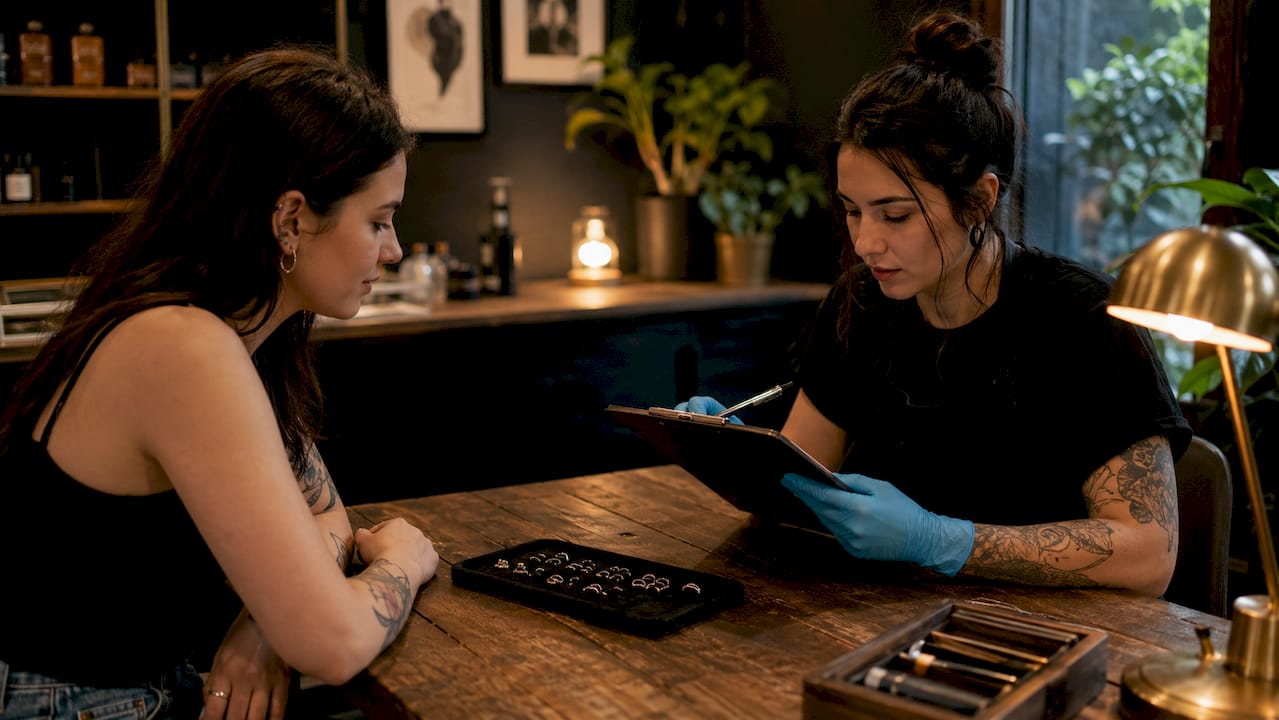
A piercing consultation is a structured, preparatory meeting between you and a professional piercer that happens before any needle touches your skin. This pre-piercing intake, as studios formally call it, covers anatomy assessment, health history, jewelry selection, and legal verification. The consultation lasts about 15 minutes, while the actual piercing takes 1–2 seconds. Those 15 minutes are where every critical decision gets made. Skip them, and you skip the safety net.
What is a piercing consultation and what does it cover?
A piercing consultation is the intake process where a licensed piercer evaluates your health, anatomy, and preferences before proceeding. The industry standard term is “pre-piercing consultation,” though most studios simply call it a consultation. Either way, the purpose is the same: gather the information needed to pierce you safely and correctly.
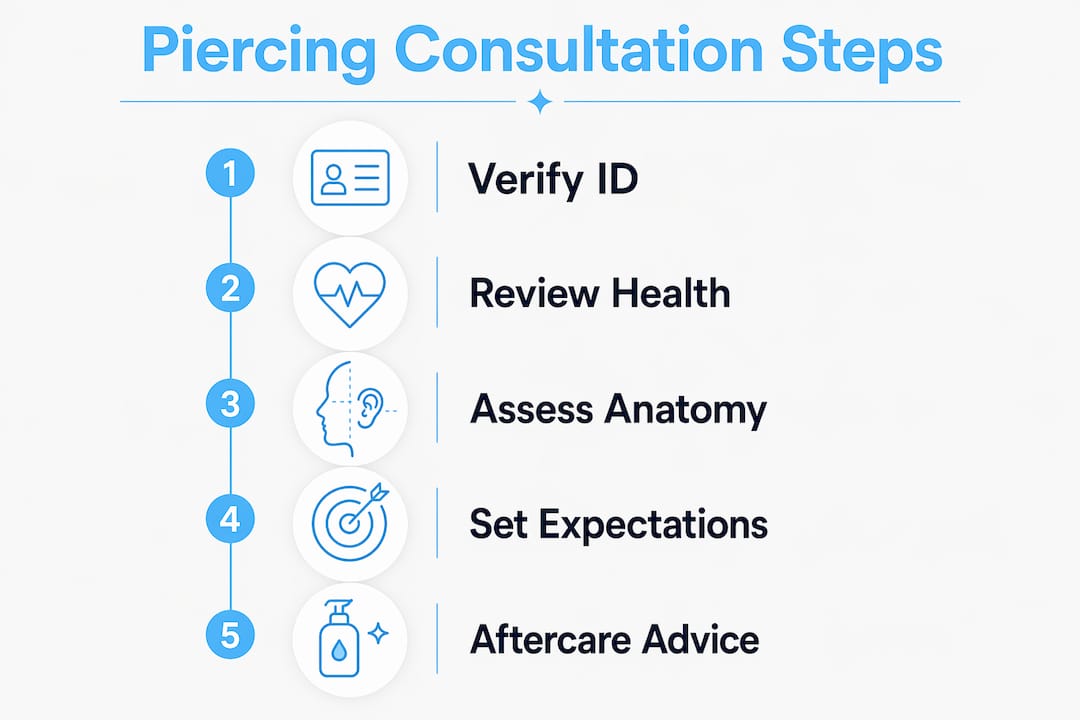
Standard consultations in 2026 cover four mandatory areas: legal age verification, health history review, anatomical suitability assessment, and jewelry selection matched to your specific anatomy. Each area directly affects whether your piercing heals well or causes problems down the road. A studio that skips any of these four steps is cutting corners on your safety.
The consultation also sets expectations. You learn what the procedure feels like, how long healing takes, and exactly what aftercare you need to follow. Walking in informed is the single biggest factor in a positive piercing experience.
What happens during a piercing consultation?
The piercing consultation process follows a clear sequence. Here is exactly what to expect, step by step.
-
Check-in and ID verification. The studio confirms your legal age with a government-issued photo ID. Minors typically need a parent or guardian present with matching ID. No ID means no piercing, regardless of how old you look.
-
Health history review. Your piercer asks about allergies, current medications, bleeding disorders, skin conditions, and any previous piercing complications. This is not small talk. Certain medications thin the blood. Nickel allergies rule out specific jewelry materials. Autoimmune conditions affect healing timelines. Full honesty here protects you.
-
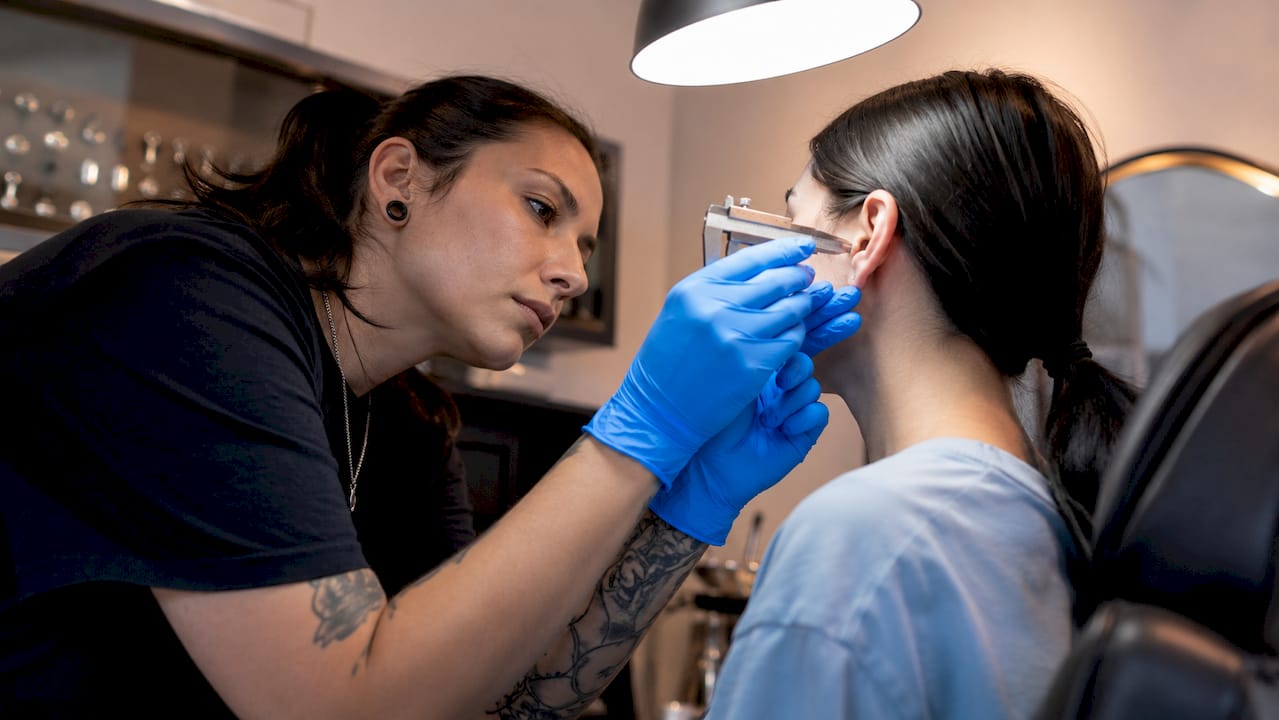
Anatomical assessment. The piercer examines the specific area you want pierced. Ear cartilage thickness, navel depth, nostril shape, and skin elasticity all determine whether a placement is viable. Not every anatomy supports every piercing. This assessment is the most medically significant part of the whole appointment.
-
Placement marking and approval. The piercer marks the exact spot with a surgical pen and shows you in a mirror. Clients must approve placement markers before the needle moves, because adjustments cannot be made once the skin is pierced. Speak up if anything looks off. This is your moment to redirect.
-
Jewelry selection. Your piercer recommends specific jewelry based on your anatomy, the piercing location, and your skin sensitivity. Implant-grade metals and flat-back posts reduce irritation and accommodate swelling during the initial healing phase. Choosing the wrong material or post length at this stage is one of the most common causes of healing complications.
-
Sterilization and hygiene walkthrough. A reputable piercer explains the sterilization process and uses an autoclave for all reusable tools. Reputable studios openly show sterilization equipment to clients on request. If a studio hesitates at this question, that hesitation tells you something important.
-
Questions, pain discussion, and consent. You get dedicated time to ask anything. The piercer explains pain levels, breathing techniques, and what to do if you feel faint. You then sign a consent form confirming you understand the risks and aftercare requirements.
Pro Tip: Bring a written list of your current medications and any known allergies to the consultation. Piercers are not doctors, but this information directly shapes their jewelry and placement recommendations.
Why is the piercing consultation important for your health and healing?
The consultation functions as a mini medical assessment. Its benefits extend far beyond logistics.
“Good consultations transform client anxiety into confidence through education and trust-building communication.” — Shallows Studio, Manchester
The health benefits of a thorough consultation are concrete and well-documented. Here is what a proper pre-piercing intake prevents and provides:
-
Allergy identification. Nickel, cobalt, and certain alloys cause contact dermatitis in a significant portion of the population. Identifying sensitivities before piercing means your piercer selects implant-grade titanium, niobium, or solid gold instead of cheaper mixed metals.
-
Rejection and scarring prevention. Anatomy that does not support a specific placement will reject the jewelry over time, leaving a scar. The anatomical assessment catches this before it happens. A comparable process in cosmetic settings, like professional skin assessments, follows the same logic: evaluate suitability before proceeding.
-
Correct jewelry sizing. Post length matters. A post that is too short compresses the tissue during swelling. One that is too long catches on clothing and delays healing. Your piercer measures and selects the right length during the consultation.
-
Anxiety reduction. Clear, transparent communication during consultation turns nervous clients into confident ones. Knowing exactly what will happen, in what order, and for how long removes the fear of the unknown.
-
Aftercare clarity. The consultation is when you receive your cleaning schedule, product recommendations, and healing timeline. Studios that provide written aftercare instructions at this stage see fewer follow-up complications.
-
Informed consent. You leave the consultation knowing the risks, the healing demands, and your responsibilities. That knowledge is protective.
A professional piercer’s refusal to proceed with a chosen placement due to anatomy concerns is an ethical protection measure, not a rejection. Ethical piercers always suggest alternative placements that your anatomy can support. Hearing “no” from a skilled piercer is a sign you are in good hands.
How to prepare for your piercing consultation
Preparation before the appointment is as important as the consultation itself. The right steps beforehand make the whole process smoother and safer.
-
Eat a full meal 1–2 hours before your appointment. Low blood sugar increases fainting risk during piercing due to adrenaline release. A solid meal, not a snack, is the standard recommendation from professional piercers.
-
Bring valid photo ID. A driver’s license, passport, or state ID works. If you are under 18, your parent or guardian must bring matching ID and be present in the studio.
-
Dress for access. Wear clothing that gives your piercer easy access to the area being pierced. Getting a navel piercing in a tight bodysuit creates unnecessary complications.
-
Prepare your health information. Know your current medications, any metal allergies, and any relevant medical conditions. You do not need a formal medical record, but accurate recall matters.
-
Research jewelry preferences in advance. Knowing whether you prefer titanium or gold, hoops or flat-backs, helps the conversation move faster. Your piercer will guide you, but arriving with preferences saves time.
Pro Tip: Take photos of piercings you like and bring them to the consultation. Visual references help your piercer understand your aesthetic goals and assess whether your anatomy supports that specific style.
What to expect after the consultation
Once the consultation wraps and the piercing is done, your piercer hands you written aftercare instructions. These cover your cleaning schedule (typically a saline spray twice daily), what to avoid (swimming pools, touching with unwashed hands, rotating the jewelry), and your expected healing timeline. Healing times vary widely: earlobe piercings heal in 6–8 weeks, while cartilage piercings take 6–12 months.
Know when to contact your piercer. Redness and mild swelling in the first week are normal. Discharge that is yellow or green, significant swelling after the first few days, or a fever are signals to reach out immediately. A good studio provides a direct contact method for post-piercing concerns.
Understanding the full booking and aftercare process before your appointment helps you arrive prepared and leave confident.
Common piercing consultation questions and how piercers answer them
First-time clients consistently ask the same questions during consultations. Knowing the answers in advance helps you walk in with confidence.
-
Is the consultation free? Most professional studios offer consultations at no charge. Some studios apply a deposit at booking that counts toward the final cost of the piercing. Confirm the policy when you book.
-
Can I bring a friend or parent? Yes, and most studios encourage it for first-timers. A support person can help you stay calm and remember aftercare instructions. Minors are required to have a parent or legal guardian present.
-
What if I do not like the placement marking? Tell your piercer immediately. Placement approval is your last chance to redirect before the needle moves. A professional piercer welcomes this feedback and will re-mark until you are satisfied.
-
How much will it hurt? Pain is subjective and location-specific. Earlobe piercings register as mild for most people. Cartilage, septum, and industrial piercings involve more sensation. Your piercer will describe what to expect for your specific placement and walk you through breathing techniques.
-
What materials are safe for new piercings? Implant-grade titanium (ASTM F136), implant-grade steel (ASTM F138), solid 14k or 18k gold, and niobium are the industry standards for initial piercings. Avoid acrylic, mystery metals, and plated jewelry until fully healed.
-
Can I ask to see the sterilization equipment? Absolutely. Requesting to see sterilization processes is a valid and encouraged way to evaluate studio quality. A reputable studio will show you the autoclave without hesitation.
-
What if the piercer says my anatomy is not suitable? Ask for alternatives. Ethical piercers always have backup options. A comparable consultation model in beauty settings, like a medical spa consultation, follows the same principle: if one approach does not fit your anatomy, a professional redirects rather than proceeds unsafely.
Key takeaways
A piercing consultation is the most important 15 minutes of your piercing appointment, covering anatomy, health history, jewelry selection, and placement approval before any piercing occurs.
| Point | Details |
|---|---|
| Consultation covers four core areas | ID verification, health history, anatomy check, and jewelry selection happen before every piercing. |
| Placement approval is final | Clients must confirm placement marks before the needle moves; corrections cannot be made after. |
| Jewelry material affects healing | Implant-grade titanium, solid gold, and niobium reduce irritation and support healthy healing. |
| Eat before your appointment | A full meal 1–2 hours before reduces fainting risk caused by adrenaline during the procedure. |
| A piercer’s “no” protects you | Refusal based on anatomy is an ethical safeguard, not a rejection, and always comes with alternatives. |
What I have learned from watching consultations go right and wrong
The clients who have the best piercing experiences share one trait: they treat the consultation as the main event, not the waiting room before the main event. They ask questions. They push back on placement marks that do not feel right. They disclose their full health history without editing it down out of embarrassment.
The clients who struggle are usually the ones who rushed through the consultation, said yes to everything without engaging, and then were surprised when healing did not go smoothly. A consultation is only as useful as the honesty and attention you bring to it.
One thing I think the piercing community does not say loudly enough: hearing “no” from a skilled piercer is genuinely good news. It means you found someone who will not damage your body to make a sale. That is rare and worth recognizing. When a piercer declines a placement and offers three alternatives instead, you are sitting across from someone who takes their craft seriously.
My advice is simple. Prepare like the consultation matters, because it does. Write down your questions before you arrive. Bring your health information. Look at the placement mark from every angle before you nod. And if a studio makes you feel rushed or dismisses your questions, walk out. The right studio exists, and the right consultation will make the whole experience feel exciting rather than stressful.
— Matthew
Ready to book your piercing consultation?
Finding a studio you trust is the first real step toward a piercing you will love. Ink link connects you with experienced, vetted studios where transparent consultations are the standard, not the exception.
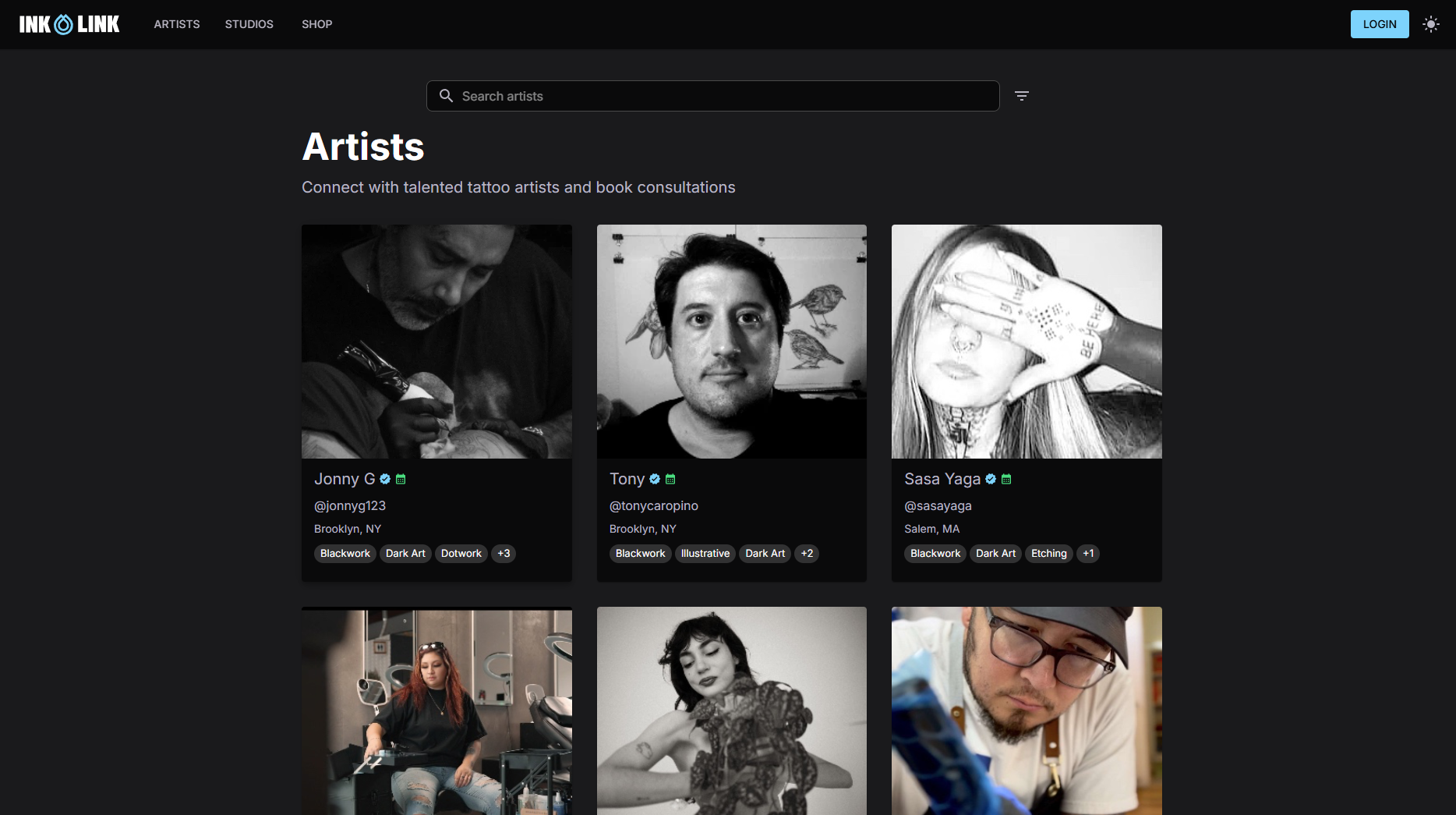
Browse trusted piercing studios on Ink link and read through portfolios, check studio profiles, and book your consultation appointment directly online. No phone tag, no uncertainty about availability. Ink link puts the full booking process in one place so you can focus on the part that matters: showing up prepared and excited for your piercing.
FAQ
What is a piercing consultation?
A piercing consultation is a pre-procedure meeting where a professional piercer reviews your health history, assesses your anatomy, selects appropriate jewelry, and confirms placement before piercing. It typically lasts about 15 minutes.
How long does a piercing consultation take?
Most consultations take approximately 15 minutes. The piercing itself lasts 1–2 seconds after the consultation and placement approval are complete.
Is a piercing consultation always free?
Most professional studios offer consultations at no cost. Some apply a refundable deposit at booking that counts toward the total piercing fee.
What should I bring to a piercing consultation?
Bring a valid government-issued photo ID, a list of current medications and known allergies, and any reference photos of piercings you like. Minors must bring a parent or legal guardian with matching ID.
Can a piercer refuse to do my chosen piercing?
Yes. A piercer can and should decline a placement if your anatomy does not support it safely. This is an ethical protection, and a professional will always suggest suitable alternatives.