What Do Snake Tattoos Mean? Symbolism and Design Guide
TL;DR:
- Snake tattoos symbolize transformation and renewal through the shedding of skin, representing personal change. Cultural traditions and design elements, such as pose and paired symbols, shape the tattoo’s deeper meaning and interpretation. Careful selection of symbolism and design details ensures the tattoo effectively communicates the wearer’s intended message.
Snake tattoos are defined by one core theme: transformation. The snake’s ability to shed its skin makes it one of the oldest symbols of personal renewal across nearly every major culture on earth. If you’re asking what do snake tattoos mean before committing to a design, the honest answer is that the symbolism runs deep, cuts in multiple directions, and changes significantly depending on the cultural tradition and design elements you choose. A snake coiled around a staff reads nothing like a snake wrapped around a skull. Getting that distinction right before you sit in the chair matters.
Snake tattoo symbolism spans Greek medicine, Japanese folklore, Hindu mythology, and Judeo-Christian theology. Each tradition assigns the serpent a different role, from divine healer to dangerous tempter. That range is exactly what makes snake tattoos so compelling and so easy to get wrong. This guide breaks down the primary meanings, cultural roots, and design choices so your tattoo says exactly what you intend.
What do snake tattoos mean at their core?
Snake tattoos symbolize transformation and renewal more than anything else. The shedding of skin is a biological fact that humans have read as a spiritual metaphor for thousands of years. Leaving the old self behind and emerging renewed is the central message most wearers reach for first.
Beyond transformation, snake tattoo significance rests on duality. The same creature that delivers venom also provides the raw material for antivenoms. That contradiction sits at the heart of snake symbolism and gives these tattoos their emotional weight. Wearers who understand this duality tend to choose designs that lean deliberately into one side or the other, rather than leaving the meaning open to interpretation.
Healing and the Rod of Asclepius
The Rod of Asclepius, a single snake coiled around a staff, is the recognized symbol of medicine and healing worldwide. It originates in Greek tradition and appears in the logos of the World Health Organization and countless medical institutions. A tattoo referencing this motif signals healing, recovery, or a connection to the medical field. The meaning is specific and widely understood, which makes it one of the clearest snake designs you can choose.
Protection and guardianship
Many traditions cast the snake as a guardian rather than a threat. A snake coiled protectively around an object or person signals watchfulness and defense. This reading appears in Japanese, Hindu, and ancient Egyptian traditions, where serpents guard sacred spaces and divine figures. Choosing a coiled, protective pose communicates strength without aggression.
Danger, temptation, and mortality
The Judeo-Christian serpent in the Garden of Eden carries the weight of temptation and forbidden knowledge. Some wearers choose this reading deliberately, embracing the edge as a symbol of resilience or defiance. A striking snake, fangs exposed, leans into this darker register. The meaning shifts further when paired with a skull, which adds mortality to the message.
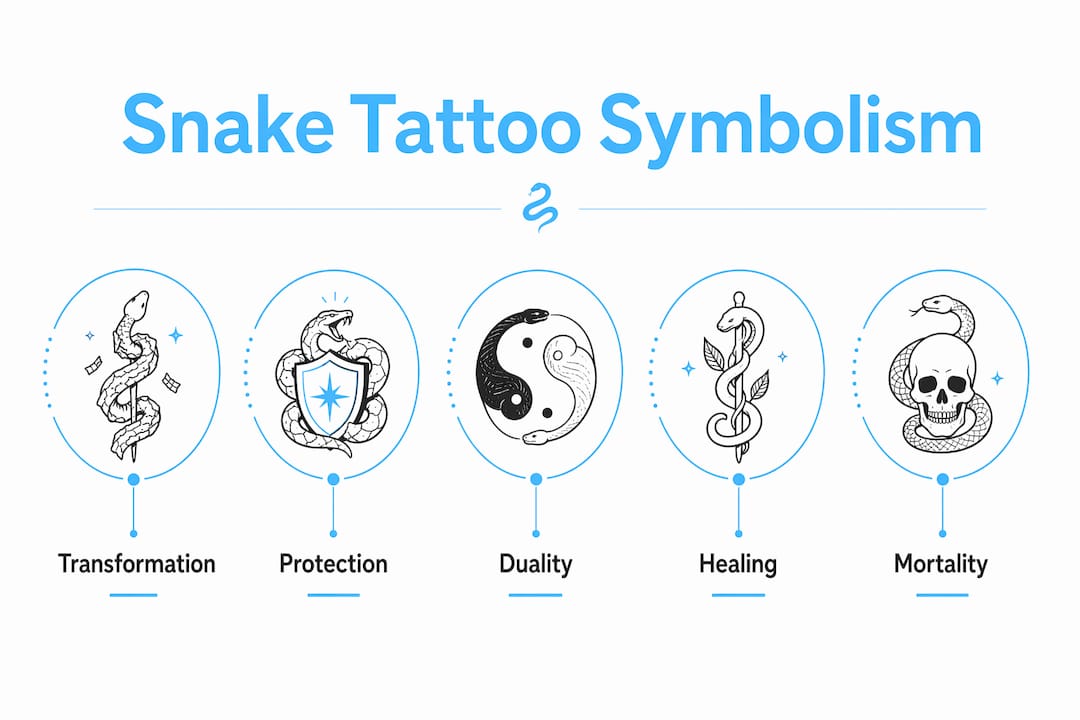
Here is a quick breakdown of the primary symbolic themes:
-
Transformation and renewal: Shedding skin as a metaphor for personal change, recovery, or a new chapter in life
-
Healing: The Rod of Asclepius tradition linking snakes to medicine and recovery
-
Protection: Coiled or guardian poses drawn from Japanese, Hindu, and Egyptian traditions
-
Duality: The snake as both healer and threat, creator and destroyer
-
Danger and temptation: Striking poses and Judeo-Christian references signaling risk or defiance
-
Infinity and cycles: The ouroboros representing time, self-renewal, and continuity
Pro Tip: If you want your snake tattoo to read as positive and protective, avoid a striking pose with open fangs. A coiled or resting snake communicates guardianship far more clearly than an aggressive stance.
How do cultural traditions shape snake tattoo symbolism?
Snake symbolism varies dramatically by cultural context, which means the same design can carry opposite meanings depending on the viewer’s background. Knowing which tradition your design draws from gives your tattoo a clear, defensible meaning.
Here are the five major cultural traditions that shape snake tattoo interpretations:
-
Greek tradition. The Rod of Asclepius and the caduceus both originate in Greek mythology. Asclepius was the god of medicine, and his staff with one coiled snake became the global symbol for healing. A tattoo referencing this tradition communicates medicine, recovery, or transformation through hardship.
-
Japanese tradition. The hebi, or Japanese snake tattoo, represents protection, good fortune, and health. In Japanese folklore, the snake acts as a guardian spirit that wards off illness and brings positive energy to the wearer. Hebi tattoos are typically rendered in bold traditional Japanese style with strong outlines and rich color.
-
Judeo-Christian tradition. The serpent in Genesis represents temptation, forbidden knowledge, and the fall from grace. This is the tradition most Western viewers default to when they see a snake tattoo without additional context. Wearers who want to avoid this reading should pair their design with symbols from other traditions to signal a different intent.
-
Hindu tradition. Naga deities are divine serpent beings associated with water, fertility, and protection. Shiva wears a cobra around his neck as a symbol of power over death and time. Hindu-influenced snake tattoos carry a deeply spiritual meaning tied to divine protection and cosmic balance.
-
Ancient Egyptian tradition. The uraeus, a rearing cobra, was the symbol of royal authority and divine protection in ancient Egypt. It appeared on the crowns of pharaohs and represented the protective goddess Wadjet. A cobra tattoo drawn from this tradition signals authority and sacred guardianship.
Each tradition produces different design cues. A hebi tattoo looks nothing like a uraeus, and a Rod of Asclepius reads nothing like the Garden of Eden serpent. Choosing your cultural reference point first makes every subsequent design decision easier.
What specific designs carry distinct symbolic messages?
Design elements change the meaning of a snake tattoo as much as cultural origin does. Pose, species, and paired imagery each shift the message in specific, readable ways.
The ouroboros
The ouroboros depicts a snake biting its own tail, forming a continuous circle. This ancient symbol appears in Egyptian, Greek, and Norse traditions and represents infinity, cyclical time, and self-renewal. An ouroboros tattoo says that endings and beginnings are the same thing. It is one of the most philosophically loaded snake designs available and reads clearly across cultures.
Two snakes tattoo meaning
A two snakes tattoo symbolizes balance, duality, and harmonious opposing forces. This meaning connects to the caduceus, the staff of Hermes with two intertwined snakes, which represents commerce, communication, and equilibrium. Two snakes facing each other or intertwined signal partnership, the coexistence of opposites, or the balance between two forces in the wearer’s life.
Snake with a dagger, rose, or skull
Paired imagery adds a second layer of meaning. A snake wrapped around a dagger combines the snake’s transformation symbolism with the dagger’s themes of courage and sacrifice. A snake and rose together balance danger and beauty, threat and desire. A snake coiled around a skull pushes into mortality territory, signaling awareness of death or a confrontation with it. Each combination produces a specific emotional register that a solo snake design cannot.
Cobra vs. generic snake shapes
Pose and species affect interpretation directly. A cobra silhouette, hood flared and body raised, implies protection or aggression far more than a generic snake shape does. A rattlesnake tattoo meaning leans toward warning and self-defense, drawing on the rattlesnake’s role as a creature that signals danger before striking. A rattlesnake coiled with its rattle raised communicates “do not tread on me” in a way that resonates with American cultural history as well as personal boundary-setting.
Dragon and snake tattoo meaning
A dragon and snake tattoo meaning typically centers on the conflict or balance between two powerful forces. In East Asian traditions, the dragon represents heaven and the snake represents earth, making their combination a symbol of cosmic balance. In Western interpretations, the pairing often signals a battle between two equal powers. This design works best when the artist understands both symbols and renders them with clear cultural grounding.
Pro Tip: Bring a reference image that specifies the exact pose, species, and any paired symbols when you meet your artist. A clear reference image with pose and style details dramatically improves how accurately your artist captures your intended meaning.
How do you choose a snake tattoo that fits your personal story?
Matching design elements to your personal story produces a tattoo with lasting meaning. Choosing a snake because it looks cool is valid, but choosing one because it maps onto a real experience gives the piece staying power.
Here is how to approach the decision:
-
Identify the experience you want to mark. Recovery from addiction, the end of a difficult relationship, a career change, or a spiritual shift all map naturally onto transformation narratives that snake tattoos carry well. Name the experience first, then find the design that fits it.
-
Choose your cultural reference deliberately. If you have Japanese heritage or a strong connection to Japanese aesthetics, a hebi tattoo carries authentic weight. If your story is about healing from illness, the Rod of Asclepius tradition gives your design a clear, recognized meaning.
-
Think about pose and placement together. A coiled snake fits a circular placement like a shoulder or thigh. A long, sinuous snake works well on a forearm or ribcage. Pose and placement should reinforce each other rather than fight.
-
Consider color carefully. Black and gray snake tattoos read as classic and timeless. Color adds cultural specificity. A green and gold hebi reads as Japanese traditional. A red and black cobra reads as aggressive and bold. Color is not decoration; it is part of the message.
-
Avoid vague serpent symbolism without cultural grounding. A generic evil serpent motif without a clear tradition behind it risks being read as threatening or dark when you intend something else entirely. Specific symbols, like the Asclepius staff or the ouroboros, reduce misinterpretation.
Pro Tip: Write two or three sentences describing what you want your tattoo to mean before your consultation. Sharing that statement with your artist gives them context that a reference image alone cannot provide.
The meaning behind snake tattoos is always a conversation between the wearer’s intent and the viewer’s cultural lens. You cannot control every interpretation, but you can make deliberate choices that push the reading in the right direction.
Key takeaways
Snake tattoo symbolism is most effective when design, cultural tradition, and personal meaning align deliberately rather than by accident.
| Point | Details |
|---|---|
| Transformation is the core meaning | Shedding skin symbolizes personal renewal and is the most universal snake tattoo interpretation. |
| Cultural tradition shapes the message | Greek, Japanese, Hindu, and Judeo-Christian traditions each assign the snake a different role. |
| Design elements change the meaning | Pose, species, paired imagery, and color all shift what a snake tattoo communicates to viewers. |
| Specificity reduces misinterpretation | Choosing a culturally grounded motif like the ouroboros or hebi makes your intended meaning clearer. |
| Personal story anchors the design | Naming the experience you want to mark before choosing a design produces a tattoo with lasting significance. |
Why snake tattoos reward careful thought more than most designs
I have spent years watching people walk into studios with a vague idea of what they want and walk out with something that does not quite say what they meant. Snake tattoos are where this gap shows up most often. The symbol is so loaded, and so culturally contested, that a small design decision can flip the entire reading.
What strikes me most about snake symbolism is how honestly it mirrors human complexity. We contain contradictions. We heal and we hurt. We protect and we threaten. A snake tattoo that leans into that duality, rather than flattening it into a single meaning, tends to age better than one that tries to say only one thing. The ouroboros, for example, does not ask you to choose between endings and beginnings. It holds both at once.
The mistake I see most often is choosing a striking snake because it looks powerful, without realizing that most viewers will read it as aggressive or threatening rather than strong. If your intent is strength, a coiled cobra with a raised hood communicates that far more effectively than an open-fanged strike. The difference is subtle in the sketch and significant on skin.
My honest advice: treat the research phase as seriously as the design phase. Know your cultural reference. Know your pose. Know what the paired symbols add. A tattoo artist can execute a great design, but only you can supply the meaning. Bring both to the consultation and you will leave with something worth keeping for life.
— Matthew
Ready to find the right artist for your snake tattoo?
Choosing the right symbolism is only half the work. The other half is finding an artist who can execute it with the cultural accuracy and technical skill it deserves.

Ink link connects you with vetted tattoo artists and studios whose portfolios you can browse before you book. Whether you are looking for a traditional Japanese hebi, a fine-line ouroboros, or a bold American traditional rattlesnake, you can filter by style and review real work from real artists. Booking through Ink link is straightforward, with secure deposits handled directly on the platform. Browse tattoo artists near you and find someone whose style matches the meaning you want to carry.
FAQ
What does a snake tattoo symbolize?
A snake tattoo primarily symbolizes transformation and renewal, drawn from the snake’s ability to shed its skin. Depending on the design and cultural tradition, it can also represent healing, protection, duality, danger, or infinity.
What does a two snakes tattoo mean?
A two snakes tattoo represents balance, duality, and the coexistence of opposing forces. The design connects to the caduceus tradition and often signals partnership or equilibrium between two aspects of the wearer’s life.
What does a rattlesnake tattoo mean?
A rattlesnake tattoo signals warning, self-defense, and personal boundaries. It draws on the rattlesnake’s behavior of alerting before striking and carries strong associations with American cultural history and the phrase “don’t tread on me.”
What does a dragon and snake tattoo mean?
A dragon and snake tattoo typically represents the balance or conflict between two powerful forces. In East Asian traditions, the dragon symbolizes heaven and the snake symbolizes earth, making the combination a sign of cosmic balance.
Does the pose of a snake tattoo change its meaning?
Yes, pose changes the meaning significantly. A coiled or resting snake communicates protection and guardianship, while a striking snake with open fangs signals aggression or danger. Choosing the right pose is as important as choosing the right species or cultural reference.