Complete guide to types of tattoo machines for artists

TL;DR:
Choosing the right tattoo machine depends on comfort, style, and studio needs.
Coil machines offer traditional control, while rotary and pen-style prioritize ergonomics and versatility.
Experimenting with different machine types can expand an artist’s skills and improve client experience.
Picking the right tattoo machine is one of the most important decisions you’ll make as an artist. The wrong choice can slow your workflow, strain your hand, and affect the quality of every piece you create. The right one feels like an extension of your arm. This guide walks you through the major types of tattoo machines, the key criteria to evaluate each one, and a direct comparison to help you make a confident, informed decision for your studio setup.
Table of Contents
Key Takeaways
| Point | Details |
|---|---|
| Match machine to style | Different tattoo machines excel at line work, shading, and other styles, so choose based on your artistry. |
| Ergonomics impact results | Machines with superior ergonomics reduce fatigue and improve work quality during long tattoo sessions. |
| Maintenance matters | Low-maintenance machines like pen-style or rotary types save time and keep your studio productive. |
| Comparison guides decisions | Side-by-side comparisons help clarify which machine best matches your unique skill level and client needs. |
Key criteria for selecting a tattoo machine
Before you compare machine types, you need a clear framework for what actually matters. Not every criterion carries equal weight depending on your situation.
Here are the most important factors to evaluate:
-
Weight and ergonomics: Long sessions put real stress on your wrist and forearm. A lighter, well-balanced machine reduces fatigue and improves precision over time.
-
Maintenance and reliability: In a busy studio, downtime is money lost. Machines that are easy to clean and less prone to mechanical issues keep your schedule running smoothly.
-
Needle compatibility: Some machines accept cartridge needles, others require traditional setups. Flexibility here can save time between sessions.
-
Adjustability and power range: Voltage adjustments and give settings affect how the machine performs across different skin types and tattoo styles.
-
Style and skill match: Pen-style tattoo machines feature modern ergonomic builds and reduced maintenance, making them great for newer artists, while coil machines reward experienced hands.
Pro Tip: Start with comfort as your top filter. If a machine causes discomfort after 30 minutes, no amount of technical performance will make it worth using long term. Then match your choice to your dominant tattooing style.
With criteria in mind, let’s break down the main tattoo machine types.
Coil tattoo machines: Classic power and control
Now that we know what to look for, let’s examine coil machines, the mainstay of traditional tattooing.
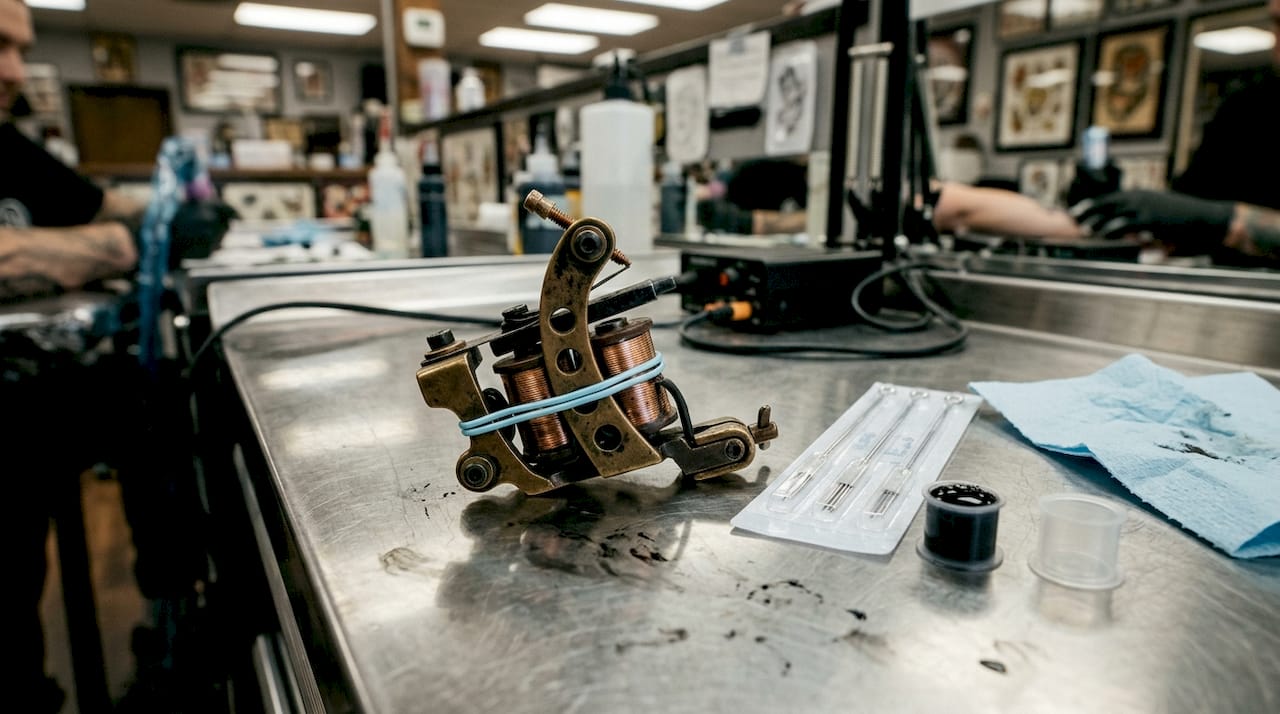
Coil machines use electromagnetic coils to rapidly pull and release a spring-loaded armature bar, which drives the needle up and down. This mechanical process gives artists a tactile, hands-on feel that many veterans swear by.
There are two main coil variants:
-
Liner coil machines: Tuned for speed, these deliver sharp, clean lines with consistent ink flow. They typically run at higher frequencies.
-
Shader coil machines: Built for slower, heavier passes, shaders pack color and create smooth gradients across larger areas.
Coil machines shine when you want maximum control in detailed, traditional, or black-and-gray work. The customizability is a major draw. You can tune spring tension, coil wraps, and contact gap to dial in your preferred feel. That said, traditional non-cartridge machines typically vibrate more than pen-style alternatives, which can be a drawback during extended sessions.
“A well-tuned coil machine is still the gold standard for artists who want to feel every stroke and own every line.” Many experienced professionals continue to choose coil setups for exactly this reason.
The trade-offs are real: coils are louder, require more frequent tuning, and can intimidate newer artists. But for those who invest time in learning them, the payoff in control and artistry is hard to match.
Rotary tattoo machines: Versatility and modern appeal
While coils dominate tradition, rotary machines are favored for their versatility, and here’s what sets them apart.
Rotary machines use a small electric motor to drive the needle in a smooth, circular motion. The result is a quieter, more consistent operation that puts less stress on both artist and client. Pen-style machines are typically rotary-driven, with smoother operation and lower vibration, which is one reason they’ve become so popular in modern studios.
Key benefits of rotary machines include:
-
Lightweight design: Most rotary machines weigh significantly less than coil setups, making them easier to handle during multi-hour sessions.
-
Low vibration: The motor-driven motion produces minimal buzz, reducing hand fatigue and improving client comfort.
-
Low maintenance: Fewer moving parts mean fewer things to adjust or replace.
-
Cartridge compatibility: Most modern rotary machines accept cartridge needle systems, speeding up setup and changeover between sessions.
-
Style range: Rotary machines handle line work, color packing, shading, and blending without needing separate machines.
Pro Tip: Many experienced artists keep both a coil and a rotary machine in their kit. They use coil for bold traditional lines and rotary for color realism or watercolor styles. Switching between them mid-project is more common than you might think.
Pen-style tattoo machines: Ergonomics and the cartridge revolution
As tattooing evolves, pen-style machines are becoming a favorite. Here’s why.
Pen-style machines are designed to mimic a pen for superior comfort, lower vibration, and easier cartridge needle swaps. If you’ve ever finished a long session with a sore wrist and numb fingers, a pen-style machine could genuinely change how you work.
Here’s what makes them stand out:
-
Pencil-grip ergonomics: The cylindrical shape allows a natural writing grip, reducing strain over long tattoo sessions.
-
Cartridge needle system: Needles snap in and out in seconds, cutting transition time between configurations.
-
Quiet operation: Pen-style machines run near-silently, which many clients find far less intimidating than traditional coil buzz.
-
Minimal maintenance: Fewer components mean less cleaning time and lower risk of mid-session mechanical issues.
| Feature | Pen-style machine | Traditional coil machine |
|---|---|---|
| Weight | Light | Heavier |
| Vibration | Very low | High |
| Noise level | Quiet | Loud |
| Needle type | Cartridge | Traditional bars |
| Maintenance | Low | High |
| Learning curve | Gentle | Steep |
Most artists who switch to pen-style report less fatigue and more precise control, especially during fine-detail and portrait work. If you’re planning longer sessions or want to improve the client experience, solid booking and deposit tips paired with the right machine setup make a real difference.
Comparison chart: Which tattoo machine is right for you?
To bring everything together, here’s a direct comparison and decision guide.
Pen-style machines are generally more ergonomic and maintenance-friendly than coil machines, but the best choice really depends on your style, experience level, and studio demands.
| Machine type | Weight | Comfort | Learning curve | Maintenance | Price range |
|---|---|---|---|---|---|
| Coil | Heavy | Lower | Steep | High | $80 to $300+ |
| Rotary | Medium | High | Moderate | Low | $100 to $400+ |
| Pen-style | Light | Highest | Gentle | Very low | $150 to $500+ |
How to choose the right machine for your situation:
-
Identify your primary style. Traditional and black-and-gray artists often favor coil. Realism, watercolor, and versatile artists lean toward rotary or pen-style.
-
Assess your session length. If you’re doing three-plus hour sessions regularly, ergonomics become critical. Pen-style and rotary win here.
-
Consider your studio size. Busy studios benefit from low-maintenance machines. Pen-style cartridge systems speed up turnover between clients.
-
Factor in your experience level. New artists typically build better habits on rotary or pen-style before moving to coil.
-
Set a realistic budget. Entry-level rotary options are solid. Avoid buying the cheapest coil machine available as tuning problems will cost you more in the long run.
For more tools and community insights, the tattoo business blog covers studio growth, client management, and artist best practices.
Our take: Why machine choice shapes artistry more than ever
With all the comparisons in mind, there’s a broader point worth making. Many artists treat machine choice as purely a technical decision. We’d argue it’s also a creative one.
Sticking to a single machine type out of habit or loyalty can quietly limit your range. The tactile feedback of a coil machine builds a certain kind of skill. The smooth flow of a pen-style machine builds another. Artists who experiment across types often discover new techniques they couldn’t access before.
Machine ergonomics also affect client experience in ways that get overlooked. A quieter, smoother machine means a calmer client, and a calm client sits better, making your work easier and cleaner. That connection between equipment comfort and client satisfaction shows up in reviews, repeat bookings, and referrals. Don’t fear newer technology. Embrace whatever tool best supports you and your team.
Find your studio’s perfect tattoo machine with Ink Link
Ready to elevate your craft? Your machine is only part of the equation.
Ink Link helps tattoo artists and studios connect with clients, manage bookings, and grow their business all in one place. Whether you’re building your portfolio, streamlining your schedule, or looking for inspiration, we’ve got the tools to support your work. Discover top artists who are pushing the craft forward, or explore our studio directory to find the right environment for your next step. Your artistry deserves the right platform to back it up.
Frequently asked questions
What are the main differences between coil and rotary tattoo machines?
Coil machines use electromagnetic coils for classic feel and control, while rotary machines are smoother and quieter with less vibration and a motor-driven mechanism.
Are pen-style tattoo machines suitable for all tattooing styles?
Pen-style machines’ ergonomic design and cartridge compatibility suit varied styles, though some artists still prefer coil or rotary machines for specific traditional techniques.
How often should tattoo machines be maintained?
Pen-style machines are lower maintenance compared to coil machines, but all types should be cleaned and serviced regularly to stay safe and functional.
What’s the best tattoo machine for a beginner artist?
Rotaries and pen-style machines are ergonomic and easier to handle for new artists, thanks to low vibration, simple setup, and forgiving learning curves.