The Real Role of Tattoo Photo Galleries for Clients

TL;DR:
Tattoo galleries are essential tools for clients to assess artist skill, style, and authenticity before booking.
Owning a professional gallery on a personal website improves discoverability, booking conversion, and long-term credibility.
Tattoo photo galleries are curated visual collections that serve as the primary decision-making tool for clients choosing an artist. The role of tattoo photo galleries goes far beyond decoration. They verify skill, communicate style, and set honest expectations before anyone sits in a chair. For tattoo enthusiasts, a well-built gallery is the difference between booking with confidence and taking a costly gamble. Artists who present organized, authentic photo showcases attract better clients and build lasting reputations. Platforms like Ink link make it easier than ever to present that work professionally and connect it directly to a booking flow.
How tattoo photo galleries help clients assess artist credibility and style
A tattoo photo gallery is the first place a client goes to judge whether an artist can actually deliver. The images tell a story that words and reviews cannot. Clients who know how to read a portfolio can spot technical skill, style consistency, and honesty in minutes.
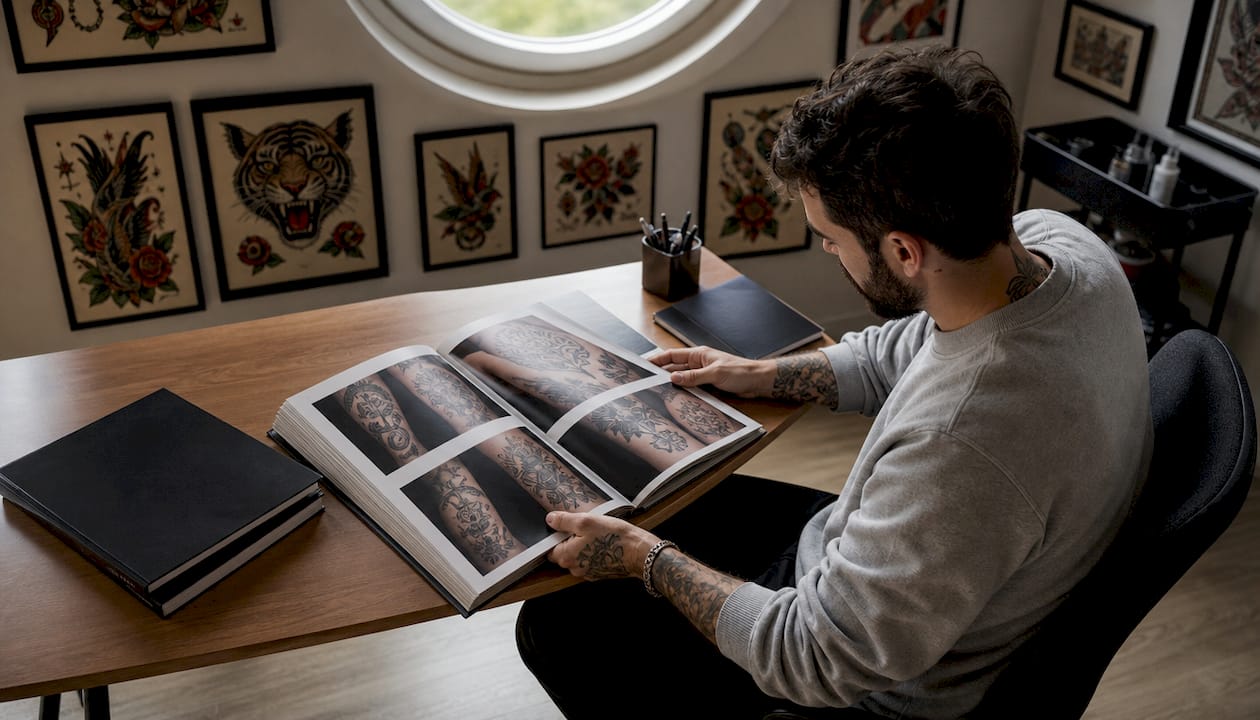
A thorough portfolio review takes about 10 minutes, during which clients check for natural skin texture and signs of heavy editing. That 10-minute window is enough to reveal whether an artist’s work holds up under scrutiny or whether the photos are doing the heavy lifting.
The most common red flag in any gallery is over-editing. Heavy photo editing often masks actual technical errors like shaky lines, uneven shading, or blown-out color. Unnatural skin smoothing and exaggerated saturation are the clearest signs that a photo has been altered beyond honest representation. Understanding how skin type affects photo appearance is also useful here. Clients who want to understand what real healed skin looks like can reference resources on skin and tattoo results to calibrate their expectations before reviewing a portfolio.
Galleries that include tagged client photos add a layer of trust that edited studio shots cannot match. When real clients share their results publicly and link back to the artist, it creates a verifiable record. Cross-checking a gallery against the artist’s social media and Google reviews confirms whether the portfolio reflects consistent, real-world results.
Here is what to look for when reviewing any tattoo gallery:
-
Natural skin texture. Pores, fine lines, and realistic color variation should be visible in the photos.
-
Style consistency. A strong artist shows mastery within a defined range, whether that is blackwork, realism, or traditional American.
-
Healed work. Fresh tattoos look great on everyone. Healed photos reveal how the work actually ages.
-
Volume and variety. A gallery with only five photos raises questions. A gallery with 50+ pieces across different placements shows genuine experience.
-
Client tagging and reviews. Social proof tied directly to gallery images confirms authenticity.
Pro Tip: Run a reverse image search on any portfolio photo that looks too perfect. Stolen artwork appears in galleries more often than most clients expect, and a quick search takes less than 30 seconds.
Organizing galleries by tattoo style improves client navigation and establishes artist specialization. A client searching for a fine-line floral piece does not want to scroll through 80 neo-traditional skulls. Style-specific sections communicate expertise and save everyone time.
How tattoo photo galleries influence inspiration and design decisions
Galleries do more than verify skill. They actively shape what clients want. Browsing a well-curated tattoo photo showcase exposes enthusiasts to styles, placements, and techniques they may never have considered on their own.
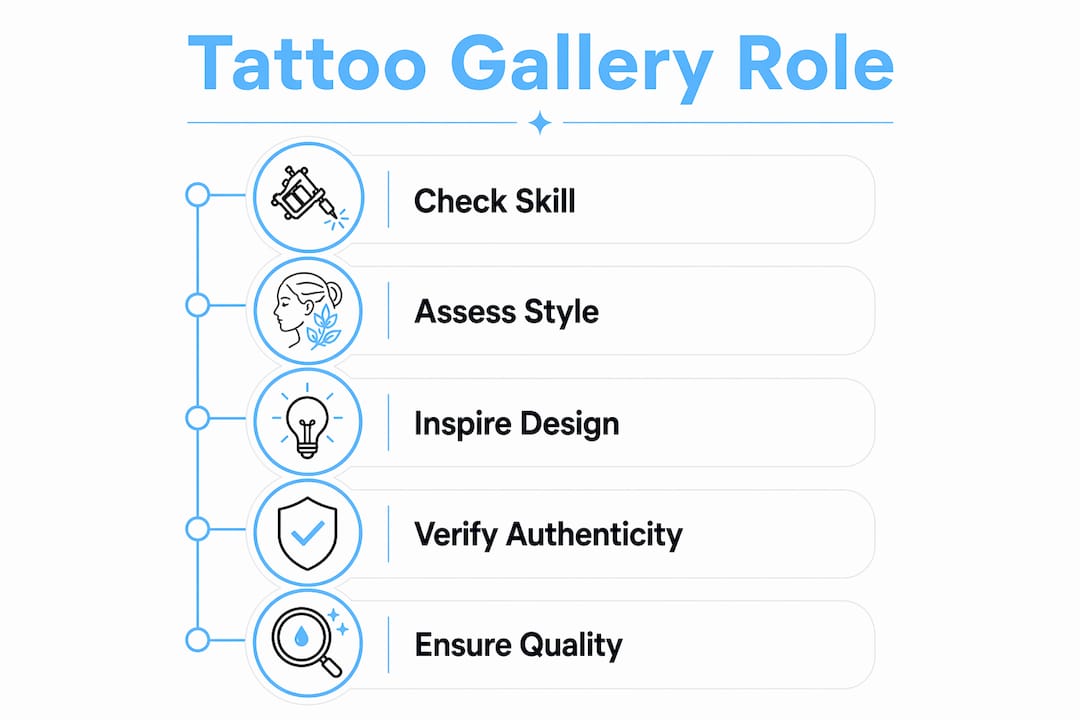
The influence of tattoo imagery on design decisions works through exposure. A client who spends time in a blackwork gallery starts to see the appeal of negative space. A client browsing watercolor pieces begins to imagine soft color washes on their own skin. Galleries do not just reflect demand. They create it.
Here is how galleries guide the full inspiration process:
-
Style discovery. Clients often arrive with a vague idea and leave with a specific style after browsing organized collections. Seeing 30 examples of Japanese traditional work communicates the style’s rules and possibilities far better than any written description.
-
Placement visualization. Photos showing tattoos on forearms, ribs, thighs, and necks help clients picture scale and fit on their own bodies. Placement decisions are among the most common sources of regret, and galleries reduce that risk.
-
Trend awareness. Galleries reflect what is gaining momentum in the tattoo community. Styles like ornamental, ignorant style, and micro-realism spread largely through visual sharing in online galleries and artist portfolios.
-
Healed image expectations. Clients value seeing healed tattoo photos over fresh ink because healed images show true longevity and color retention. A gallery that includes both fresh and healed shots sets honest expectations and reduces post-tattoo disappointment.
-
Augmented reality previews. Some booking platforms and apps now let clients overlay tattoo designs onto photos of their own skin before committing. This technology builds on the foundation that galleries establish by giving clients a personalized preview of the finished result.
Exhibiting tattoo art in galleries shifts perception from decoration to storytelling, which broadens the audience for tattoo art as a whole. When galleries treat tattoos as narrative art rather than body decoration, they attract clients who want meaningful, personal work rather than generic flash.
Pro Tip: When browsing for inspiration, save images by body placement rather than by style. A folder labeled “forearm ideas” gives you a clearer picture of scale and fit than a folder labeled “geometric.”
Why does owning your gallery matter more than social media?
Social media is rented space. Algorithms change, accounts get suspended, and content gets buried. An artist who builds their entire portfolio presence on a single platform hands control of their business to a third party.
Artist websites offer full control over portfolio display, SEO, and booking flows in ways that social media cannot match. A website you own lets you organize work by category, write descriptive copy that ranks on Google, and connect every gallery image directly to a booking form. That combination turns passive browsing into active appointments.
The practical differences between social media portfolios and artist-owned gallery sites are significant:
| Feature | Social media profile | Artist-owned website |
|---|---|---|
| Content control | Platform rules apply | Full owner control |
| SEO and discoverability | Limited, algorithm-dependent | Indexable, keyword-optimized |
| Booking integration | External links only | Native booking and deposits |
| Gallery organization | Chronological feed | Style-sorted, searchable |
| Account risk | Suspension possible | No third-party risk |
| Healed work display | Mixed into feed | Dedicated sections |
Experts caution that relying solely on social media for tattoo portfolios risks business exposure. An account with 20,000 followers can disappear overnight. An owned website with strong SEO continues to generate bookings regardless of platform changes.
Integrated booking and deposit management on an artist’s own site also increases professionalism. Clients who can browse a gallery, read style descriptions, and book in one place convert at higher rates than clients who must switch between platforms to complete the same process. Studios on Ink link like Old Traditions Tattoo Parlor demonstrate how organized gallery presentation and booking integration work together to build client confidence.
Pro Tip: Post your best work on social media for discovery, but always link back to your owned gallery for the full portfolio experience. Social media is your billboard. Your website is your studio.
What makes tattoo photography good enough for a professional gallery?
Photography quality determines whether a gallery builds trust or destroys it. A technically excellent tattoo photographed poorly looks mediocre. A mediocre tattoo photographed with flattering light and heavy filters looks better than it is. Neither outcome serves the client or the artist honestly.
Quality tattoo photography uses natural skin texture, consistent lighting, and avoids heavy retouching to accurately represent the artwork. Photos that show pores and realistic color indicate honest representation. That honesty is what converts a browser into a booked client.
The right equipment makes a measurable difference in gallery quality:
-
Camera body. A DSLR or mirrorless camera captures detail that smartphone cameras still cannot fully replicate, especially for fine-line work and micro-realism.
-
Macro lens. Recommended photography gear includes macro lenses for close-up detail shots that show line quality and shading precision.
-
Lighting setup. Softboxes and reflectors create even, diffused light that eliminates harsh shadows without washing out color.
-
Circular polarizer. This filter reduces shine on fresh tattoos, which can otherwise blow out highlights and obscure detail.
-
Consistent background. A neutral, uncluttered background keeps the focus on the tattoo and creates a professional, cohesive gallery aesthetic.
Tattoo photography ethics are non-negotiable. No heavy retouching or color changes should alter the appearance of the finished tattoo. Artists should always credit photographers, and signed portfolio release forms protect both the artist and the client. A gallery built on honest photography earns long-term trust. A gallery built on filters earns short-term clicks and long-term complaints.
Photography also affects search rankings. Images with descriptive file names, alt text, and accurate color representation perform better in Google Image Search, which drives organic discovery for artists who maintain their own websites.
Key Takeaways
Tattoo photo galleries are the most powerful trust-building and inspiration tool available to both clients and artists, and their quality directly determines booking outcomes.
| Point | Details |
|---|---|
| Galleries verify artist skill | Spend 10 minutes checking for natural skin texture and signs of heavy editing before booking. |
| Healed photos build real trust | Galleries that include healed work show true longevity and set honest client expectations. |
| Owned websites outperform social media | Artist-controlled galleries offer SEO, booking integration, and zero platform risk. |
| Photography quality is non-negotiable | Honest lighting, no heavy filters, and proper gear produce photos that convert browsers to clients. |
| Style organization drives decisions | Galleries sorted by style communicate expertise and help clients find the right artist faster. |
What I’ve learned from watching artists build their galleries
The artists who book consistently are not always the most technically gifted. They are the ones with the most honest, well-organized galleries. I have watched talented artists lose bookings to less skilled peers simply because their portfolio was a chaotic mix of styles with no healed work and questionable photo quality.
The most common mistake I see is treating the gallery as an afterthought. Artists spend hours on a tattoo and 30 seconds photographing it under fluorescent lights with a phone. That photo then represents their work to every potential client who finds them online. The gap between the actual tattoo and the gallery image is where trust breaks down.
The second mistake is over-relying on social media. I understand the appeal. The audience is already there, the posting is easy, and the feedback is immediate. But I have seen artists lose years of portfolio content to account suspensions and algorithm shifts. An owned gallery is not optional for a serious tattoo business. It is the foundation.
The combination that works best is simple: post frequently on social media for visibility, and maintain a clean, organized website gallery for credibility. The social feed brings people in. The website converts them. Artists who treat these as separate tools with different jobs see the clearest results.
One more thing worth saying directly: galleries that include healed work and tagged client photos are not just more trustworthy. They are more interesting. A fresh tattoo is a promise. A healed tattoo is proof. Clients respond to proof.
— Matthew
Ink link makes your gallery work harder for your business
Your portfolio deserves more than a social media feed. Ink link gives tattoo artists and studios a professional space to showcase organized photo galleries by style, connect those galleries directly to a booking system, and collect deposits without chasing clients through DMs.
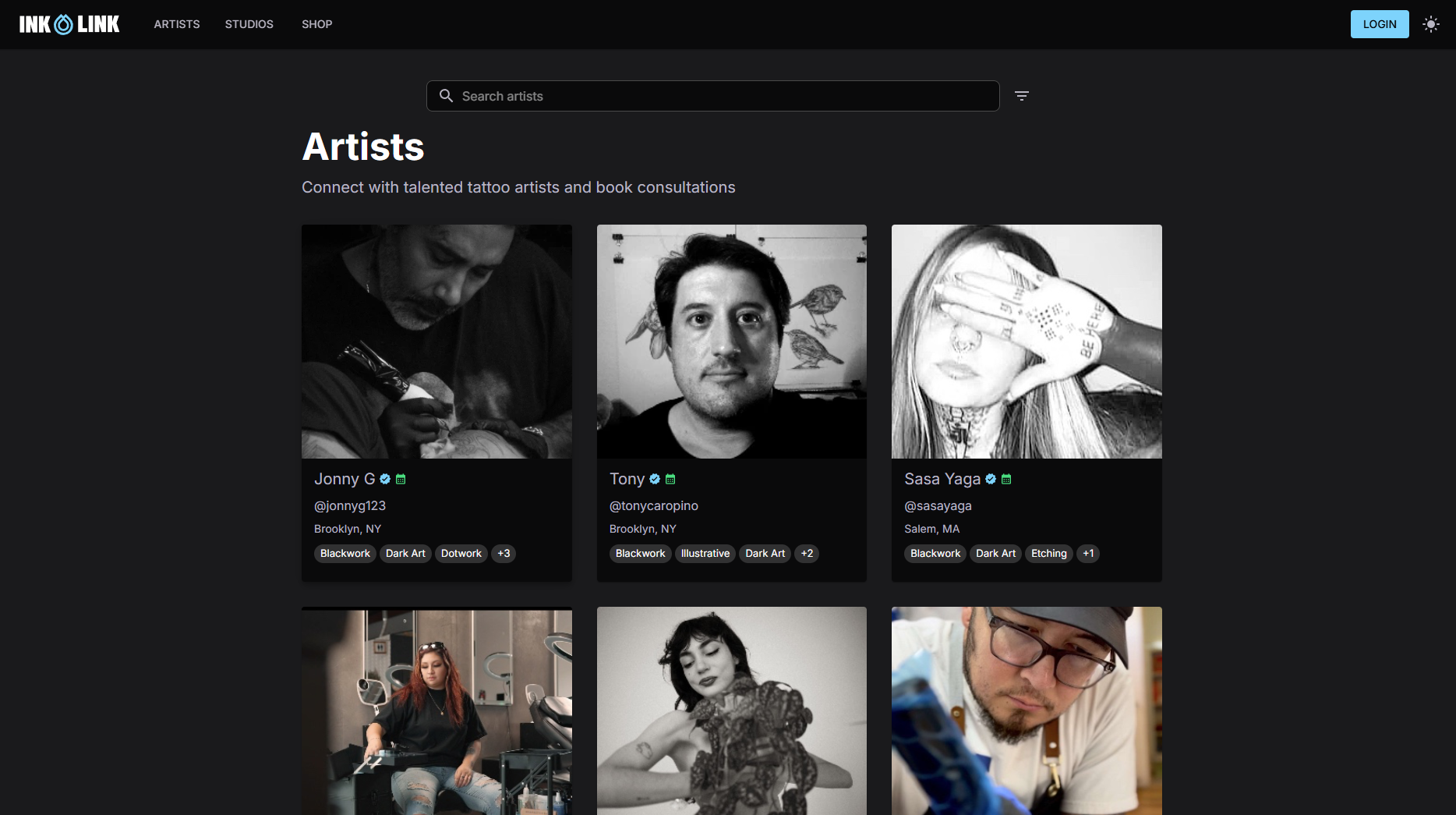
Studios like Too Soon Studio show exactly how a well-presented gallery and a clean booking flow work together to turn browsers into confirmed appointments. Ink link handles the booking, deposit, and calendar management so you can focus on the work that fills your gallery. Browse artist studios on Ink link to see how the platform supports every stage of the client experience, from first impression to booked chair.
FAQ
What is the role of tattoo photo galleries for clients?
Tattoo photo galleries serve as the primary tool clients use to assess an artist’s skill, style, and authenticity before booking. They provide visual proof of technical ability and help clients set realistic expectations for their own tattoos.
How long should I spend reviewing a tattoo artist’s portfolio?
A thorough portfolio review takes about 10 minutes, focusing on natural skin texture, style consistency, and signs of heavy editing. That time is enough to identify whether the work is genuine and matches your style preferences.
Why do healed tattoo photos matter in a gallery?
Healed photos show how a tattoo actually ages, including color retention and line clarity over time. Fresh tattoo photos look sharp on everyone, but healed images reveal the true quality of the artist’s technique.
How can I tell if gallery photos have been heavily edited?
Look for unnatural skin smoothing, exaggerated color saturation, and the absence of pores or fine skin texture. Running a reverse image search on suspicious photos can also expose stolen or misrepresented artwork.
Why should tattoo artists have their own website gallery instead of just social media?
Social media is controlled by platform algorithms and carries account suspension risk. An artist-owned website provides full control over gallery organization, SEO discoverability, and integrated booking, which social media profiles cannot offer.