Tattoo styles explained: meanings, methods & right look
TL;DR:
Choosing the right tattoo style depends on your meaningful design and desired placement.
Bold styles like traditional and blackwork are more durable and beginner-friendly, while realism requires expert artists.
Personal stories and long-term connection to the style are more important than fleeting trends.
Most people assume getting a tattoo is simply picking an image and sitting in the chair. But tattoo styles are as varied as painting techniques, and choosing the wrong one for your vision can mean a design that fades fast, misses the meaning you wanted, or simply doesn’t suit your body. Understanding the differences between styles gives you real power over your next piece. This guide breaks down the major styles, the techniques behind them, and how to make a choice you’ll love for life.
Table of Contents
Key Takeaways
| Point | Details |
|---|---|
| Different styles, unique effects | Tattoo styles like realism, traditional, and minimalism each offer distinct looks and meanings. |
| Technique impacts results | Artistic methods such as shading, lining, or Tebori affect a tattoo’s durability, pain, and appearance. |
| Style and placement matter | Choosing the right style for the right body part helps your tattoo look great and last longer. |
| Start with personal meaning | Select a tattoo style that resonates deeply to ensure lifelong satisfaction, not just trend appeal. |
Understanding the major tattoo styles
Tattoos are not one-size-fits-all. Each style carries its own visual language, cultural roots, and technical demands. Here’s a quick look at the five most popular styles you’ll encounter:
-
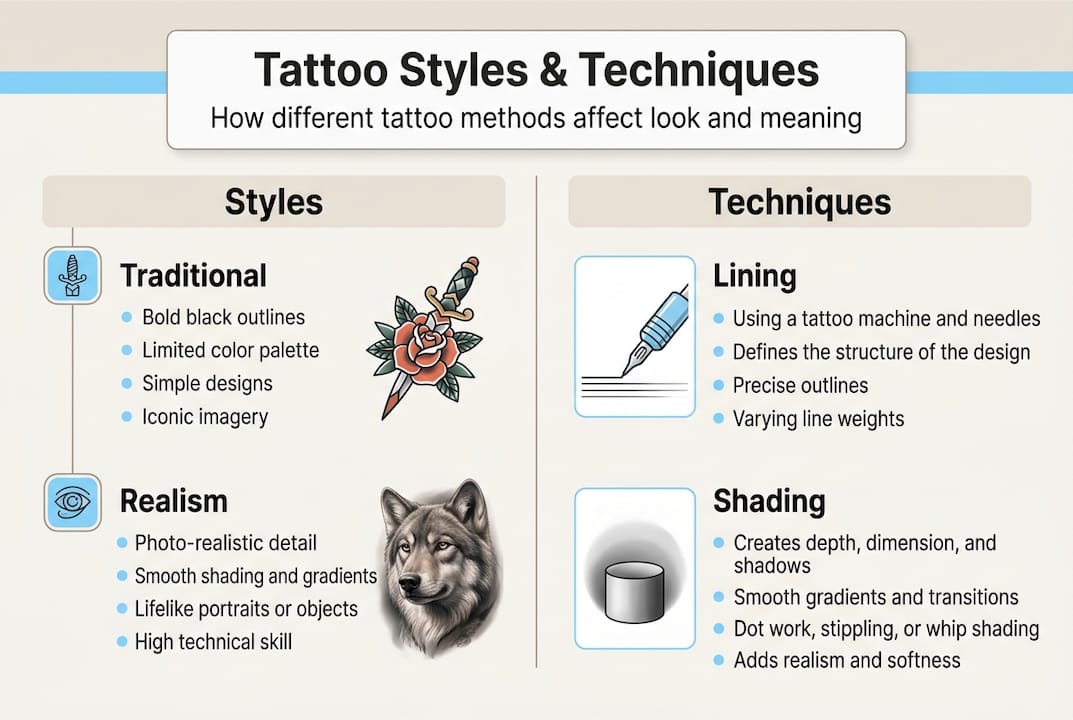
Traditional (Old School): Bold outlines, limited color palettes, iconic imagery like anchors, roses, and eagles. Rooted in American sailor culture from the early 1900s.
-
Realism: Designed to look like a photograph on skin. Realism tattoos achieve photorealistic effects via gradient shading, varying line weights, and magnum needles, making them expert-level work that often requires multiple sessions.
-
Fine Line / Minimalist: Clean, delicate designs using a single needle. Fine line tattooing uses a single needle for delicate details, producing elegant results that tend to fade faster than bolder styles.
-
Japanese (Irezumi): Rich storytelling through koi fish, dragons, peonies, and waves. Heavy use of color and deliberate shading creates a flowing, full-composition feel.
-
Blackwork: Bold, graphic designs using only black ink. Includes geometric patterns, tribal references, and illustrative styles.
Here’s a side-by-side comparison to help you see the differences clearly:
| Style | Line weight | Color use | Durability | Skill level |
|---|---|---|---|---|
| Traditional | Bold | Limited palette | Very high | Beginner-friendly |
| Realism | Varied | Full color or B&W | Moderate | Expert only |
| Fine Line | Ultra-thin | Minimal or none | Lower | Intermediate |
| Japanese | Medium to bold | Rich, layered | High | Advanced |
| Blackwork | Bold | Black only | High | Intermediate |
When you’re booking your tattoo, knowing which style speaks to you helps you find the right artist faster and sets clear expectations from the start.
Artistic techniques and how they shape tattoo results
With style frameworks in mind, understanding the techniques artists use will help you recognize why tattoos look and age differently. The style you choose is only part of the story. The technique behind it determines how your tattoo heals, holds color, and stands the test of time.
Here are the four core techniques you should know:
-
Lining: The foundation of almost every tattoo. Bold, clean lines create structure and are especially critical in traditional and blackwork styles.
-
Shading: Artists use stippling (tiny dots) or whip shading (fast, feathered strokes) to create depth and dimension. Realism relies heavily on this.
-
Color packing: Solid color is layered using magnum needles to fill large areas evenly. Key techniques like color packing use magnum needles to achieve smooth, saturated results in Japanese and traditional styles.
-
Tebori: A traditional Japanese hand-poke method where ink is tapped into the skin manually rather than by machine. Tebori causes less trauma to the skin, which often leads to better healing and a softer, more organic look. Hybrid machine-tebori combinations are increasingly common today.
| Technique | Typical style | Effect on result |
|---|---|---|
| Lining | Traditional, Blackwork | Sharp, defined edges |
| Shading | Realism, Japanese | Depth and dimension |
| Color packing | Japanese, Traditional | Vibrant, solid fills |
| Tebori | Japanese | Softer, skin-friendly finish |
Pro Tip: If you’re considering a Tebori tattoo, expect a different aftercare experience. The healing process is often gentler, but you should still follow your artist’s specific instructions. Check out resources on caring for your tattoo to stay informed before your session.
What style means for your tattoo’s meaning and placement
Now that you know how tattoos are created, let’s examine how your style choice affects meaning and where your tattoo will last or fade faster. Style and symbolism are deeply connected in tattooing.
Here’s how common styles carry meaning:
-
Traditional / Old School: Anchors represent stability, swallows symbolize safe return, roses stand for love and loyalty. These images carry decades of cultural weight.
-
Realism: Often chosen to memorialize a person, pet, or place. It’s a personal photograph made permanent.
-
Japanese: Each element tells a story. Koi fish represent perseverance, dragons symbolize wisdom and strength, and cherry blossoms reflect the beauty of impermanence.
-
Fine Line / Minimalist: Tends toward personal symbols, coordinates, or abstract shapes. Meaning is intentionally subtle.
-
Blackwork: Geometric designs can represent balance and order, while tribal patterns often carry cultural or ancestral significance.
Placement matters just as much as style. Fine line tattoos are best suited for smaller placements like wrists, and they fade more quickly on high-movement areas. Bold styles like traditional and blackwork hold up better on areas with less sun exposure and skin stretching.
Pro Tip: Always think about style and placement together, not separately. A hyper-detailed realism portrait on a finger will blur and fade within a few years. The same design on an upper arm or thigh will hold its detail far longer. Find more on tattoo placement tips to plan your design smartly.
Expert tips for choosing the right tattoo style
Having understood style, meaning, and placement, let’s distill this knowledge into practical steps for your tattoo journey. Follow this process and you’ll walk into your consultation with real confidence.
-
Define your meaning first. What do you want this tattoo to represent? A memory, a value, a piece of art? Your answer will naturally point you toward certain styles.
-
Consider your placement. Think about visibility, skin type, and how much that area moves. Fine line on a knuckle fades fast. Traditional on a forearm holds for decades.
-
Think about longevity. Some styles age beautifully, others require touch-ups. Bold lines and solid fills outlast delicate single-needle work.
-
Match the artist to the style. This is critical. Realism and portrait work are expert-only due to the precision required, while traditional styles are more beginner-friendly and widely available. Always ask to see healed photos, not just fresh work straight off the machine.
“The best tattoo is the one that still feels right ten years from now. Choose a style that connects with who you are, not just what’s trending on social media this month.”
When researching artists, look for someone who specializes in your chosen style. A generalist can do decent work, but a specialist will elevate it. Use resources like how to choose an artist to guide your search and know the right questions to ask.
Our take: Personal style beats trends every time
After all these tips, there’s one perspective we find essential: stop chasing trends. Watercolor tattoos, fine line botanicals, and micro-realism all have their moment in the spotlight. But a tattoo that genuinely connects to your life story will always outlast the trend cycle.
We’ve seen clients regret following a trend within two years. The ones who are still proud of their ink a decade later? They chose something personal. Technology now makes it easier than ever to research styles and artists before committing. Spend time exploring tattoo stories and artist portfolios before you decide. Ask yourself: would I still wear this proudly in fifteen years? If the answer is yes, you’ve found your style.
Ready to find your perfect tattoo style?
You’ve done the research. Now it’s time to bring your vision to life with an artist who truly specializes in the style you want.
On Ink Link, you can browse tattoo artists by style, view their portfolios, and book directly without the back-and-forth. Want to see what a studio specializing in traditional work looks like? Check out Old Traditions Tattoo Parlor as a great example of what style-focused studios offer. Start your search today at Ink Link tattoo booking and connect with the right artist for your next piece.
Frequently asked questions
Which tattoo style lasts the longest?
Traditional and blackwork tattoos last longest due to bold lines and solid fill, while fine line tattoos fade more quickly, especially in high-movement areas.
Is realism or minimalist tattooing more painful?
Realism tattoos typically require longer, more intense sessions than minimalist styles, since realism requires multiple sessions and expert-level precision. Pain also varies by placement.
What should I consider when choosing where to place my tattoo?
Think about style, size, meaning, visibility, and movement. Fine line placements like wrists fade faster, so bold styles work better on high-movement or sun-exposed areas.
Are there tattoo styles best for beginners?
Traditional styles are beginner-friendly and widely available, while realism and portrait work require experienced, specialized artists to execute well.