Tattoo Appointment Booking: A Step by Step Process Guide

TL;DR:
- Following a structured research, request, and secure process helps clients prevent common booking issues and arrive prepared. Choosing an artist based on style, reviews, and portfolio consistency ensures satisfaction and avoids disappointment. Clear communication through complete inquiries and proper preparation on appointment day lead to a smooth tattoo experience.
The tattoo appointment booking process is a structured sequence of three core stages: research, request, and secure. Following a clear, step by step booking process protects you from common pitfalls like losing your deposit, getting ghosted by a busy artist, or arriving unprepared on tattoo day. This guide covers every stage, from finding the right artist on platforms like Ink link to submitting a professional inquiry, paying your deposit, and preparing your skin for the session. Whether you’re booking your first tattoo or your tenth, a structured approach makes the difference between a smooth experience and a frustrating one.
What does the step by step booking process for tattoo appointments look like?
The tattoo booking process follows three defined stages. Tattoo booking consists of Research, Request, and Secure. Each stage builds on the last, and skipping any one of them creates problems down the line.
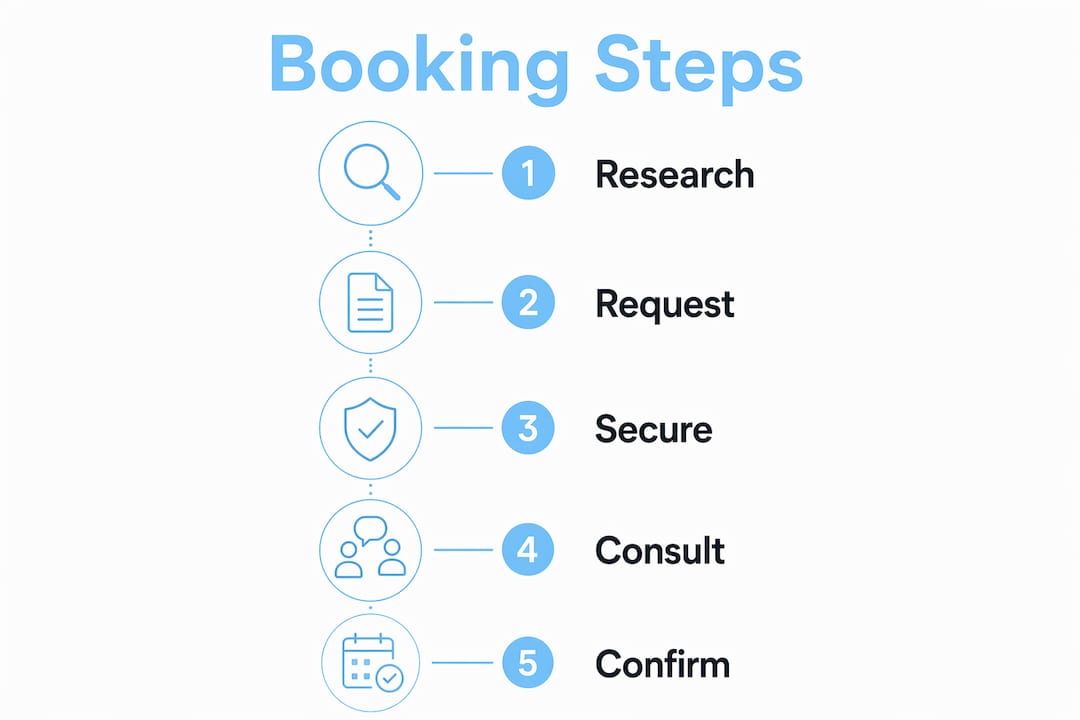
Research means finding an artist whose style matches your vision before you contact anyone. Request means submitting a complete, professional inquiry with all the details the artist needs. Secure means confirming your date through a consultation and deposit payment. Most booking failures happen because clients jump straight to the request stage without doing the research first, or they submit vague inquiries that force the artist to ask follow-up questions. A clear process eliminates both problems.
How to find and choose the right tattoo artist for your booking
Choosing the right artist is the most important decision in the entire booking guide. A mismatch between your vision and the artist’s specialty wastes everyone’s time and often leads to disappointing results.
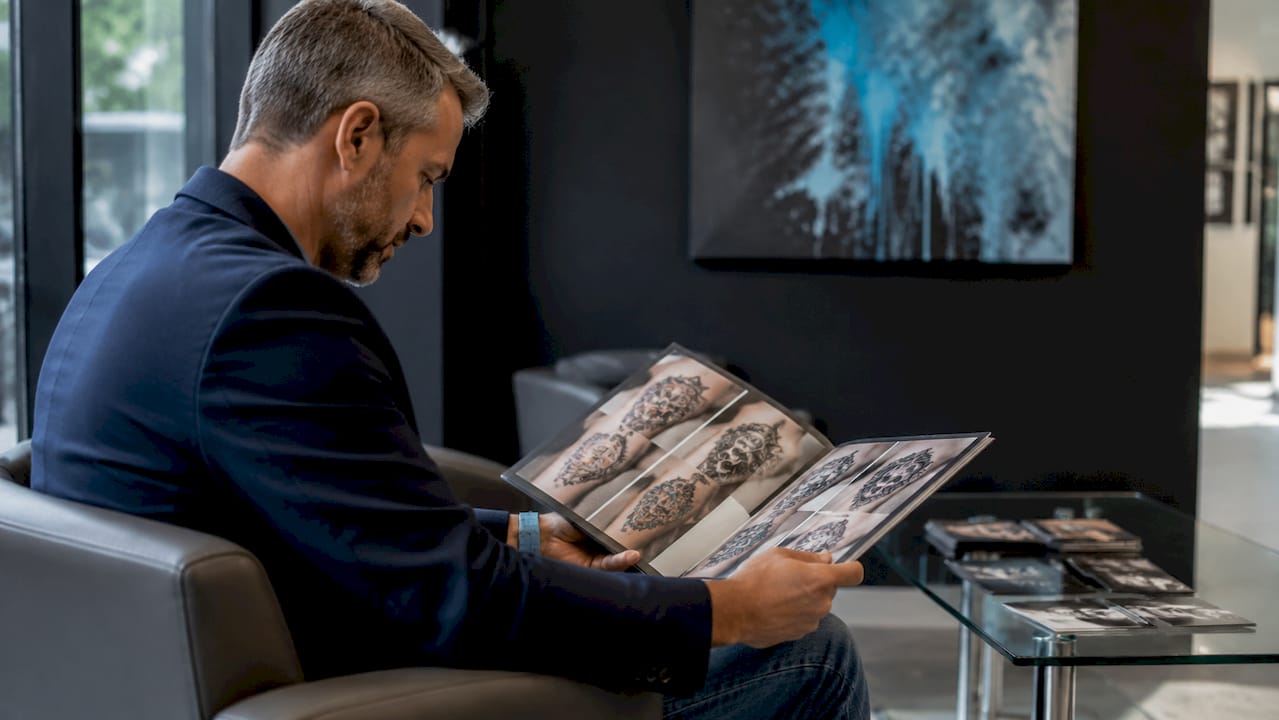
Start your research on Instagram, where most tattoo artists post their recent work consistently. Look at the last 20 to 30 posts to understand their current style, not just their best pieces. Check Google reviews and any profiles on dedicated booking platforms like Ink link to read client feedback on communication, punctuality, and aftercare guidance. Reviews tell you as much about the booking experience as they do about the tattoo itself.
Style alignment is non-negotiable. A fine-line specialist will not produce a bold traditional piece at the same quality level, and vice versa. Identify the style you want first, then search for artists who specialize in exactly that. Common styles include blackwork, neo-traditional, realism, Japanese, watercolor, and geometric. Browsing artist profiles by style on a dedicated platform makes this comparison faster and more accurate than scrolling through social media alone.
-
Check portfolio consistency. Look for repeated examples of your desired style, not just one standout piece.
-
Read the booking instructions. Many artists post specific requirements on their profiles or websites. Follow them exactly.
-
Note waitlist status. High-demand artists often have waitlists of three to six months. Factor this into your timeline.
-
Verify shop affiliation. Confirm the artist works at a licensed studio with proper health and safety certifications.
Pro Tip: If your preferred artist has a long waitlist, add your name to it and simultaneously book a consultation with a second artist whose work you admire. You keep your options open without losing time.
Platforms like Ink link let you browse artist portfolios, check availability, and submit booking requests in one place. This cuts the research phase from days to hours, and it keeps all your communication in a single thread rather than scattered across DMs, emails, and text messages.
What should you include in a tattoo booking inquiry?
A well-structured inquiry acts as a creative brief. It minimizes back-and-forth, shows the artist you are a serious client, and increases your chances of getting a prompt response. High-demand artists can receive hundreds of messages daily, and a vague or incomplete request is the fastest way to get deprioritized.
Send your inquiry through the artist’s preferred channel. Avoid social media DMs unless the artist explicitly requests them. Email or a dedicated booking form is the professional standard. DMs get buried, especially on Instagram, where algorithm changes affect message visibility. A booking form or email creates a paper trail and signals that you respect the artist’s workflow.
Here is what every professional tattoo inquiry must include:
-
Your full name. Artists manage multiple clients. A full name prevents confusion.
-
Tattoo concept. Describe the design clearly in two to three sentences. Mention subject matter, mood, and any specific elements you want included or excluded.
-
Placement on the body. Be specific: inner forearm, left calf, right shoulder blade. Vague placement descriptions delay the quote process.
-
Size in inches. Specific sizing in inches or a comparison to an everyday object is far more useful than terms like “small” or “medium.” Size directly affects session time, detail level, and price.
-
Reference images (1–3 maximum). Attach images that capture the style, mood, or specific elements you want. Too many references create confusion rather than clarity.
-
Health considerations. Disclose medications, allergies, or pregnancy status upfront. This is a licensing and safety requirement for tattoo artists, not an optional formality.
-
Your availability. Offer three to five date windows rather than asking the artist to suggest times. It speeds up scheduling significantly.
Pro Tip: Use a clear subject line for email inquiries. A format like “Booking Request | [Style] | [Your Name]” helps artists categorize and prioritize requests instantly.
The table below shows the difference between a weak inquiry and a strong one:
| Element | Weak inquiry | Strong inquiry |
|---|---|---|
| Size | “Medium sized” | “Approximately 4 inches by 3 inches” |
| Placement | “On my arm” | “Outer upper arm, right side” |
| References | No images attached | 2 reference images showing style and subject |
| Health info | Not mentioned | “I take blood thinners, no allergies” |
| Availability | “Whenever you’re free” | “Available weekends in march and april” |
A strong inquiry gets a faster response, a more accurate quote, and a better first impression. Treat it like a job application for a creative collaboration.
How do consultations, deposits, and appointment confirmation work?
After an artist accepts your inquiry, the next step is the consultation. Consultations finalize design, size, placement, and pricing, and they typically run 15 to 45 minutes. Some artists conduct them by email, others prefer a phone call, and many studios require an in-person meeting for complex or large-scale work. The format depends on the artist and the complexity of the design.
The initial consultation turns a vague tattoo idea into a finalized design brief. Come prepared with your reference images, a clear sense of your budget, and any firm preferences about color, line weight, or style. Artists appreciate clients who know what they want and can articulate it clearly. Vague feedback during a consultation leads to revisions, delays, and sometimes a design that misses the mark entirely.
After the consultation, the artist will ask for a deposit to hold your appointment date. Key facts about deposits:
-
Deposits typically range from $50 to $200, or roughly 10–20% of the projected total cost, depending on the artist and studio policy.
-
Deposits are non-refundable. The deposit compensates the artist for design preparation work completed before your session begins. It is not a down payment you can reclaim if you change your mind.
-
Deposits usually apply to your final tattoo price. Confirm this with your artist before paying.
-
Rescheduling policies vary. Most studios allow one reschedule with advance notice of 48 to 72 hours. Missing your appointment without notice typically forfeits the deposit entirely.
“A deposit signals that you are a serious client. It compensates the artist for the hours they invest in your custom design before you ever sit in the chair.” — Inkjin Tattoo Consultation Guide
Once the deposit is paid, you receive a confirmed appointment date, a price quote, and the studio’s aftercare and cancellation policies in writing. Read these carefully. Understanding the shop’s rules before your session prevents surprises and protects both you and the artist.
Pro Tip: If your tattoo requires multiple sessions, ask the artist to outline the full project timeline and total estimated cost upfront. Budget for all sessions before you begin, not just the first one.
How to prepare effectively for your tattoo appointment
Preparation in the week before your appointment directly affects how well your tattoo heals and how comfortable the session feels. Sessions can last 2 to 6 or more hours, and your body’s condition on the day matters more than most first-time clients expect.
Skin care in the seven days before your appointment sets the foundation. Avoid sunburn on the tattoo area at all costs. Sunburned skin cannot be tattooed safely, and your artist will reschedule the appointment rather than work on damaged skin. Skip self-tanner entirely, as it interferes with ink placement and color accuracy. Moisturize the area daily with an unscented lotion to keep skin supple and receptive to ink.
On the day of your appointment, follow these steps:
-
Eat a full meal two hours before your session. Low blood sugar during a long session causes lightheadedness, nausea, and fainting. This is the single most preventable problem on tattoo day.
-
Stay hydrated. Drink water consistently the day before and the morning of your appointment. Hydrated skin takes ink more evenly.
-
Sleep well the night before. Fatigue lowers your pain tolerance and makes long sessions significantly harder.
-
Wear appropriate clothing. Dress so the tattoo area is easily accessible. For a thigh tattoo, wear loose shorts. For a shoulder piece, wear a tank top or a shirt you can remove easily.
-
Bring snacks and entertainment. A long session benefits from snacks, headphones, and something to keep your mind occupied during the quieter stretches.
Pro Tip: Avoid alcohol for at least 24 hours before your appointment. Alcohol thins the blood, which increases bleeding during the session and can affect how well the ink sets in the skin.
Common mistakes that lead to rescheduling include arriving with sunburned skin, forgetting to eat, wearing clothing that blocks access to the tattoo area, and showing up with a new skin rash or irritation. A little preparation prevents all of these.
Key takeaways
The most effective tattoo booking process combines thorough artist research, a complete professional inquiry, and a confirmed deposit before you ever sit in the chair.
| Point | Details |
|---|---|
| Research before you reach out | Match the artist’s style to your vision before submitting any inquiry. |
| Send a complete inquiry | Include name, concept, placement, size in inches, references, and health info. |
| Use email or booking forms | Avoid DMs; professional channels keep your request visible and organized. |
| Pay and understand your deposit | Deposits are non-refundable and confirm your appointment date with the artist. |
| Prepare your body and skin | Eat well, hydrate, avoid sun and alcohol, and wear accessible clothing on the day. |
What I’ve learned from watching clients get the booking process right and wrong
Most booking problems I’ve seen come down to one thing: clients treating the inquiry like a casual text message instead of a professional request. An artist managing a full calendar does not have time to chase down missing details. The clients who get booked fastest are the ones who send a complete, clear inquiry the first time and never make the artist ask a follow-up question.
The deposit conversation is where I see the most friction. Clients sometimes push back on non-refundable deposits, viewing them as a risk. The reality is the opposite. A deposit protects you as much as it protects the artist. It locks in your date, confirms the artist’s commitment to your design, and gives you a paper trail. If an artist refuses to take a deposit or cannot explain their cancellation policy clearly, that is a warning sign worth taking seriously.
Clear communication also speeds up the entire process in ways most clients don’t anticipate. When you arrive at a consultation with reference images, a defined size, and a specific placement in mind, the artist can finalize your design in one meeting instead of three. That means your appointment gets scheduled weeks earlier. Professionalism from the client side is not just courteous. It is practical.
Finally, preparation on the day of your appointment is something most guides mention briefly and then move on from. I’d argue it deserves more attention. Showing up well-rested, well-fed, and with accessible clothing turns a potentially stressful experience into an enjoyable one. Your artist notices, your body handles the session better, and the healed result reflects that care.
— Matthew
Book your next tattoo confidently with Ink link
Ink link takes every step in this booking guide and puts it in one place. You can browse tattoo artists by style and availability, review full portfolios, and submit booking requests directly through the platform without hunting down email addresses or getting lost in DMs.
Studios on Ink link, including Old Traditions Tattoo Parlor, manage deposits, calendars, and client communication through a single dashboard. That means faster responses, clearer policies, and a more professional experience from your first inquiry to your confirmed appointment. If you’re ready to book with confidence, explore studios and artists on Ink link today.
FAQ
What are the three stages of the tattoo booking process?
The tattoo booking process follows three stages: Research, Request, and Secure. Research means finding the right artist, Request means submitting a complete inquiry, and Secure means confirming your date with a deposit.
How much is a typical tattoo deposit?
Deposits typically range from $50 to $200, or roughly 10–20% of the projected total cost. Most deposits are non-refundable because they compensate the artist for design work completed before your session.
What should I include in my tattoo booking inquiry?
A complete inquiry includes your full name, tattoo concept, body placement, size in inches, one to three reference images, health disclosures, and your available dates. Sending all of this upfront reduces back-and-forth and speeds up your booking.
Should I message a tattoo artist on Instagram to book?
Avoid Instagram DMs unless the artist explicitly asks for them. High-demand artists receive hundreds of messages daily, and DMs are easy to miss. Use email or a dedicated booking form instead.
How do I prepare my skin before a tattoo appointment?
Avoid sunburn and self-tanner on the tattoo area for at least seven days before your session. Moisturize daily, stay hydrated, eat a full meal before you arrive, and avoid alcohol for at least 24 hours prior.