Realistic Tattoo Guide: Styles, Artists & Longevity
TL;DR:
Realistic tattoos require precise shading and must be evaluated with healed results for longevity.
Black and grey realism offers better aging and longevity, while color realism provides vibrant, initial impact.
Optimal placement areas include outer forearm and thighs for durability and better preservation of detail.
Getting a realistic tattoo is one of the most exciting decisions you can make, and one of the most demanding to get right. Unlike traditional or neo-traditional styles, hyperrealism and photorealism rely on precise techniques that leave zero margin for error. The artist you choose, the style you pick, and even where you place your tattoo will determine how it looks five, ten, or twenty years from now. This guide walks you through everything: how to evaluate portfolios, compare styles, and find an artist whose healed work stands the test of time.
Table of Contents
Key Takeaways
| Point | Details |
|---|---|
| Healed work matters | Always evaluate an artist’s healed tattoo photos to judge lasting realism and avoid surprises. |
| Choose the right style | Decide between black & grey for subtlety and durability or color realism for dramatic visual impact. |
| Placement affects results | Stable body areas, like the forearm or thigh, extend the life and clarity of realism tattoos. |
| Aftercare is critical | Your tattoo’s longevity and true appearance depend on dedicated aftercare and sun protection. |
Realistic tattoo 101: What makes an image pop?
A realistic tattoo is designed to look like a photograph or three-dimensional image on skin. The two main branches are hyperrealism (pushing beyond photographic accuracy with exaggerated depth) and photorealism (replicating a reference image as faithfully as possible). Both require extraordinary skill in shading, light control, and color blending.
Precise shading, gradients, and needle configurations are what allow artists to replicate lifelike images on skin. Without these fundamentals nailed down, a portrait can turn muddy or flat within months of healing.
When you review a portfolio, watch for these key quality indicators:
-
Depth and dimension: Does the subject look three-dimensional, not flat?
-
Smooth gradients: Are transitions between light and shadow seamless?
-
Accurate composition: Does the reference translate well to the skin’s curves?
-
Healed results: Are healed photos included alongside fresh work?
-
Consistent detail: Does fine detail hold up across different body placements?
“Trained realism artists design with the healed outcome in mind, not just the dramatic freshness of a new piece.”
This is a mindset thing. Many stunning tattoos look incredible right after the needle lifts, but the real proof comes weeks and months later.
Pro Tip: Always request healed tattoo photos before committing. If an artist only shows fresh work, that is a red flag worth taking seriously. When selecting a realism specialist, healed samples should be non-negotiable.
Black & grey realism vs. color realism: Choosing your style
Once you understand what realism demands, the next step is deciding which visual style fits your vision. Both black & grey and color realism are stunning, but they suit different subjects, skin tones, and lifestyles.
| Attribute | Black & grey realism | Color realism |
|---|---|---|
| Contrast | High tonal range, timeless | Vibrant, eye-catching |
| Healed appearance | Fades uniformly over time | Can shift unevenly |
| Skin tone compatibility | Works for all skin tones | Better on lighter tones |
| Maintenance | Lower touch-up frequency | May need more touch-ups |
| Best subjects | Portraits, wildlife, memorial | Nature, flowers, fantasy |
Black & grey ages better with more uniform fading, while color can shift unevenly as the skin changes over decades. That does not mean color is a bad choice. It just means you should plan for maintenance.
Here is a quick guide to choosing your style:
-
Choose black & grey if you want longevity, subtlety, or are working with darker skin tones
-
Choose color realism if vibrancy and visual impact matter more than low maintenance
-
Consider your subject: florals and fantasy scenes pop in color; portraits and memorials often shine in black & grey
Black & grey offers subtlety and longevity, while color realism delivers immediate visual impact but requires more upkeep. Neither is objectively better. It comes down to your personal vision and how much aftercare you are willing to commit to.
Portfolio essentials: Judging the best realistic tattoo artists
Knowing your style is step one. Knowing how to judge an artist’s portfolio is what protects your investment. Here is a practical step-by-step approach:
-
Search for healed and fresh side-by-sides. This is the single most revealing comparison in any realism portfolio.
-
Look for diversity in subject matter. A great artist handles portraits, animals, objects, and textures with equal confidence.
-
Review consistency across placements. Work on forearms, thighs, and ribs should all hold up.
-
Ask about the consultation process. Preparation involves client consultation, photo reference combination, and design for movement and light on the body.
-
Research their awards and community reputation. Recognition from peers and conventions speaks volumes.
Some artists worth studying for portfolio inspiration include Livio Cuci (hyperrealism with jaw-dropping texture), Zhimpa Moreno (award-winning realism across multiple styles), Yasser Urbina (custom emotional portraits), and Gabriele Pellerone (master of facial likeness in portraits).
Pro Tip: Healed work often loses 15 to 20 percent of its original contrast. If an artist’s healed photos still look crisp and dimensional, that is a strong sign of technical mastery. Review artist booking best practices before your first consultation so you know exactly what to ask.
Placement, healing, and longevity: Making your tattoo last
Even the best artist cannot save a poorly placed tattoo. Where you get inked plays a huge role in how long your realism piece stays sharp.
| Placement | Longevity rating | Notes |
|---|---|---|
| Outer forearm | Excellent | Stable skin, low friction |
| Thigh | Excellent | Large canvas, minimal distortion |
| Upper arm | Good | Some muscle movement over time |
| Ribs | Good | Moderate fading, painful healing |
| Hands and feet | Poor | Fade faster due to friction |
| Inner elbow or knee | Poor | Constant bending causes blowouts |
Stable placements like the outer forearm and thigh help maximize realism and longevity. That is where fine detail survives the longest.
For aftercare, follow this general healing timeline:
-
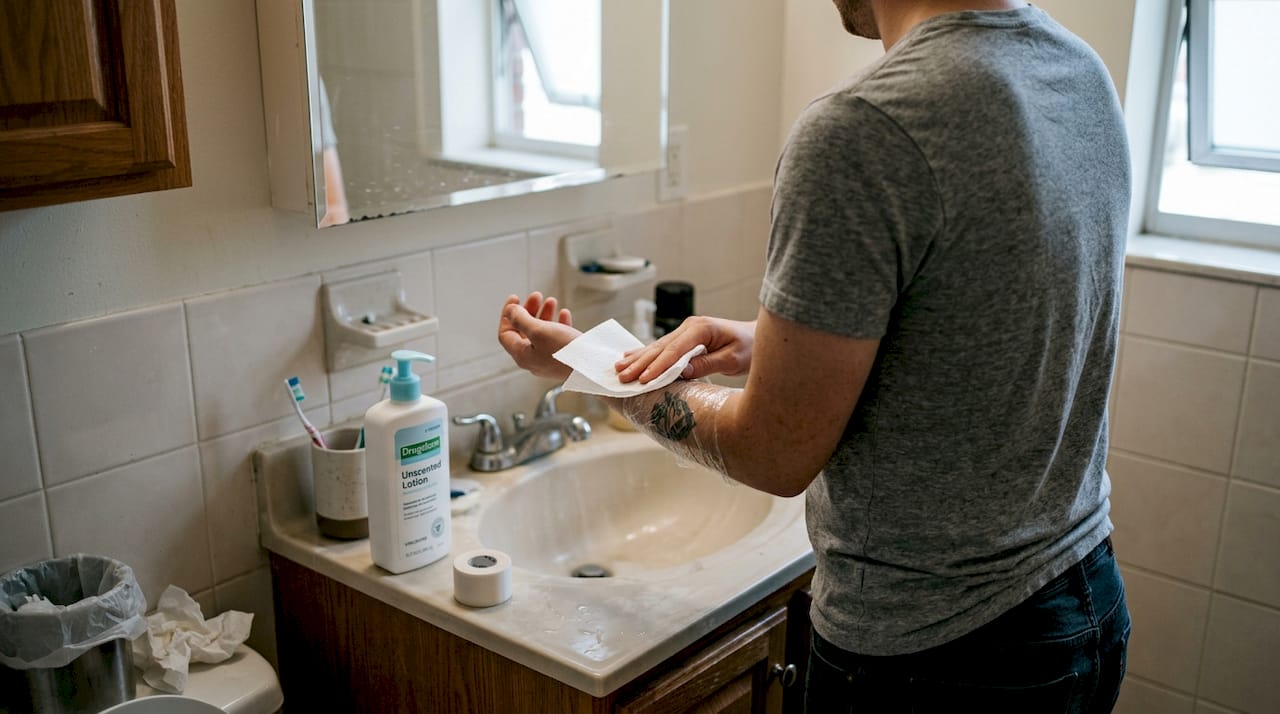
Days 1 to 5: Keep the tattoo clean, apply thin layers of fragrance-free moisturizer
-
Week 1 to 2: Peeling begins; do not pick or scratch
-
Weeks 2 to 4: Surface skin heals; color may look dull temporarily
-
Months 3 to 6: Full dermal healing completes; final result becomes visible
Always follow tattoo aftercare advice from your artist, since every skin type responds differently. Sun exposure is one of the biggest enemies of realism tattoos. Use SPF 50 on healed work whenever it is exposed.
“Demanding healed portfolio proof and understanding the realities of skin movement and sun exposure are the two habits that separate satisfied clients from disappointed ones.”
Why true realism means patience and personalization
Here is something most tattoo guides skip entirely. The best realism artists are not just technically skilled. They are patient collaborators who build designs around your specific skin tone, body movement, and reference material.
Many portfolios online only show freshly completed work photographed under perfect lighting. That is not dishonesty, but it is not the full picture either. Only healed results reveal true mastery, and only artists who invite that scrutiny deserve your trust.
Rushing the selection process or ignoring healed proof almost always leads to regret, or worse, an expensive touch-up. Great realism takes time to plan, execute, and evaluate. Give yourself and your artist the space to get it right. That patience is what turns good ink into something you will proudly wear for life.
Frequently asked questions
How can I tell if a tattoo artist really specializes in realism?
Look for side-by-side healed and fresh photos in their portfolio, and ask directly about their consultation and design process. Expert artists demand healed portfolio proof and tailor designs for lasting results.
Which placement is best for a long-lasting realistic tattoo?
The outer forearm and thighs are top choices because their skin is stable and less prone to distortion. Stable placements are crucial for realism tattoos to age well.
How long does it take for a realistic tattoo to fully heal?
The surface heals in 2 to 4 weeks, but full dermal healing takes 3 to 6 months. Healing benchmarks vary slightly based on placement and skin type.
Are color or black & grey realism tattoos better for all skin tones?
Black & grey is recommended for all skin tones and tends to age more gracefully. Black & grey realism offers subtlety for all tones, while color realism is more vibrant but higher maintenance.