How to streamline your tattoo inquiry for fast bookings
TL;DR:
- Preparing a detailed inquiry with clear design description, size, placement, references, budget, and availability increases your chances of booking your desired artist quickly. Responding promptly within a few hours enhances booking likelihood, as studios favor fast communication, and complete inquiries help avoid unnecessary delays. Building mutual respect through thoughtful communication fosters better collaboration and results in a tattoo experience worth waiting for.
You finally found the perfect artist. Their portfolio is exactly what you’ve been looking for, so you send an inquiry and then wait. Hours pass. Nothing. That sinking feeling is familiar to a lot of tattoo clients, and it often leads to booking with whoever responds first rather than who you actually wanted. According to tattoo shop statistics, 78% of clients book with the first responder, which means your inquiry process matters just as much as your design idea. This guide walks you through exactly what to prepare, how to send it, and what to expect so you can boost your chances of landing the artist you want.
Table of Contents
-
Step-by-step: How to send your tattoo inquiry for the best results
-
What happens next: Response times, consultations, and collaboration
-
What no one tells you about tattoo inquiries: The real keys to a smooth process
Key Takeaways
| Point | Details |
|---|---|
| Be detailed upfront | Providing all required info saves time and gets you a faster, clearer response. |
| Speed matters | Studios respond fastest to complete, well-structured inquiries—helping you get booked first. |
| Follow up smartly | If you don’t get a reply, resend with all details or use the studio’s online form for best results. |
| Consultations boost results | A design consultation clarifies what’s possible and ensures expectations align before committing. |
What you need before sending your tattoo inquiry
Now that you see the risks of unclear communication, let’s start with what to prepare before you reach out.
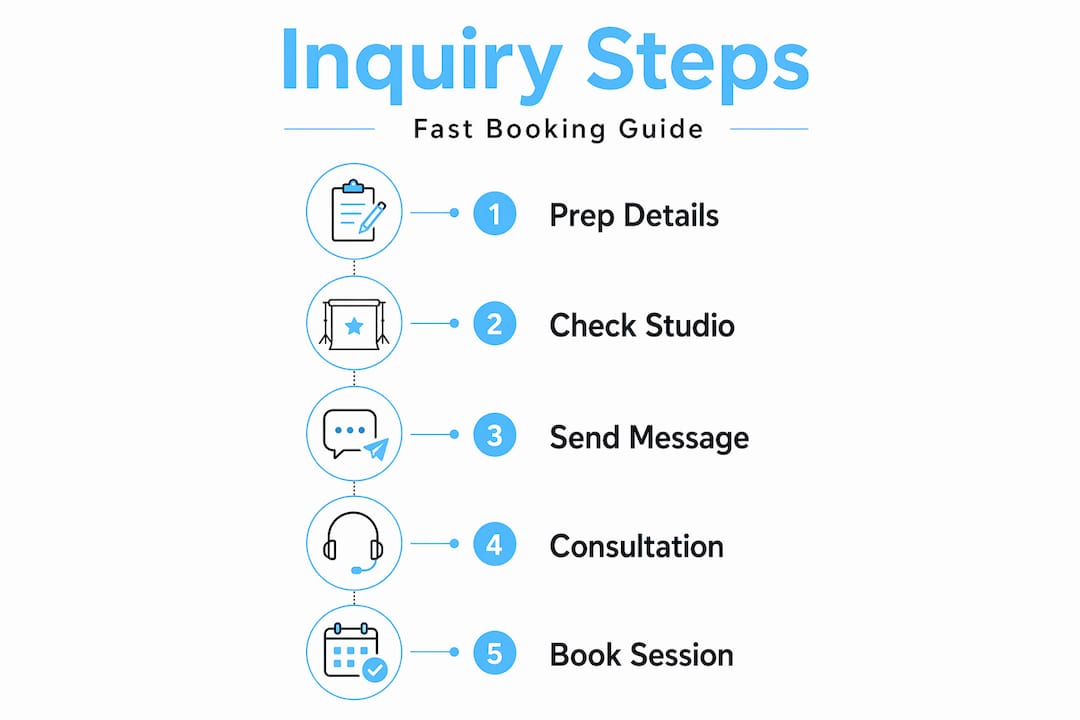
A solid inquiry is not just a courtesy to the artist. It is the single fastest way to get a yes. As outlined in how to email a tattoo artist, the inquiry process begins with clients sending detailed messages that cover every key element: subject line, design description, size, placement, references, budget, and availability windows. Miss one of those and you are almost guaranteed an unnecessary back-and-forth that slows everything down.
Here is what to gather before you write a single word:
-
Design description: Describe your idea in two to three clear sentences. Mention style (realism, traditional, blackwork, etc.) and any specific elements you want included.
-
Size: Give dimensions in inches. “Medium” means something different to everyone.
-
Placement: Be specific. “Outer forearm” is far more useful than “arm.”
-
Reference images: Collect three to five images that represent your style, mood, or specific design elements. These do not need to be tattoos; art, photographs, or illustrations all work.
-
Budget: Share a realistic range. Artists appreciate knowing whether you are expecting a $200 piece or a $1,000 one.
-
Availability windows: Offer at least two or three date ranges when you are free. The more flexible you are, the easier scheduling becomes.
| Information needed | Why it matters | Example |
|---|---|---|
| Design description | Lets the artist visualize the concept immediately | “Geometric wolf with fine-line details, blackwork style” |
| Size | Affects time, complexity, and pricing | “4 inches by 6 inches” |
| Placement | Impacts design shape and session length | “Right outer forearm” |
| Reference images | Communicates aesthetic quickly | 3 to 5 relevant images attached |
| Budget | Avoids mismatched expectations | “$400 to $600” |
| Availability | Speeds up scheduling | “Weekends in March or April” |
Check the artist’s booking request essentials before you write your message, because many artists and studios publish specific intake requirements right in their bio or on their website.
Pro Tip: Prep all of this in a simple notes document before you open your email or booking form. Having everything ready means you can submit a polished inquiry in under five minutes instead of scrambling to find references or remember your schedule.
Step-by-step: How to send your tattoo inquiry for the best results
With everything ready, it’s time to actually send your inquiry. Here is how to do it right.
A well-crafted inquiry follows a logical order so the artist can read it quickly and understand exactly what you want without having to ask follow-up questions.
-
Write a clear subject line. Something like “Tattoo inquiry: blackwork wolf, right forearm, March availability” tells the artist everything at a glance before they even open the message.
-
Open with a brief introduction. One sentence about who you are and why you chose this artist goes a long way. Artists appreciate knowing their work resonated with you.
-
Describe your design. Follow the notes you prepared. Be specific but concise. Two to three sentences covering style, subject matter, and any must-have elements.
-
State size and placement together. “I am looking for a 5-inch piece on my outer right forearm” is clean, easy to process, and shows you have thought it through.
-
Attach your references. Label them if you can. “This image is for line style” or “this is for shading inspiration” helps the artist immediately understand how you want each reference used.
-
State your budget range and availability. Keep this direct. “My budget is $500 to $700 and I am available most Saturdays in March and April.”
-
Close politely and invite a response. A simple “I would love to hear if this sounds like a good fit for your schedule” is warm without being pushy.
“Studios that reply within 5 minutes see 3x higher booking conversions compared to those that respond hours later. And since 78% of clients book with the first responder, getting your inquiry to the right artist fast gives you a real competitive edge.”
When it comes to timing, the same logic applies on the client side. Send your message during the studio’s business hours and through the artist’s preferred contact method, which is usually listed in their bio or on their booking page. Sending a detailed Instagram DM when an artist explicitly asks for email inquiries is an easy way to get overlooked.
Pro Tip: Always use the artist’s preferred contact channel. If their bio on a platform like Ink Link directs you to a booking form, use it. Forms are structured to capture all the details the artist needs, which means faster replies and fewer missed messages.
What happens next: Response times, consultations, and collaboration
Once your inquiry is sent, here is what happens next and how you can keep things moving smoothly.
Understanding the typical timeline prevents unnecessary anxiety and helps you know when it is appropriate to follow up.
| Response speed | Typical timeframe | Impact on booking |
|---|---|---|
| Fast | Under 1 hour | Very high booking likelihood |
| Average | Around 4.2 hours | Moderate booking likelihood |
| Slow | 24+ hours or more | Lower booking likelihood |
After you send your inquiry, here is what to generally expect:
-
Confirmation message: Many studios send an automatic acknowledgment so you know your inquiry was received.
-
Clarifying questions: Even a great inquiry may prompt a question or two. Answer promptly and thoroughly.
-
Consultation invitation: For larger or more complex pieces, the artist may invite you to a consultation appointment, which is a short meeting where you review the design together, discuss feasibility, talk through the number of sessions needed, and confirm pricing.
-
Quote and timeline: After consultation, you will usually receive a price estimate and proposed session dates.
-
Deposit request: Most studios ask for a deposit at this stage to hold your appointment. This is standard practice and protects both you and the artist.
Consultations have become a welcome norm in the industry. Artists and clients now work collaboratively to shape a design before any commitment is made, which leads to better outcomes and fewer surprises on the day of the session. You can read more about what to expect with booking requests and deposits so you are fully prepared going in.
Common mistakes and troubleshooting your inquiry response
Understanding what can go wrong helps you troubleshoot and avoid issues. Here is what to watch out for.
Even well-meaning clients make mistakes that slow down the process or hurt their chances of getting booked. The good news is that most of these are easy to fix once you know what they are.
Common mistakes clients make:
-
Sending vague descriptions like “I want something cool on my arm” with no further context
-
Forgetting to include references, or attaching low-resolution images that are hard to interpret
-
Setting unrealistic timelines (“Can you fit me in next week?”) without checking the artist’s posted schedule
-
Not reading the studio’s policies on deposits, cancellations, or booking procedures before reaching out
-
Using the wrong contact channel, like messaging on social media when the artist only accepts email
How to fix them:
-
If you sent a vague inquiry and have not heard back, send a polite follow-up with the missing details rather than just “just checking in”
-
Check your junk mail folder if you are waiting on a reply. Booking confirmations sometimes get filtered out
-
If you are using email, make sure your attachment file sizes are reasonable so they do not bounce
According to best practices for tattoo inquiries, studios are not being difficult when they enforce intake policies. They are qualifying serious clients and protecting their time so they can focus on great work. Respecting those boundaries signals that you are a client worth prioritizing. Studios that use tools or systems for instant acknowledgments during peak hours can manage volume without missing leads, which also benefits you as the client.
Pro Tip: If a studio has an online booking form, use it every time. Forms are specifically designed to capture all the required information in one shot, and artists who receive complete forms almost always move those inquiries to the top of the pile when managing deposits and bookings.
What no one tells you about tattoo inquiries: The real keys to a smooth process
You have seen the process laid out step by step, but there is a side to tattoo inquiries that rarely gets discussed openly.
Most advice focuses on what clients need to do. But the truth is that a well-prepared inquiry is actually a favor to the artist, not just yourself. When you walk in with clear references, a realistic budget, and flexible availability, you move to the front of the line not because you followed rules but because you made the artist’s job easier. Artists book people they can visualize working with. A thorough inquiry does that instantly.
There is also a common misconception that slow response times mean disinterest. Sometimes the best artists are the most in-demand, which means their inbox is overwhelming. A thoughtful follow-up after 48 to 72 hours is completely appropriate and often welcomed. Do not interpret silence as rejection.
Studios are also doing something important when they enforce policies and qualify inquiries carefully. They are not gatekeeping creativity. They are creating the conditions under which great work actually happens. Rushed bookings, vague briefs, and mismatched expectations are the root cause of most tattoo regrets. The studios that take their intake process seriously tend to be the ones producing work worth waiting for.
“The best tattoo experiences come from mutual respect. When you invest in a clear, thoughtful inquiry, you are signaling that you value the artist’s time. That energy shapes the entire collaboration.”
When you discover artists whose work genuinely excites you, go the extra mile in your inquiry. Read their bio, follow their specific instructions, and bring your best references. That combination of genuine enthusiasm and practical preparation is what actually gets you booked.
Ready for your smoothest tattoo booking ever?
Now that you know how to make your inquiry stand out, it is time to connect with the right artist or studio.
Ink Link is built for exactly this moment. Whether you are browsing flash, exploring portfolios, or ready to submit your first inquiry, the platform puts everything in one place so nothing falls through the cracks.
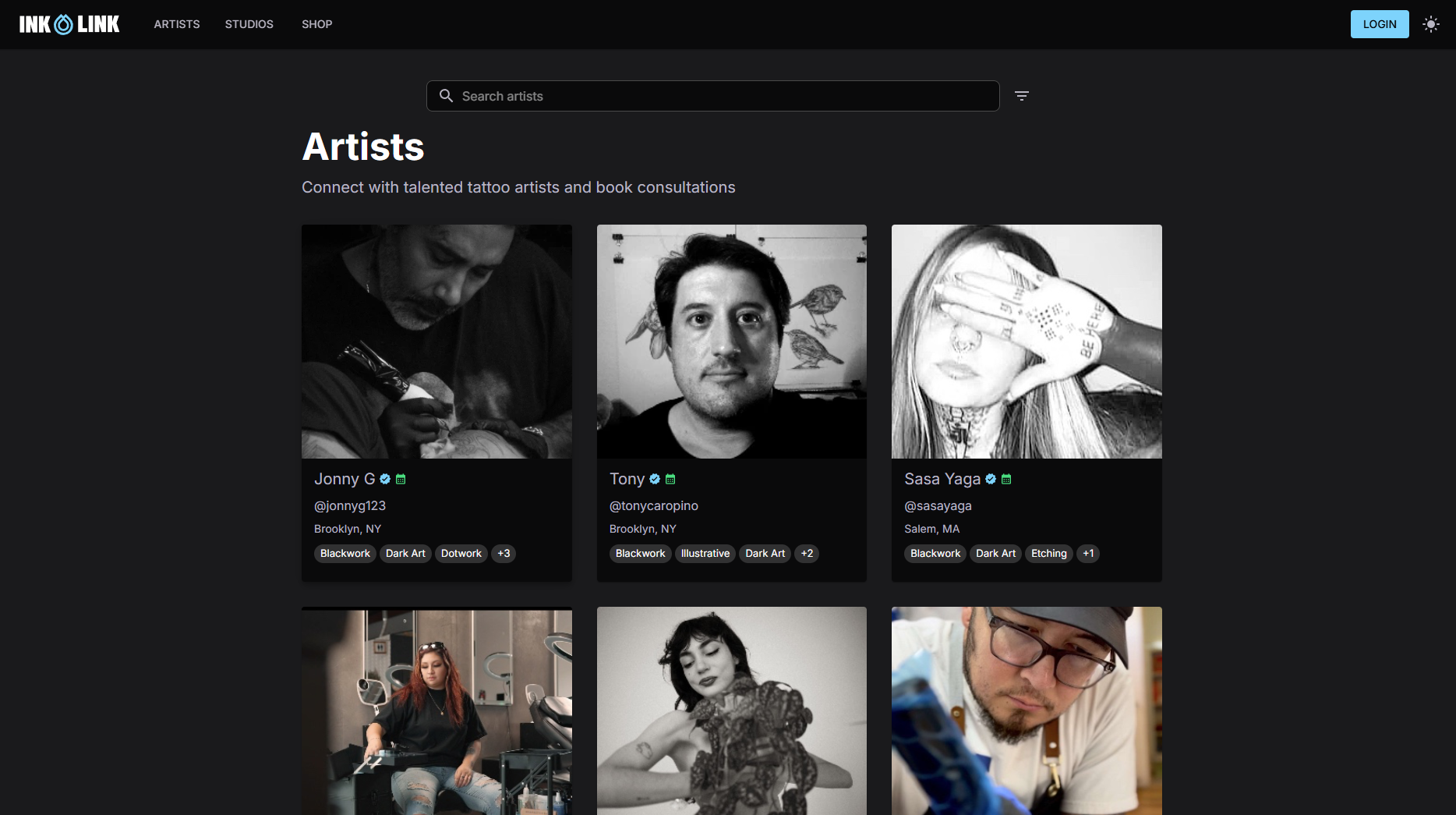
When you use Ink Link’s structured booking forms, you automatically include all the key details that artists need: design description, size, placement, references, budget, and availability. That means faster responses and a much better shot at landing your preferred artist. Browse artists by style, location, or availability, or explore verified find studios near you. Your next tattoo starts with one well-prepared inquiry, and Ink Link makes that easier than ever.
Frequently asked questions
What information should I always include in my tattoo inquiry?
Always list your desired design, size, placement, up to 5 reference images, your budget range, and your available dates, since covering all these points as part of the inquiry process gives artists everything they need to respond without follow-up questions.
How quickly do most tattoo studios reply?
The average response time is 4.2 hours, but studios that respond within 5 minutes are significantly more likely to book your appointment.
What should I do if I get no reply to my tattoo inquiry?
Check your junk mail folder first, then send a polite follow-up with complete details attached, or use the studio’s online booking tools if one is available for a faster, better-organized response.
Why do artists ask for consultations before booking?
Consultations allow you and the artist to review design feasibility, confirm the number of sessions, align on cost, and make sure you are both excited about the project before any commitment is made.
Do I need a deposit when booking a tattoo?
Most studios require a deposit to hold your appointment, and understanding the studio’s deposit and booking policies before you reach out helps you move quickly once they respond.