How to build a tattoo portfolio that attracts more clients
TL;DR:
A curated portfolio of 20 to 40 high-quality, focused pieces outperforms larger, mixed galleries.
Use natural lighting, neutral backgrounds, and both fresh and healed photos for professional images.
Regularly update and organize your portfolio to showcase your best work and build client trust.
Plenty of talented tattoo artists lose bookings every week, not because their work is weak, but because their portfolio fails to present it well. A cluttered gallery, poor photos, or an unfocused mix of styles can send potential clients to a less-skilled competitor. This guide walks you through every stage of building a portfolio that genuinely works: selecting the right pieces, capturing great photos, organizing your layout, and keeping everything current. Follow these steps, and your portfolio becomes one of your most powerful tools for attracting and converting clients.
Table of Contents
Key Takeaways
| Point | Details |
|---|---|
| Quality wins clients | Curate only your best, most representative pieces instead of aiming for a large number. |
| Show healed results | Including healed tattoo photos proves your work stands the test of time and builds trust with clients. |
| Use multiple formats | Maintain both digital and physical portfolios to cover all opportunities and reach more clients. |
| Regularly update | Keep your portfolio current by continually adding new work and refreshing your selections. |
Gathering your best work: Quality over quantity
The first step in building a strong portfolio is deciding what to actually include. This is where most artists go wrong. They add too much, hoping volume signals experience. In reality, it signals the opposite.
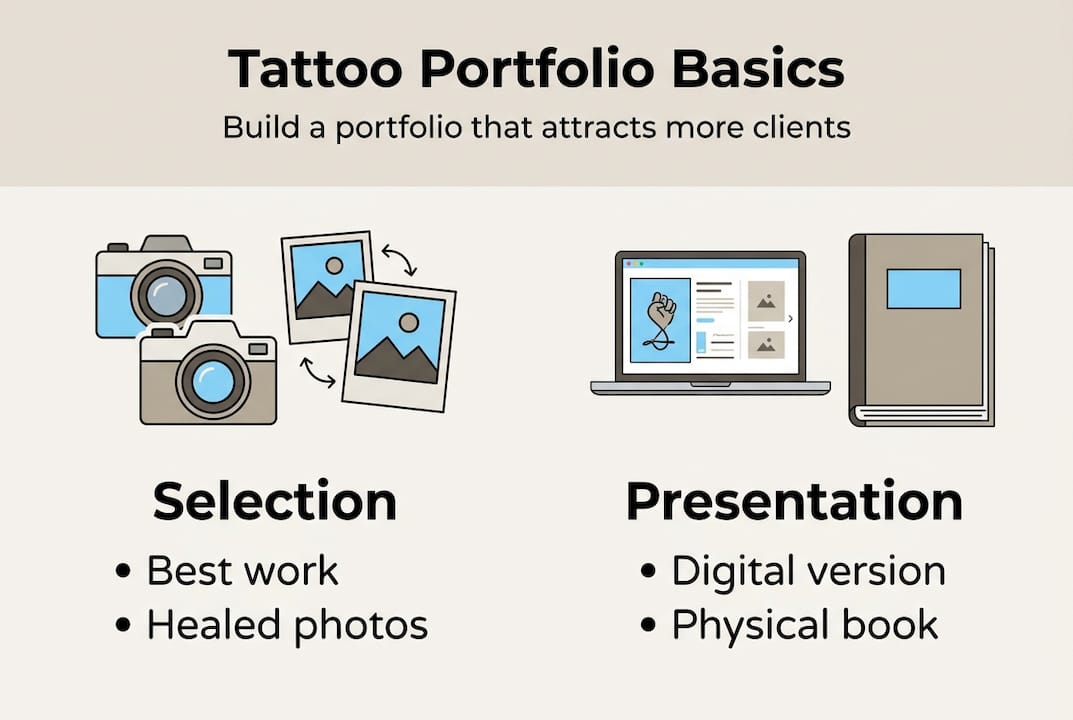
Apprenticeship portfolios of 20 to 30 pieces tend to perform better than bloated galleries of 50 to 100, because curated selections let your strongest work carry the conversation. For working artists, 40 strong pieces outperform 200 mixed every time.
Here is a quick guide by career stage:
| Career stage | Recommended piece count | Focus |
|---|---|---|
| Apprentice | 20 to 30 pieces | Variety with quality |
| Emerging artist | 30 to 40 pieces | Style consistency |
| Established artist | 40 curated pieces | Specialty and depth |
Specialized portfolios also convert better than generic ones, because clients searching for a specific style, say realism or fine line, want proof you can deliver it. Mixing too many unrelated styles without a clear narrative can dilute the impact of your best work.
When selecting pieces, ask yourself:
-
Does this represent my current skill level?
-
Is this a style I want to do more of?
-
Does this add something new, or is it redundant?
Pro Tip: Remove anything you would not be proud to show a dream client. If you hesitate for even a second, take it out.
Essential tools and formats for impressive portfolios
With your best work selected, setting up the right tools and formats ensures your portfolio works in every situation.
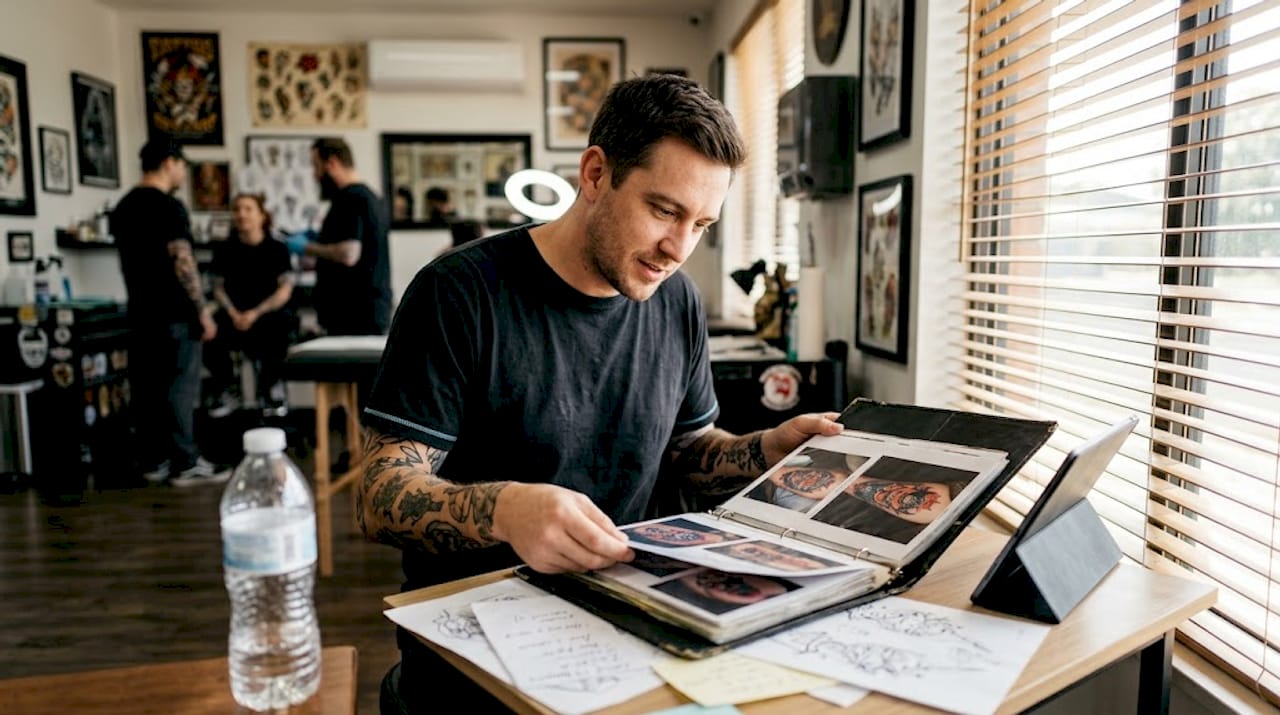
You need both physical and digital versions. A physical portfolio, whether a printed book or tablet presentation, is essential for studio interviews, guest spot applications, and tattoo conventions. A digital portfolio, including Instagram, a personal website, and a PDF, is how modern clients discover and vet artists before booking.
Maintaining both physical and digital versions and updating them regularly with current work is one of the most recommended practices among experienced tattoo professionals.
Here is a quick comparison of the main digital formats:
| Format | Best for | Key advantage |
|---|---|---|
| Discovery and reach | Algorithm-driven visibility | |
| Personal website | Credibility and control | Custom layout and SEO |
| PDF portfolio | Applications and interviews | Easy to share directly |
Essential tools to build and maintain your portfolio:
-
A quality DSLR or smartphone with a solid camera
-
Editing apps like Lightroom or Snapseed
-
A professional portfolio book for physical presentations
-
A website builder or booking platform with portfolio features
You can explore the Ink Link blog for more ideas on how other artists present their work, or browse portfolio examples from artists already building their presence online.
Pro Tip: Sync your updates across all formats at the same time. When you photograph a new piece, update your website, Instagram, and physical book in the same session.
Capturing high-quality tattoo photos
Once you have the right formats, the visual quality of your tattoo photos becomes critical. A brilliant tattoo shot on a dark background with harsh shadows looks forgettable. A clean, well-lit photo of even a mid-tier piece looks professional.
Follow these steps for better portfolio photos:
-
Use natural light whenever possible. Shoot near a window or outdoors in shade to avoid harsh shadows.
-
Set a neutral background. White, light gray, or skin-tone fabric minimizes distraction.
-
Shoot at multiple angles to capture detail, especially for large or textured pieces.
-
Use your phone’s portrait mode or a DSLR with a prime lens for clean depth of field.
-
Edit lightly. Adjust brightness and contrast, but do not over-filter or over-sharpen.
“Show both fresh and healed photos in your portfolio. Healed tattoos lose 15 to 20% contrast, but they show clients what your work actually looks like long term.”
That transparency builds trust. Healed photos are especially crucial for realism and fine line artists, where fresh photos can hide issues that only appear after healing. Poor healing photos genuinely hurt booking rates, so choose healed shots that show your work aging well.
Pro Tip: Keep a dedicated folder on your phone for healed client photos. Follow up with clients 6 to 8 weeks after their appointment and ask them to send a photo. These images are portfolio gold.
Portfolio layout and organization strategies
After taking great photos, organizing them effectively makes your work stand out even more. A strong layout guides the viewer’s eye and builds a narrative about what you do best.
Category-organized and healed-focused layouts are among the most effective approaches for converting browsers into booked clients. Here is how to apply them:
-
Open with your absolute best piece, not your newest one
-
Group work by style: realism, traditional, watercolor, fine line, and so on
-
Lead each section with a healed photo to establish trust immediately
-
Place your specialty work prominently, not buried in the middle
-
End with a strong piece to leave a lasting impression
Comparison of layout approaches:
| Layout type | Strength | Best for |
|---|---|---|
| Style-organized | Clear specialization | Artists with multiple styles |
| Healed-first | Builds trust early | Realism and fine line artists |
| Chronological | Shows growth | Apprentices and early career |
For scheduling updates, treat your portfolio like a living document. Both physical and digital versions need regular attention to stay competitive. A portfolio with work from two or three years ago signals that you are not active or evolving.
When you update your portfolio, make sure you are also managing your handling booking requests process so new interest from clients actually converts into appointments.
Pro Tip: Ask a trusted mentor or fellow artist to review your layout before publishing. Fresh eyes catch things you will miss after staring at your own work.
Why less is often more in tattoo portfolios
Here is something most artists do not want to hear: adding more images rarely solves the problem. The real issue is usually about editing with honesty, not ambition.
We see it constantly. Artists keep expanding their galleries, hoping to impress. But a client scrolling through 150 photos gets tired before they find your best work. Quality always trumps quantity, and 40 sharp, well-documented pieces will outperform 200 mixed ones every time.
The overlooked advantage is healed work. Most artists skip it because healed tattoos look less dramatic in photos. That is exactly why showing them sets you apart. It signals confidence. It says you stand behind your work months later, not just on the day of the session. In a saturated market, that kind of transparency is a genuine differentiator. Pare down your portfolio ruthlessly, lead with your healed pieces, and watch your booking inquiries improve.
Showcase your portfolio and boost bookings with Ink Link
Ready to put your portfolio to work? Here is an easy way to maximize its visibility.
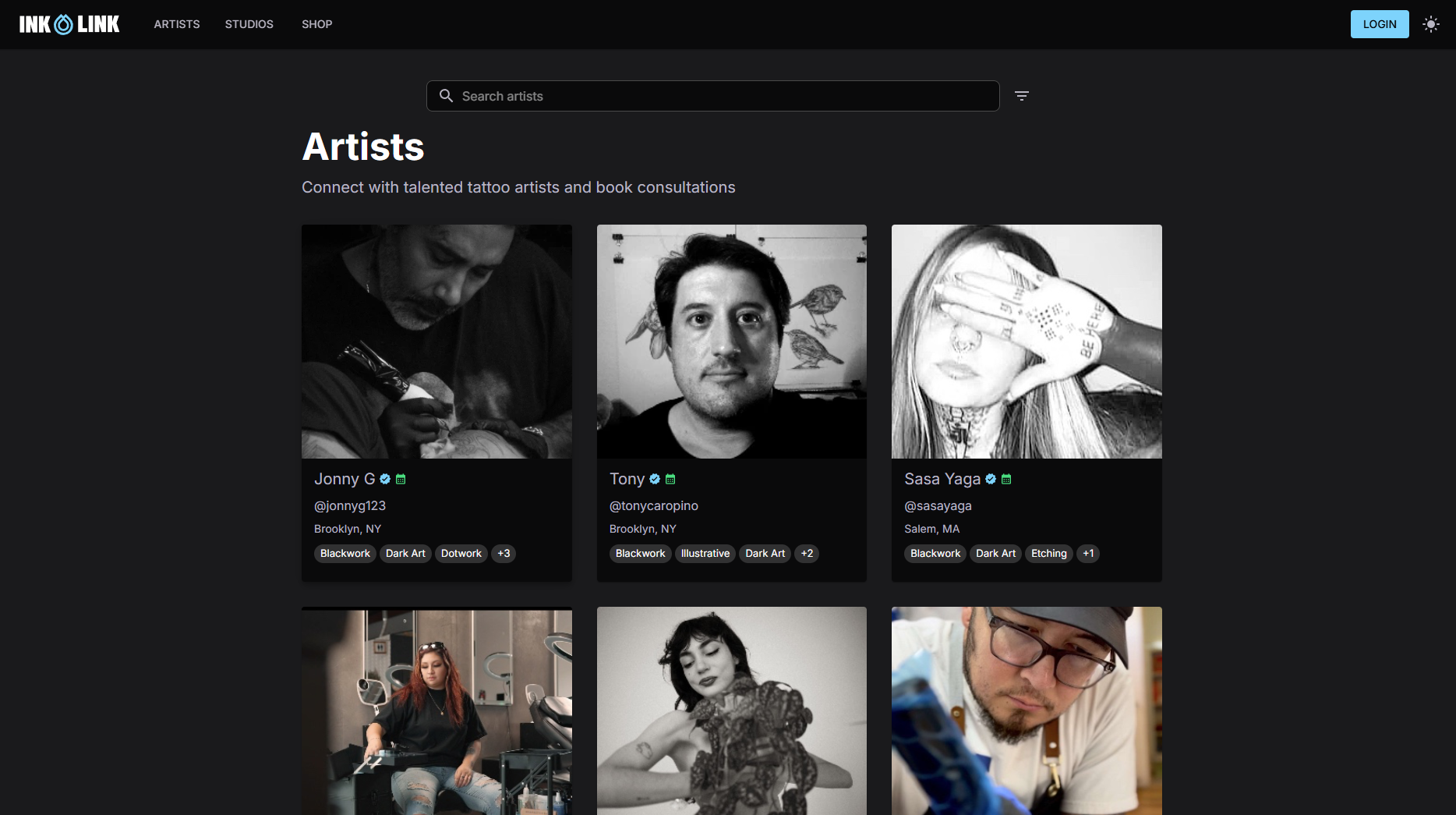
Ink Link is built for artists who want their portfolio to do more than look good. You can upload, organize, and display your work on a platform where clients are actively searching for artists to book. Your portfolio becomes a live booking tool, not just a gallery. Check out how other artists are already doing it by browsing tattoo artist profiles for inspiration. Then set up your own presence on the Ink Link platform and start turning portfolio views into confirmed appointments.
Frequently asked questions
What is the ideal number of pieces for a tattoo portfolio?
Aim for 20 to 30 well-chosen pieces as an apprentice, or around 40 as a working artist. Quality always matters more than volume.
Should I include healed tattoo photos or only fresh work?
Include both. Healed photos are crucial for proving your work holds up over time and building trust with clients who are researching your style.
How often should I update my tattoo portfolio?
Update every few months at minimum. Keeping both versions current with your best recent work, and getting mentor feedback, keeps your portfolio competitive.
What platforms are best for digital tattoo portfolios?
Instagram, a personal website, and a PDF are the most effective formats. Both physical and digital versions matter depending on whether you are applying in person or attracting clients online.