How tattoo design archives shape modern artistry
TL;DR:
Tattoo design archives preserve historical designs and styles for use by artists and clients.
They evolved from hand-painted stencils to digital repositories, shaping modern tattoo culture.
Archives serve as valuable resources for understanding tradition, inspiring creativity, and maintaining artistry.
Tattoo art is permanent on skin, but that doesn’t mean it lives forever. Designs worn by people generations ago could easily vanish without any record. That’s where tattoo design archives come in. These collections, built from flash sheets and pattern books used historically for quick client selection in shops, keep tattoo history alive and accessible. Whether you’re a client seeking inspiration or an artist building your style, understanding archives helps you connect with a rich creative lineage that actively shapes the tattoos being made today.
Table of Contents
Key Takeaways
| Point | Details |
|---|---|
| Preservation of tattoo history | Tattoo archives ensure the art and styles of the past remain accessible to artists and enthusiasts. |
| Inspiration for modern designs | Archives provide creative reference points that spark new trends and custom work. |
| Accessible for all | Both professionals and clients can use archives to learn, discover, and plan their next tattoo. |
| Ethical and digital evolution | Methods for preservation and sharing continue to evolve, increasing access and ethical awareness. |
What are tattoo design archives?
Tattoo design archives are organized collections of drawings, stencils, and printed design sheets that tattoo artists have used, traded, and saved over decades. Think of them as the visual libraries of the tattoo world. They document what was popular, what was possible, and how styles shifted across different eras and regions.
The most recognizable items in any archive are flash sheets, which are pre-drawn designs displayed in a shop or printed on a single page for clients to pick from. Flash made it possible for a walk-in client to point at a design and get tattooed in the same afternoon. Alongside flash, pattern books offered more structured collections, sometimes organized by theme like nautical imagery, religious icons, or animals.
Here’s a quick look at the common items found in tattoo design archives:
-
Flash sheets (hand-painted, printed, and now digital)
-
Pattern books and stencil sets
-
Transfer paper designs and acetate overlays
-
Photographs of tattooed bodies as reference
-
Sketches and artist notebooks
-
Digital image catalogs and online galleries
The materials in archives have changed significantly over time. Check out this simple timeline:
| Era | Archival material |
|---|---|
| Late 1800s | Hand-painted designs and acetate stencils |
| Early 1900s | Printed flash sheets and pattern books |
| Mid 1900s | Photographic references and catalogs |
| Late 1900s | Photocopied and offset-printed designs |
| 2000s onward | Digital files, online galleries, and social media archives |
“Tattoo design archives, primarily consisting of flash sheets and pattern books, serve as repositories of ready-to-tattoo designs used historically for quick client selection in tattoo shops.”
For a broader look at how these traditions connect to today’s tattoo culture, our tattoo blog insights covers the full range of topics from history to booking advice.
How archives preserve tattoo art and history
Tattoo art faces a challenge no other visual art form deals with quite the same way. The canvas is a living body. When that person passes, the art goes with them unless someone documented it first. Archives solve this problem directly. They preserve ephemeral tattoo art that would otherwise disappear with the wearer’s skin, acting as visual records passed between artists through trading, selling, or sometimes just borrowing without asking.
This passing of designs between artists is actually central to how tattoo culture spread. Before the internet, a sailor might carry a pattern book from one port city to another. A shop owner retiring would hand off their flash collection to the next generation. Designs traveled, evolved slightly with each artist’s hand, and created regional styles that still exist today.

Here’s a comparison of how physical and digital preservation methods stack up:
| Method | Strengths | Weaknesses |
|---|---|---|
| Physical storage | Authentic, tactile, original context | Fragile, limited access, fire or flood risk |
| Museum collections | Curated, protected, publicly accessible | Slow to update, geographic barriers |
| Digital scanning | Wide access, searchable, shareable | Can lose resolution or metadata |
| Online archives | Real-time sharing, global reach | Risk of loss if platforms shut down |
Ways designs commonly change hands in the archival tradition include:
-
Direct sale or trade between retiring and active artists
-
Auction and estate sales of estate collections
-
Museum and library acquisitions from private donors
-
Scanned uploads by collectors to public digital archives
-
Peer sharing through online communities and forums
Pro Tip: If you’re a client interested in historically rooted designs, visiting a studio with deep archival roots can be a game changer. Studios like Old Traditions Tattoo Parlor draw on classic design traditions to inform their current work.
Dedicated sites like the digital tattoo archive have also played a real role in keeping vintage imagery accessible to anyone with an internet connection, not just collectors or historians.
Evolution of tattoo archives: From stencils to digital
The story of how archives evolved is really the story of how tattoo culture itself grew. What started as practical shop tools became something much more significant over time.
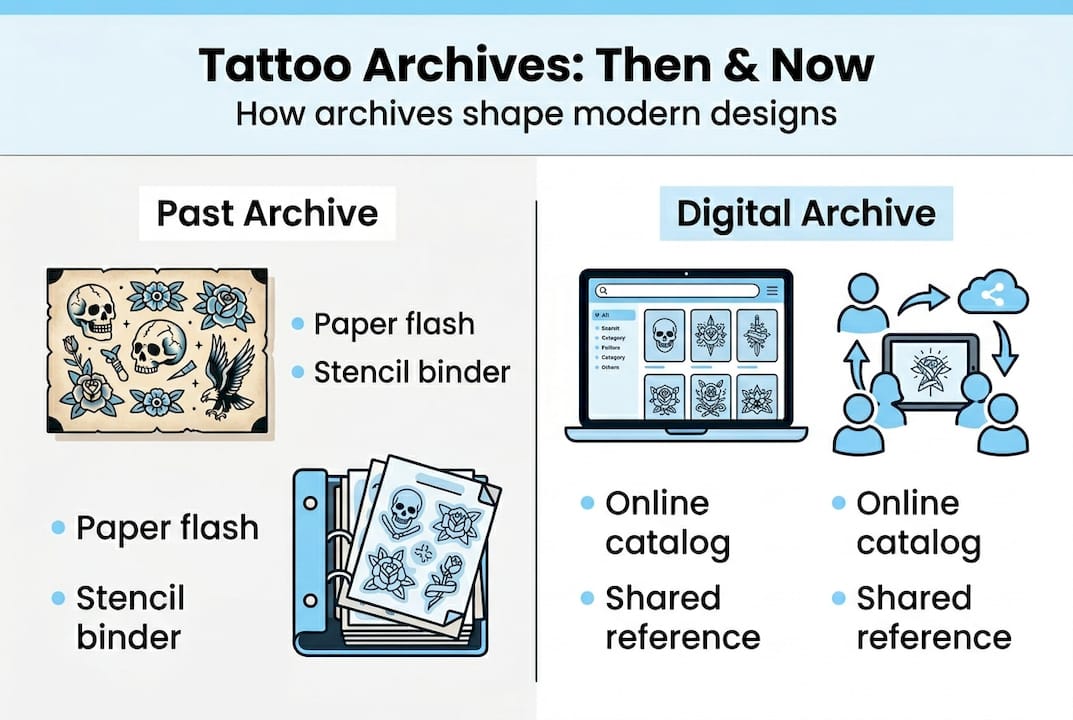
Flash sheets evolved from 19th-century acetate stencils and hand-painted designs into today’s digital sharing networks, maintaining their role as shop wall inspiration while also fueling the rise of fully custom work.
Here’s how that evolution unfolded step by step:
-
Hand-painted originals (1880s-1910s): Early tattooers like Samuel O’Reilly painted designs by hand, often borrowing imagery from trades like engraving and printing. These were proprietary, closely guarded, and rarely shared.
-
Printed commercial flash (1920s-1950s): Entrepreneurs began printing standardized flash sheets for distribution to shops nationwide. This standardized certain iconic designs like anchors, roses, and eagles.
-
Personal and regional collections (1960s-1980s): Artists started building their own distinct collections, trading with peers and creating recognizable personal styles backed by their archives.
-
Photocopied and offset archives (1990s): Reproduction technology made it easier to copy and distribute designs, widening access and speeding up stylistic cross-pollination.
-
Digital and social media archives (2000s to today): Scanning, image hosting, and platforms like Instagram turned every artist into a walking archive. Designs now spread globally in seconds.
A standout statistic from the world of preserved collections: over 900 pieces were assembled for Flash from the Bowery, illustrating just how rich and expansive these archives can be. This kind of scale shows you’re not dealing with a niche hobby. You’re looking at a structured visual history with real depth.
Digital archives have also changed how artists think about custom work. Instead of limiting clients to a wall of flash, artists now reference centuries of archival material to build personalized designs that still honor tradition. Learning how to structure those creative conversations around reference material is something covered in detail in our booking request guide.
The impact of archives on contemporary tattoo artistry
Archives aren’t just historical curiosities. They’re active tools that artists and clients use right now to shape decisions, develop styles, and push creative work forward.
The scale of preserved vintage flash is remarkable. Over 300 pieces in Jonathan Shaw’s collection and 900+ pieces in Flash from the Bowery demonstrate how deep these visual benchmarks run, especially for American traditional style. These aren’t just reference points. They’re the measuring sticks that help artists understand what makes a bold outline, a solid fill, or a timeless subject feel right.
For clients, archives are equally powerful. Instead of walking in with a vague idea, you can browse archival flash to understand what speaks to you visually. That clarity makes the whole booking process smoother and more satisfying for everyone involved.
Here are concrete ways both clients and artists use archives every day:
-
Clients browse vintage flash to identify their preferred style before choosing an artist
-
Artists study archived work to understand proportion, color theory, and linework standards
-
Both reference archives when discussing what “American traditional” or “Japanese irezumi” actually means in practice
-
Studios display archival flash as walk-in options, reducing decision fatigue for first-time clients
-
Educators use archives to teach apprentices the foundations of specific styles
Pro Tip: When booking a custom tattoo, bring three to five archival reference images that show the style you love, not just the subject matter. A great artist can take those references and create something totally original while honoring the visual tradition you’re drawn to. Studios like Riders on the Storm Tattoo Shop are excellent examples of artists who blend archive knowledge with fresh creativity.
Archives also give clients confidence. When you understand the history behind a design, your tattoo feels like more than a personal choice. It becomes a connection to a much larger creative story.
Why tattoo design archives matter more than ever
Here’s an honest take: most people treat tattoo archives as a research project for superfans or scholars. We’d push back on that completely. Archives are one of the most practical tools in modern tattoo culture, and their influence is growing, not shrinking.
Digital access has removed every barrier that once kept archival knowledge locked in a few collectors’ basements. Now anyone can study vintage tattoo design history before they even step into a shop. That access empowers clients to arrive educated, ask better questions, and collaborate more effectively with their artist.
Archives also protect creative heritage in a real way. Styles that fall out of fashion don’t disappear forever. They wait in archives, ready to inspire a new generation of artists who find something worth reviving. That cycle keeps tattoo art genuinely alive, not just trendy.
Explore tattoo design archives and book your next session
Ready to take what you’ve learned from tattoo design archives and put it into action? The best next step is connecting with an artist who truly understands this creative lineage.
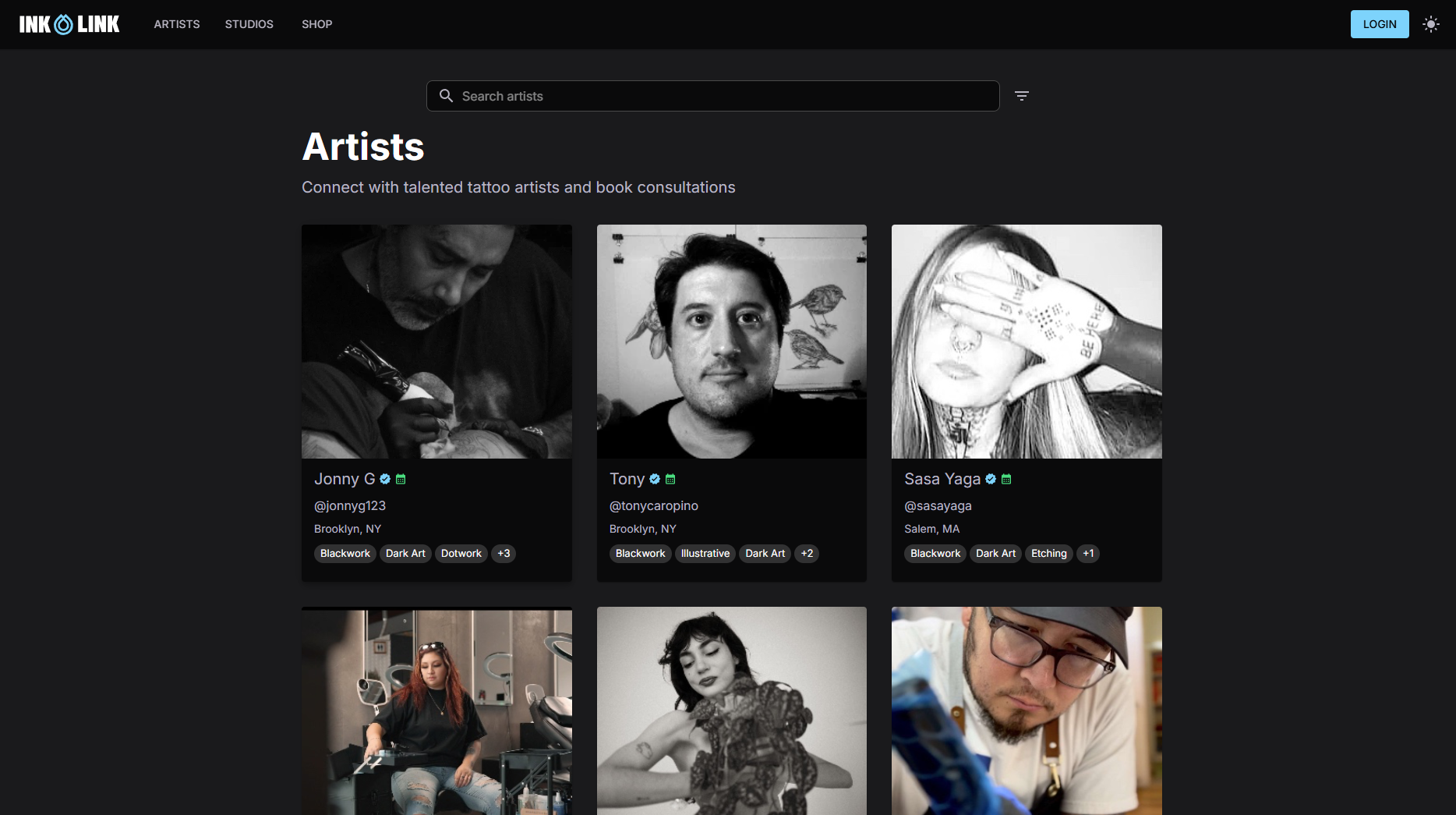
On Ink Link, you can browse tattoo artists whose portfolios reflect deep knowledge of both classic and contemporary styles. You can also explore specific artists like SimpleTinyInk to see how archival inspiration shows up in modern work. Finding the right artist has never been more straightforward, and your next tattoo story starts with the right connection.
Frequently asked questions
Why are tattoo design archives important?
Tattoo archives preserve designs that might otherwise vanish forever, keeping creative history available for both artists and clients. They act as visual records passed between artists across generations.
How do digital tattoo archives work?
Digital archives catalog and organize designs online, making them easy to share and search for inspiration or reference. Flash sheets evolved from physical stencils into the digital formats we now access instantly.
Can anyone use tattoo design archives?
Yes, archives are accessible to artists, enthusiasts, and clients looking for inspiration or historical context. Museums and libraries like the Northwest Tattoo Museum house original artifacts available for public education.
What kinds of designs are found in tattoo archives?
Archives include flash sheets, pattern books, stencils, and digital designs representing a wide variety of styles and eras. They primarily serve as repositories of ready-to-tattoo designs spanning over a century of tattooing history.