Effective tattoo artist onboarding: Step-by-step success
TL;DR:
- Effective onboarding reduces artist turnover by clearly communicating studio policies, standards, and culture from day one. Structured SOPs and a phased 90-day plan ensure consistency, faster independence, and better client experiences. Utilizing dedicated studio management platforms streamlines information sharing, reduces confusion, and fosters long-term artist retention.
Finding talented artists is hard. Keeping them is even harder. Most studio owners assume that once a great artist walks through the door, everything falls into place naturally. But the truth is, a large share of early artist departures trace directly back to unclear expectations and poor onboarding during the first few weeks. This guide gives you a clear, practical system to onboard new artists effectively, whether they are seasoned professionals or fresh apprentices. From building solid SOPs to managing a 90-day timeline, you will walk away with tools to reduce turnover, strengthen your team, and deliver a consistently excellent client experience.
Table of Contents
Key Takeaways
| Point | Details |
|---|---|
| Structured onboarding prevents turnover | Consistent processes keep new artists engaged and reduce early departures. |
| Documented SOPs boost consistency | Clear checklists make station setup and hygiene foolproof for every hire. |
| First 90 days are crucial | A visible timeline ensures new artists know expectations and stay on track. |
| Apprentice onboarding needs phases | Apprentices need structured, progressive milestones to master all key studio skills. |
| Technology streamlines onboarding | Booking platforms and digital SOPs automate and monitor progress efficiently. |
Why onboarding matters in modern tattoo studios
Tattoo studios are creative spaces, but they are also service businesses. When a new artist joins your team without a clear roadmap, confusion spreads fast. They ask the same questions repeatedly, clients notice inconsistencies, and the energy that made your studio great starts to erode. High artist turnover often starts here, long before anyone acknowledges a problem.
Structured onboarding solves this at the root. When artists understand your policies, systems, and culture from day one, they perform better and feel more connected to the studio. Better performance means better client experiences. Better client experiences mean more return bookings and stronger word-of-mouth. It all connects.
Here is what a strong onboarding structure actually delivers for your studio:
-
Fewer repeated questions from new artists
-
Consistent client intake and service quality
-
Clearer expectations around booking, deposits, and cancellations
-
Faster integration into the studio’s culture and team dynamic
-
Lower risk of compliance issues around sterilization and hygiene
The tattoo industry has historically relied on long apprenticeships to pass down knowledge, but modern studios are increasingly moving toward systemized onboarding that complements or replaces purely verbal instruction. The goal is not to strip out tradition. It is to make knowledge transferable and scalable.
“The first 30 days set the tone for an artist’s entire tenure at your studio. Document your systems now so you never have to repeat yourself again.”
Good tattoo studio workflow design is not just about efficiency. It is about giving every artist a fair, consistent start that sets them up to thrive.
Building effective SOPs and onboarding checklists
SOPs, or Standard Operating Procedures, are written step-by-step instructions for recurring tasks. In a tattoo studio, they cover everything from how to prep a station to how to greet a client on arrival. When these exist in writing, new artists follow the same process as your most experienced team members from the very first day.
The case for documented SOPs and checklists is strong: they create consistency during onboarding by removing guesswork from critical procedures like station setup, sterilization, and client intake. Instead of relying on memory or watching over someone’s shoulder, new artists have a clear reference to return to whenever they need it.
Here is how traditional onboarding compares to a documented SOP-driven approach:
| Area | Traditional (verbal/shadowing) | SOP + checklist approach |
|---|---|---|
| Consistency | Varies by trainer | Same every time |
| Time to independence | 4-8 weeks or more | 2-4 weeks |
| Compliance risk | High | Low |
| Knowledge transfer | Depends on trainer | Fully documented |
| Scalability | Limited | Works for any team size |
The difference is significant, especially as your team grows. A checklist-based approach also reduces the mental load on you as the owner.
Follow these steps to create your own studio SOPs:
-
List every repeated task in your studio (station prep, aftercare instructions, client check-in, etc.)
-
Write each procedure as a numbered, single-page document
-
Assign each SOP to the relevant role (artist, front desk, apprentice)
-
Include a short compliance note for any health or safety steps
-
Test each SOP with a new team member and refine based on feedback
Use a pre-session artist checklist as a starting reference when building out your own version for station setup and hygiene protocols.
Pro Tip: Review and update your SOPs every three months. Your studio evolves, new products get introduced, and policies change. Outdated SOPs create as many problems as having none at all.
Step-by-step onboarding timeline: The first 90 days
A great onboarding process is not just about what you teach. It is also about when you teach it. Front-loading too much information overwhelms artists and leads to mistakes. Spreading it out in a deliberate sequence keeps things manageable and sets clear milestones.
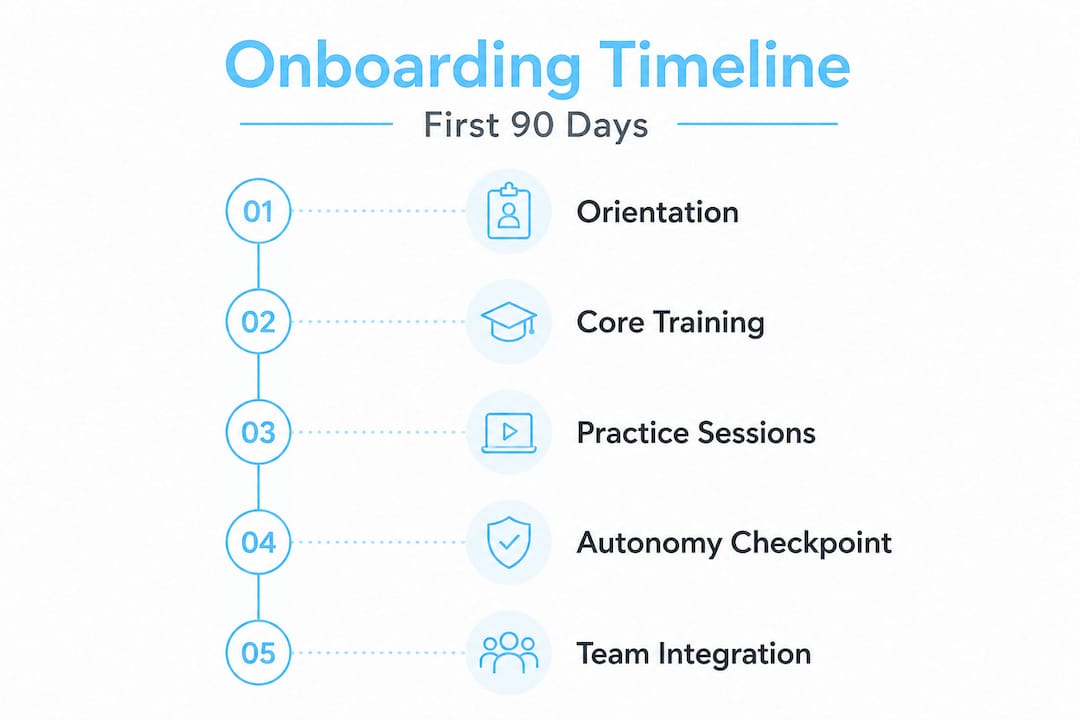
Here is a practical breakdown of the first 90 days based on a structured onboarding timeline:
| Phase | Timeframe | Focus areas |
|---|---|---|
| Orientation | Week 1 | Studio policies, SOPs, software training, meet the team |
| Ramp-up | Weeks 2 to 4 | Assisted bookings, client intake practice, brand alignment |
| Independence | Months 2 to 3 | Full booking ownership, portfolio promotion, self-management |
Most onboarding failures happen after the first week. The excitement fades, the structure disappears, and new artists are left to figure things out on their own. Keeping the timeline visible and active through all 90 days is what separates studios with strong retention from those constantly hiring.
A critical step in Week 1 is training on studio software and booking systems. Artists who understand how to manage their own calendars, process deposits, and communicate with clients through your platform are far more confident and self-sufficient. This is also a great time to walk them through handling initial bookings so they understand your studio’s approach to deposits and confirmations from the start.
Here is what owners and mentors should verify each week:
-
Week 1: Confirm all documents signed, software logins active, SOPs reviewed
-
Week 2: Observe first assisted client session and provide structured feedback
-
Week 3: Check booking accuracy, confirm understanding of cancellation and deposit policies
-
Week 4: Review client communication samples and social media posting (if applicable)
On the social media side, promoting a new artist’s arrival is a genuine business move. Feature their portfolio on your studio’s Instagram, tag them in posts, and build early momentum for their bookings. It helps them feel welcomed and drives real client interest.
Onboarding apprentices: Balancing tradition and efficiency
Apprentices are a different story entirely. They are not just learning your studio’s systems. They are learning the craft itself. That takes more time, more structure, and more patience.
Traditional tattoo apprenticeships last 18 to 24 months, moving through phases like foundation work, technical skill building, supervised tattooing, and refinement. That timeline exists for a reason. Quality tattooing requires muscle memory, knowledge of skin behavior, and an understanding of client care that only develops with repetition.
Key milestones in a classic apprenticeship include:
-
Foundation phase: Cleaning, hygiene, supply management, observation
-
Technical phase: Drawing practice, machine handling, skin theory
-
Supervised tattooing: Working on real clients with mentor oversight
-
Refinement phase: Developing personal style and consistency under reduced supervision
The good news is that structured onboarding does not conflict with this tradition. It enhances it. By creating clear phase-based benchmarks, you give apprentices a roadmap that respects the learning curve while keeping progression on track. Without documented milestones, apprentices often stagnate because neither they nor the mentor knows exactly what “ready for the next step” looks like.
Pro Tip: Schedule a formal check-in at the end of each apprenticeship phase. Review their work together, discuss what is working, and document their readiness before advancing. This protects both the apprentice and the studio.
Our take: What most tattoo studios get wrong about onboarding
Here is the honest truth: most studios treat onboarding as a one-time event. You sit down with the new artist, walk them through the studio, hand over a few forms, and then assume they are set. But that is not onboarding. That is orientation. And orientation alone does not build a team.
Shadowing is valuable, but it is not a system. When the person being shadowed is having a rough week, the new artist absorbs that too. Documented systems remove that variability. They give artists a reliable reference that does not depend on anyone’s mood or memory on a given day.
There is also a tendency to overlook the cultural side of onboarding. Operational fit matters, but so does creative fit. Making time to understand how a new artist communicates, what motivates them, and how they like to receive feedback pays off significantly over time. An artist who feels genuinely seen and supported in your studio is not going to be scanning job boards three months later.
“Studios that treat onboarding as a one-time event, not an ongoing system, see higher turnover and lower morale.”
Revisit your onboarding process every quarter. Ask recently onboarded artists what was confusing or missing. The best systems improve through real feedback, not theory.
Boost onboarding success with the right studio platform
Running a smooth onboarding process is so much easier when your tools are built for the job. The right platform keeps everything in one place, from booking schedules and deposit tracking to artist profiles and client records.
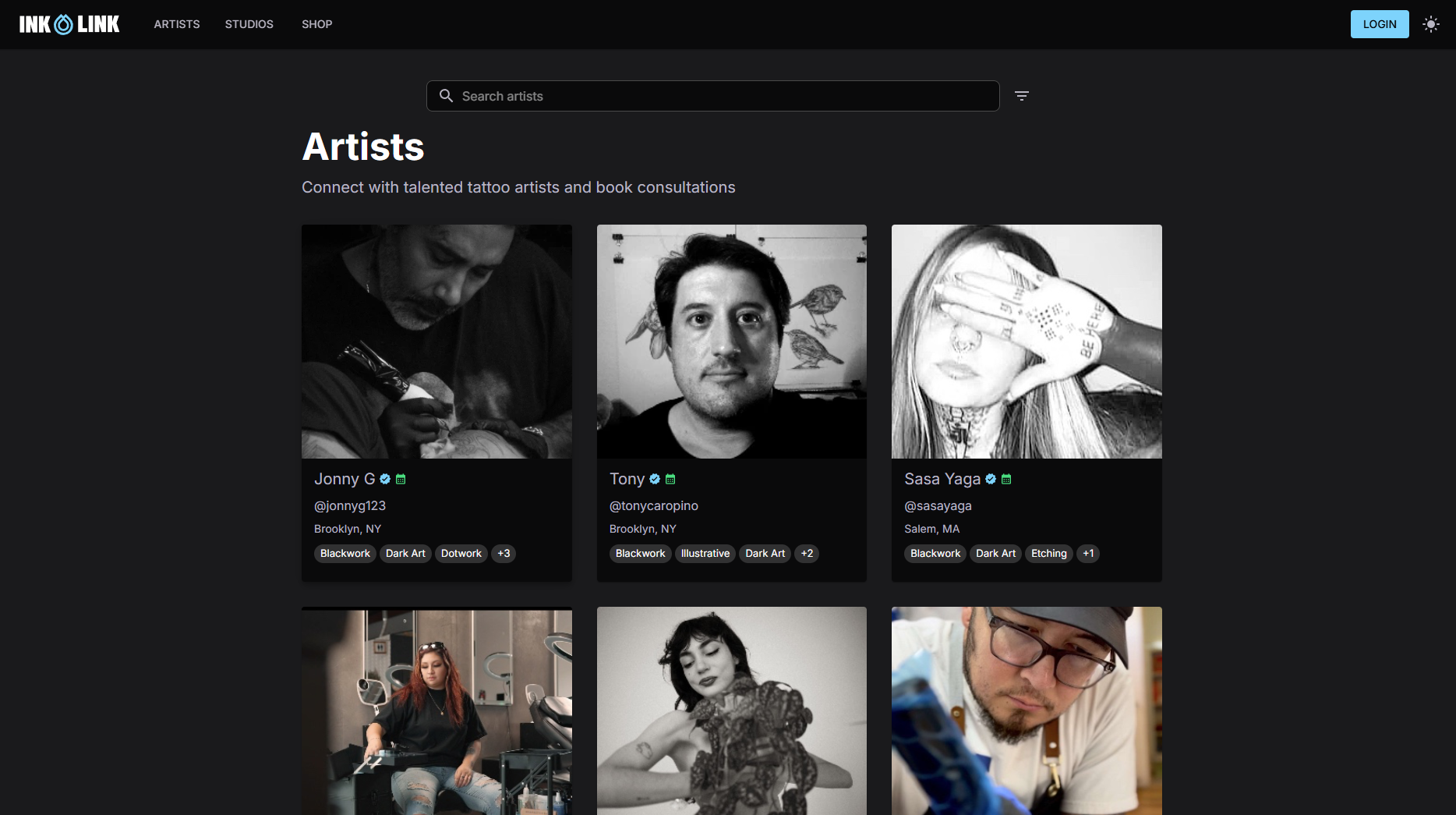
Ink Link is built for exactly this kind of studio workflow. You can discover and manage artists on a shared platform, keeping everyone aligned from day one. With purpose-built studio management tools, you get shared calendars, payment tracking, and storefront management that simplify the transition for new artists joining your team. Less time fighting scattered spreadsheets means more time building the studio culture that keeps great artists around for the long run. Get started with Ink Link and give your next onboarding a real foundation.
Frequently asked questions
What documents should every new tattoo artist receive during onboarding?
Each artist should get SOPs covering setup, sterilization, and client intake alongside emergency contacts, consent form templates, and studio compliance policies.
How long does it take for a new artist to become fully independent?
Following a structured program, most artists reach full independence within two to three months after starting, provided the ramp-up phase is actively managed.
What’s different about onboarding apprentices compared to experienced artists?
Apprentices follow a multi-phase program lasting 18 to 24 months covering foundational skills through supervised tattooing, while experienced artists move through studio-specific SOPs and software training in just a few weeks.
How do software platforms help with onboarding?
Platforms centralize bookings, artist documentation, and studio policies so new artists can access everything they need independently, reducing questions and speeding up the transition to full productivity.