3D Tattoos: Designs, Techniques, and Expert Artist Tips
TL;DR:
3D tattoos create optical illusions using shadows, highlights, and perspective to mimic depth.
Placement enhances the 3D effect, with curved body areas providing natural contours.
Proper healing and healed photos are crucial to evaluate long-term artwork quality.
Want a tattoo that makes people stop and stare? 3D tattoos do exactly that. These designs create the striking illusion that something is popping off your skin or sinking deep into it, giving your body art a dimension that flat designs simply can’t match. Whether you’re drawn to a hyper-realistic spider crawling across your forearm or a rose that looks like it’s blooming through your skin, 3D tattooing is one of the most creative and technically demanding styles in the industry. This guide covers everything you need to know, from design inspiration and artist techniques to healing and care.
Table of Contents
-
What to know before getting a 3D tattoo: Healing, care, and possible challenges
-
A fresh perspective: Why true 3D tattoo mastery is more than illusion
Key Takeaways
| Point | Details |
|---|---|
| 3D tattoos explained | They use optical illusions to create dimensional, eye-catching designs on skin. |
| Popular motifs | Common 3D themes include butterflies, animals, portraits, and fantasy objects. |
| Expert techniques | Top results require skilled artists using smooth shading, light, and perspective. |
| Healing tips | 3D tattoos need careful aftercare, especially on scarred or sensitive skin. |
| Choosing artists | Always check healed tattoo photos to judge true skill in 3D art. |
How 3D tattoos work: Beyond ordinary ink
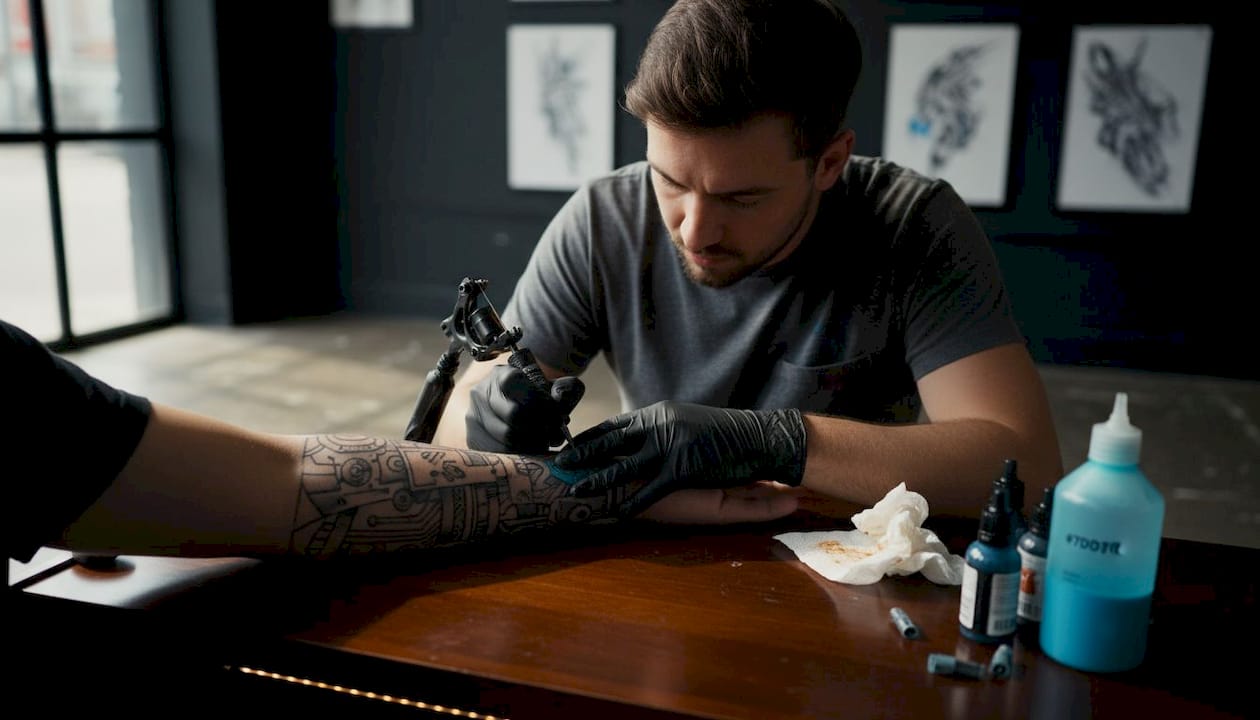
At first glance, you might wonder how a flat needle on skin can produce something that looks three-dimensional. The answer is all about how light, shadow, and perspective are used together. A skilled 3D tattoo artist doesn’t just draw an image. They engineer an optical illusion by placing highlights and shadows exactly where your eye expects them to be based on an imaginary light source.
It’s worth knowing the difference between 3D tattoos and hyper-realism, since people often use those terms interchangeably. 3D tattoos prioritize optical illusion over photorealistic accuracy. Hyper-realism aims to reproduce a subject with photographic precision, while 3D work is specifically designed to trick the eye into perceiving depth and dimension. Both styles use shading and gradient work, but the goal with 3D is always to make something appear to exist on or inside the skin.
Here are the core methods artists use to create that illusion:
-
Cast shadows: A shadow is placed beneath or beside the design as if light is hitting the object from a specific angle.
-
Forced perspective: Objects are slightly distorted to look closer or farther away than they really are.
-
Negative space: The skin itself becomes part of the design, often making it look like something is emerging from beneath.
-
Extreme contrast: Bold highlights next to deep shadows create a strong sense of volume.
Some subjects lend themselves beautifully to 3D treatment. Mechanical or biomechanical designs, insects, torn skin effects, geometric shapes, and animals with strong structural features all work especially well.
| Style element | What it creates |
|---|---|
| Cast shadow | Floating or hovering effect |
| Forced perspective | Objects appearing closer or farther |
| Negative space | Emergence or depth illusion |
| High contrast shading | Volume and roundness |
Pro Tip: When evaluating a potential 3D tattoo artist, look specifically for healed photos in their portfolio. Fresh tattoos always look more saturated and sharp. Healed work shows you what you’ll actually live with long-term.
Stunning 3D tattoo designs for inspiration
Once you understand the mechanics, the real fun begins: choosing a design. The variety within 3D tattooing is huge, and the best choice for you depends on your personal style, the placement on your body, and how bold you want to go.
Popular 3D subjects include butterflies, spiders, scorpions, roses, crosses, wedding rings, dragonflies, portraits, and animals like snakes and crocodiles. Each of these works well because they have natural shapes that suggest depth, movement, or texture that artists can exaggerate beautifully.
Here are some of the most exciting options to consider:
-
Insects and arachnids: Spiders and scorpions are classics because their legs and body segments create natural depth cues.
-
Torn skin and biomechanical designs: These reveal gears, wires, or muscle beneath the surface for a dramatic sci-fi feel.
-
Floral designs: A rose with layered petals and dramatic shadows can look like it’s pinned directly onto your arm.
-
Animal portraits: Snakes coiled around the forearm or a crocodile appearing to rise from the wrist are fan favorites.
-
Geometric shapes: Cubes, pyramids, and optical illusion patterns like impossible objects work naturally in 3D.
-
Jewelry and accessories: Wedding rings and gem designs look surprisingly convincing as real objects on the skin.
Placement changes the 3D effect dramatically. Curved body parts like the shoulder, bicep, calf, and ribcage add natural contour that reinforces the illusion. Flat areas like the forearm or back give artists more canvas to work with but require stronger shading work to compensate.
| Theme | Best placement | Effect type |
|---|---|---|
| Insects | Hand, forearm, neck | Hovering or crawling |
| Floral | Shoulder, chest, thigh | Blooming or layered |
| Biomechanical | Arm, leg, back | Revealed interior |
| Geometric | Forearm, back | Impossible illusion |
| Animal portrait | Chest, upper arm | Emerging from skin |
Pro Tip: If you’re deciding between a realistic and a fantasy theme, consider how the tattoo will age. Realistic designs with fine detail may need touch-ups as the skin changes, while bold geometric or biomechanical styles tend to hold their visual impact longer.
Mastering 3D tattoo art: Techniques and tools
Behind every jaw-dropping 3D tattoo is a methodical creative process. It’s not improvised. Artists who specialize in this style follow a structured approach to build the illusion layer by layer.
The step-by-step design process for a 3D tattoo typically looks like this:
-
Sketch the outline: The base drawing is completed first, often with a simplified silhouette that defines the subject’s shape.
-
Establish perspective: Horizon lines and vanishing points are introduced to give the object believable depth in space.
-
Apply shading and highlights: This is the most time-intensive step. Shadow gradients and bright highlights are added to simulate a consistent light source hitting the object from one direction.
-
Add cast shadows: A shadow is placed on the “skin surface” beneath the object, making it appear to float or press against the body.
-
Test the illusion: Artists often tilt their sketch or step back to check whether the depth reads naturally from different angles.
The equipment matters too. Pen-style tattoo machines are preferred by many 3D specialists because they allow smoother, more controlled shading transitions. Choppy shading breaks the illusion immediately, so a machine that supports fluid movement is genuinely important. You can explore recommended machines used by leading studio artists if you’re a professional looking to refine your setup.
For artists building their 3D skills, reviewing an artist prep checklist before each session helps maintain consistency, especially when working on technically demanding pieces.
“Mastery of 3D tattooing requires studying how light falls on real three-dimensional forms. Practice with simple spheres and cylinders before moving to complex subjects. The fundamentals don’t lie.”
The advice above reflects something many experienced 3D artists emphasize: the basic art principles of light and shadow matter far more than any specific tool or trick.
What to know before getting a 3D tattoo: Healing, care, and possible challenges
Getting excited about your design is the easy part. Understanding what comes after the session is just as important, especially with a style as detail-heavy as 3D tattooing.
The tattoo healing process for a 3D piece is similar in timeline to other styles but demands careful attention because the fine shading gradients can be affected by how the skin responds. Here’s what to expect:
-
Days 1 to 3: Redness, swelling, and some oozing are normal. Keep the area clean and follow your artist’s aftercare instructions precisely.
-
Days 4 to 7: Peeling and flaking begin. Never pick at the skin. This is the stage where people accidentally pull out ink.
-
Weeks 2 to 4: The surface looks healed but the deeper layers are still settling. Colors may appear duller during this phase.
-
Weeks 4 to 8: The full healed result becomes visible. Expect gradients to soften slightly compared to how they looked fresh off the needle.
Tattooing over damaged skin, like scars or stretch marks, introduces additional variables. On scarred or stretch-marked skin, ink absorbs unevenly, the fading and infection risk rises to between 5 and 10 percent, and artists must adjust needle depth and technique accordingly. If you have significant scarring, discuss this openly with your artist before booking.
“A good 3D tattoo artist will assess your skin texture before committing to the design. No reputable professional rushes that conversation.”
Watch for these red flags during healing: excessive swelling beyond day three, hot skin to the touch, unusual discharge, or ink that seems to be lifting in large patches rather than peeling naturally. If any of these appear, consult your artist or a medical professional right away.
A fresh perspective: Why true 3D tattoo mastery is more than illusion
Here’s something most 3D tattoo content skips over entirely: Instagram is a terrible place to evaluate an artist’s real skill. Fresh tattoos always look sharp, saturated, and dramatic. The true test is what a 3D tattoo looks like after it has settled and healed.
Healed realism and 3D tattoos are noticeably softer than fresh ones. The contrast fades slightly. Fine gradient lines blur together. An artist who only shows fresh work in their portfolio may not be confident in their healed results. Asking specifically for healed photos is one of the most important things you can do before committing.
True mastery in 3D tattooing shows up in how an artist compensates for how the skin ages. They build slightly more contrast than they might want fresh, knowing the years will soften it. That kind of forward-thinking is what separates good artists from genuinely great ones.
Explore top 3D tattoo artists and studios near you
Ready to turn your 3D tattoo idea into reality? Finding the right artist makes all the difference in a style this technically demanding.
At Ink Link, you can find top 3D tattoo artists by browsing portfolios that include healed result galleries and client reviews. Compare styles, check availability, and book directly through our tattoo booking platform. If you prefer to visit in person first, you can also browse reputable studios near you to find a team that specializes in dimensional and realism work. Great art starts with the right match.
Frequently asked questions
What’s the difference between 3D tattoos and hyper-realism?
3D tattoos use optical illusions to create the appearance of depth and dimension, while hyper-realism focuses on reproducing a subject with photographic accuracy without necessarily using illusion techniques.
How long does a 3D tattoo design take to heal?
Most 3D tattoos take between 4 and 8 weeks to heal fully, with initial darkening followed by gradual softening and color evening as the skin recovers.
Can I get a 3D tattoo over scars or stretch marks?
Yes, but ink absorbs unevenly on damaged skin and fading or infection risk is slightly higher; an experienced artist can adjust needle depth and technique to improve the outcome.
What are the most popular 3D tattoo motifs?
Butterflies, spiders, scorpions, roses, crosses, portraits, and animals like snakes and crocodiles are among the most requested 3D tattoo subjects.
Will a 3D tattoo fade faster than other styles?
Not necessarily. 3D tattoos fade at a similar rate to other styles when you follow proper aftercare and protect the ink from sun exposure with SPF regularly.